
Chasing the Monsoon
Through the highlands of Thailand and Laos, the arrival of the rains is less about seeking shelter than witnessing a world being reborn anew
Words: Phoowadon Duangmee
Photos: Shutterstock
Northern Thailand seems to hold its breath just before the rains arrive. The clouds over Chiang Mai descend, folding into the mountains until the horizon dissolves into a grey-green shade. A stillness settles, dense and expectant, broken by a distant roll of thunder across the valley.
The rain arrives suddenly, like a dam breaking.
It spreads slowly northwards to neighbouring Chiang Rai, washing the hills in glossy green hues, swelling the Mekong, and kicking up a scent of wet earth and river silt. Here, in Thailand’s northernmost province, the monsoon gathers momentum, following the current of the Mekong River as it slips across the border into Laos.
Downstream in Luang Prabang, the downpour settles into a softer, predictable rhythm – veiling temple roofs and monks gathering alms – before regaining its dramatic force among the limestone karsts of Vang Vieng.
Travelling at this time of year is not about escaping the rain, but observing one of the great transformations of the natural world. A landscape baked sepia by months of dry season suddenly awakens as a technicolour paradise of vivid wildlife and roaring waterfalls, proving that the green season can be the most magical time to explore.

Chiang Mai: Air Before Movement
Chiang Mai is where the rain first starts to make sense – not just as a meteorological event, but as a rebirth.
The monsoon creeps slowly in. afternoons feel heavy. The sky bruises grey and the mountains begin to fade. Day by day, the landscape softens as sharp edges are slowly rubbed away. A ceiling of cloud replaces open skies, and the city suddenly feels romantically remote.
By late afternoon, the slopes of Doi Suthep disappear completely, lost in the mist. The true rainy season may still be weeks away, but its presence is felt in various ways – thunder grumbles through the valley, quiet pavements darken, and a sudden gust hints at storms to come.
But the monsoon makes its entrance most spectacularly outside the city limits.
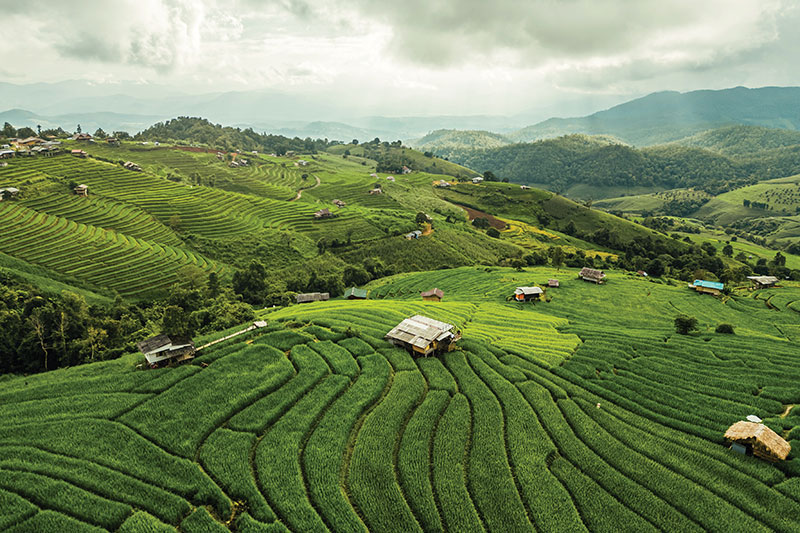
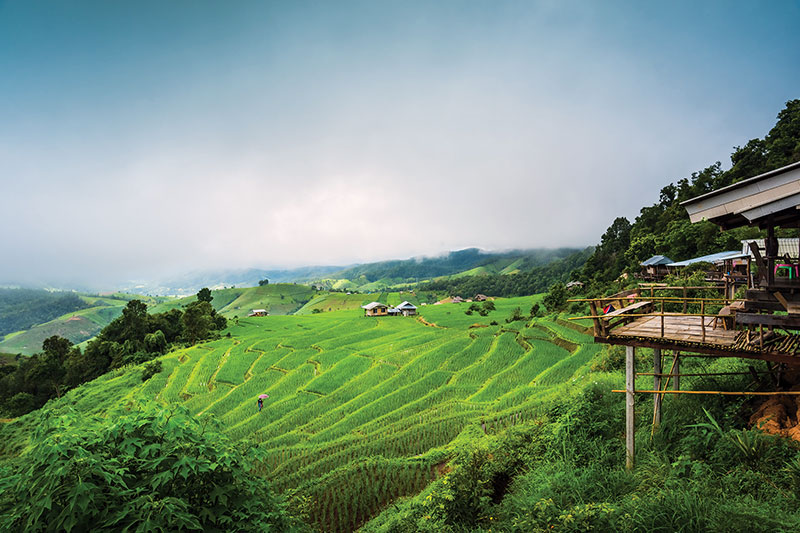
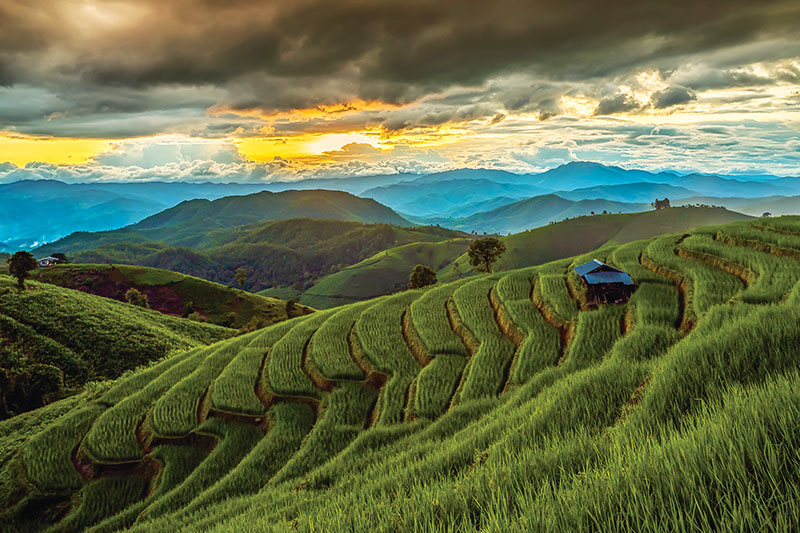
Drive 150 kilometres southwest of Chiang Mai and a wide valley of terraced rice fields opens before you. In the green season, Mae Chaem’s terraces spill down the hillside in emerald waves. When the rain comes, it ripples across the landscape step by step, following lines carved by centuries of hard toil.
Few tourists visit during the rainy season, so you can experience Mae Chaem in its natural, timeless rhythm. Small temples dot the valley, their moss-dark walls hiding murals that tell stories of the Buddha. The finest among them are Wat Yang Luang, adorned with ancient delicate paintings, and Wat Pa Daet with its traditional wooden vihara assembly hall.
The rain doesn’t interrupt life in Mae Chaem; it shapes it. Local farmers move in perfect step with the seasons – planting, tending or harvesting. The valley feels less like a destination than a pregnant pause, a place where you slow down without consciously deciding to. Sometimes the only sound is rain on the leaves, gathering in the wet soil before slipping away into a mountain stream.
Back in Chiang Mai, the monsoon sets in as a months-long mosaic of shadow and light.
The peaks re-emerge, though briefly, as the horizon breaks open once more. During the rains, the city comes alive, its atmosphere constantly changing with the weather.
Chiang Rai: Where the Land Turns to Rivers
To the north of Chiang Mai, Chiang Rai is quieter and more open – as if the landscape has been given room to breathe.
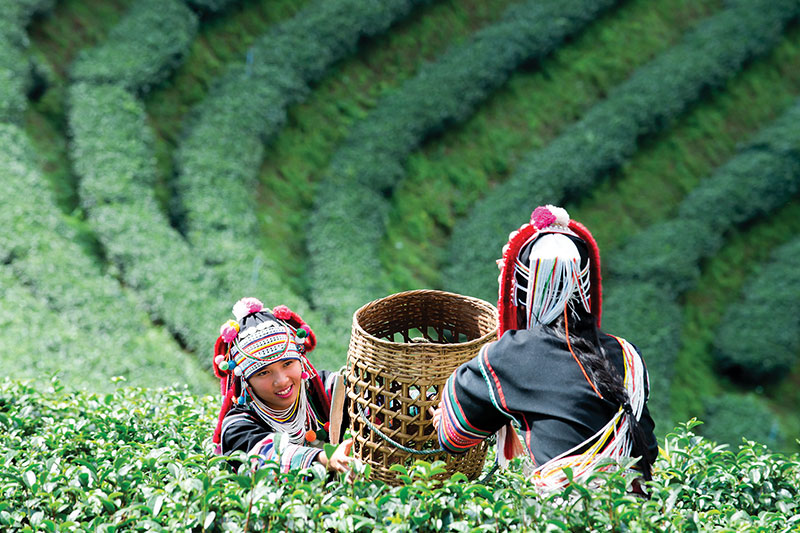
Up here, the mountains merge with the Golden Triangle, once famous as an opium capital but now transformed into a sweeping landscape of tea plantations.
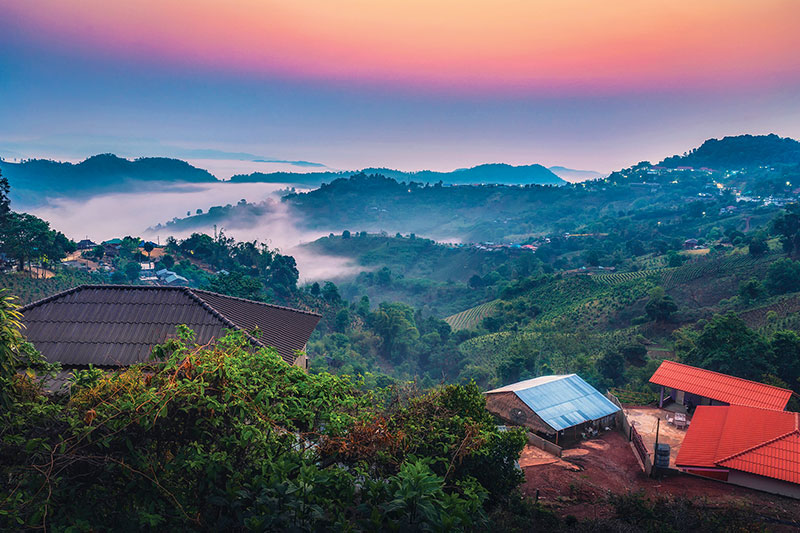
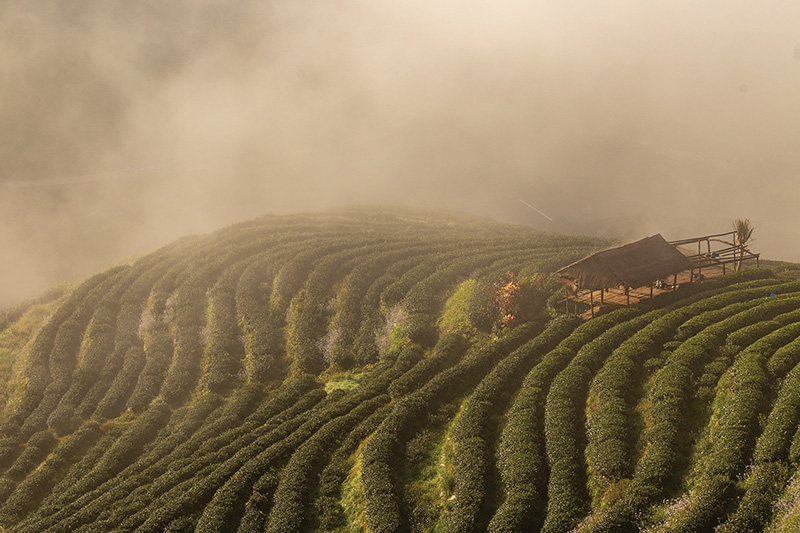
Midway between downtown Chiang Rai and the border with Myanmar, tea bushes climb the slopes of Doi Mae Salong in neat rows, following the curves of the ridges. Mist hangs low and the green deepens. This is not a postcard perfect landscape, but an atmospheric realm that changes from moment to moment.
At the Choui Fong or 101 tea plantations, visitors stroll through the manicured bushes to quiet cafés, sitting with a pot of tea grown just steps away. It comes served with a breathtaking view: hills roll to the horizon where Thailand, Myanmar and Laos meet to form the legendary Golden Triangle.
Below, the Mekong River carves through rugged terrain towards Luang Prabang. From Thailand’s far North, the journey to the Lao royal capital continues by water. Boats depart from the border town of Houayxai and drift downstream for two days before reaching their historic destination. On the river, time slows. The Mekong expands and narrows with the changing terrain, slipping past dense forests, small villages and long serene stretches where there’s nothing but water and shifting light.
Though travelling during the monsoon requires patience, it brings you closer to the pulse of nature.
Luang Prabang: Where the Rain Finds Rhythm
A season that began in Chiang Mai with a thunderclap, and in Chiang Rai as a gushing flow, settles in the former Lao capital into something gentler and more soulful.
The Mekong curls slowly around the narrow peninsula of temples, its surface reflecting the ragged grey monsoon sky. By the time you reach Luang Prabang, the rain already feels softer.
Through the early morning mist, monks set out barefoot on their alms round in a ritual unchanged for centuries.
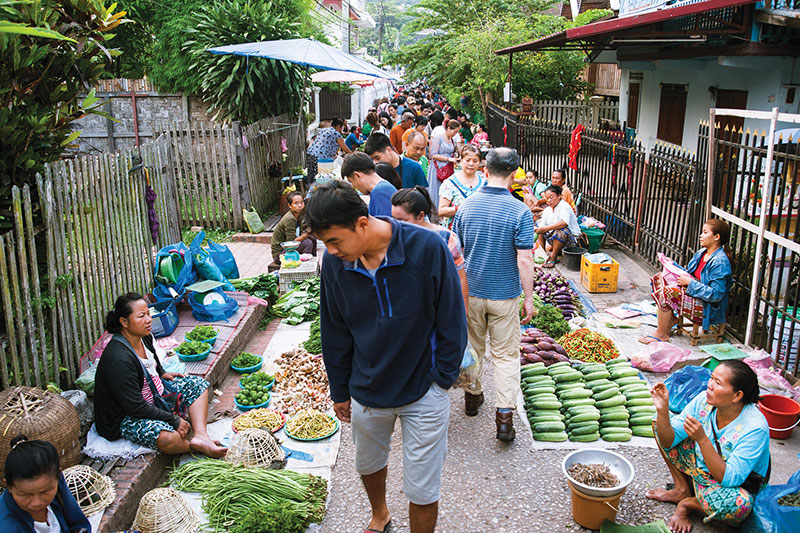
Nearby, hawkers unfurl mats and begin carefully placing their wares at the morning market. The rains add a richness to flavours – bitter leaves, wild mushrooms, and tropical fruit are at their peak. The stalls brim with forest greens, river fish, fresh herbs, and vegetables plucked from monsoon-replenished fields.
The temples, too, take on an entirely different character.
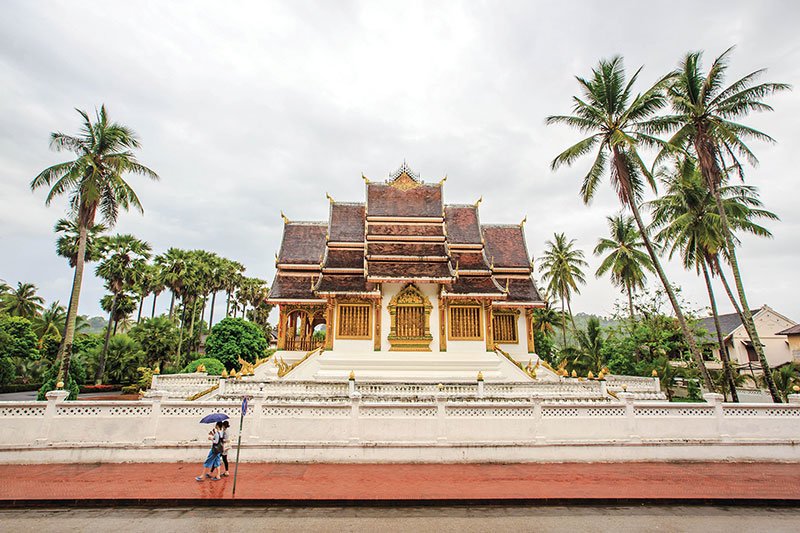
Carved timber and layered roofs radiate a deep glow in the gauzy light. Free from crowds and bustle, the green season offers a more contemplative experience, one where architecture, ritual and weather quietly converge.
Beyond the town, the landscape responds with a beauty all its own.
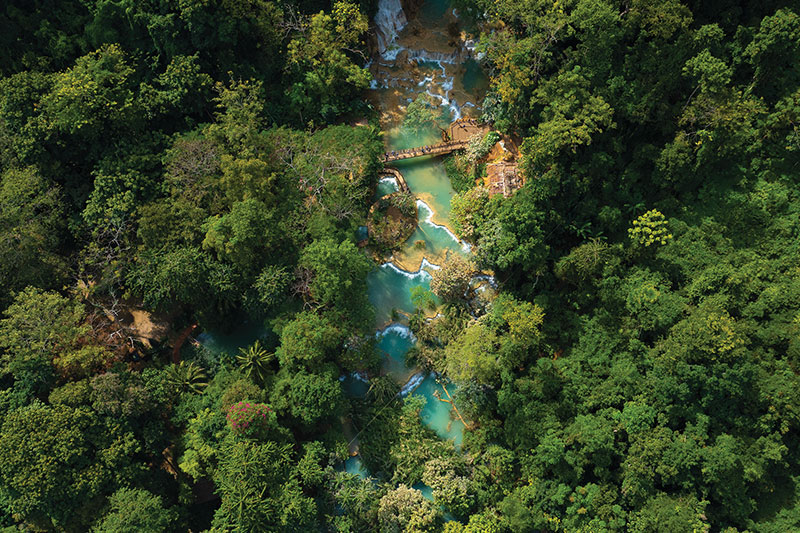
At Kuang Si Falls, the current swells, spilling over limestone tiers with awesome force. The pools below turn opaque and mineral-rich, while the surrounding forest thickens into a dense, damp canopy.
Still, nothing in Luang Prabang feels rushed. Boats drift along the Mekong, streets empty, and time seems to stretch.
If Chiang Mai holds the moment before the rain, and Chiang Rai sets it in motion, Luang Prabang is where it settles into a steady rhythm, with daily life moving in quiet alignment.
Travel onwards and Luang Prabang’s spell begins to break, giving way to dramatic karsts as you chase the rain south to Vang Vieng.
Vang Vieng: Landscape in Motion
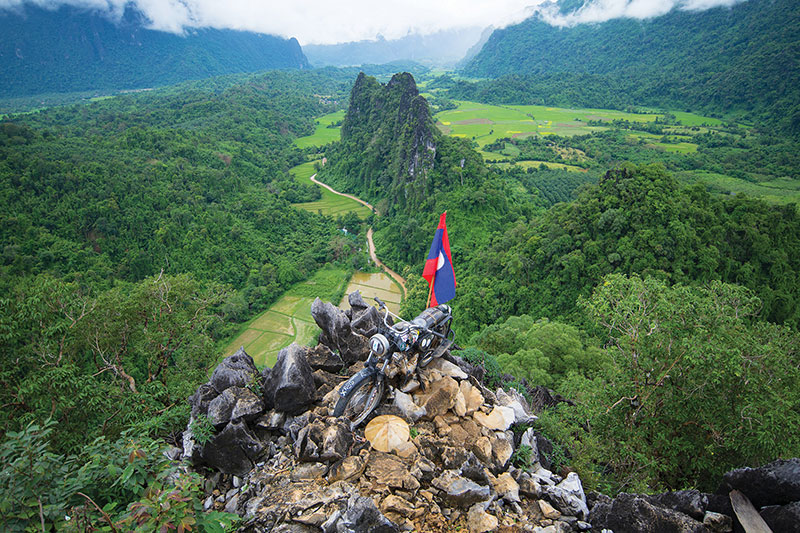
Here, the valley gives way to a more fragmented terrain dotted by limestone-karst eruptions. At this time of year, the jagged rocks appear and disappear amid shifting curtains of rain-filled clouds.
Here, the river link with the North of Thailand feels more distant, replaced by a dramatic topography of peaks and hollows. Water is still everywhere – in flooded paddy fields, roadside pools, and running in sheets across exposed stone – but it no longer obeys a clear direction of movement. Instead, it circulates within the terrain itself.
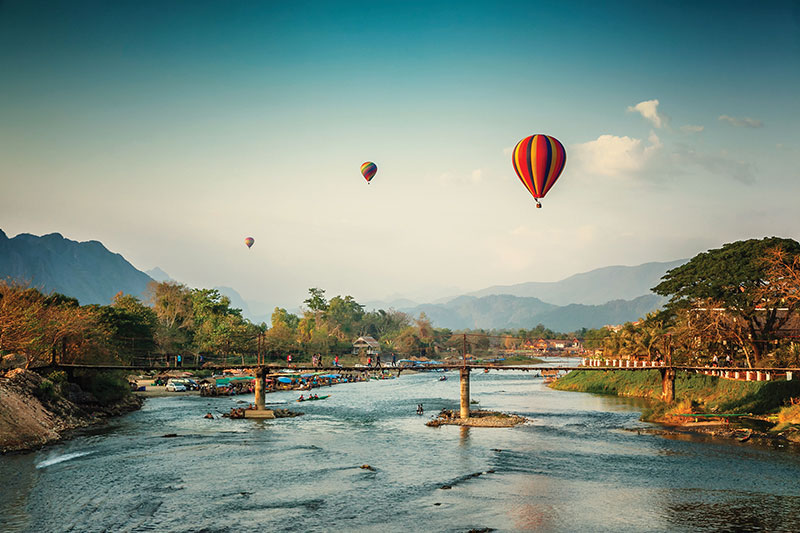
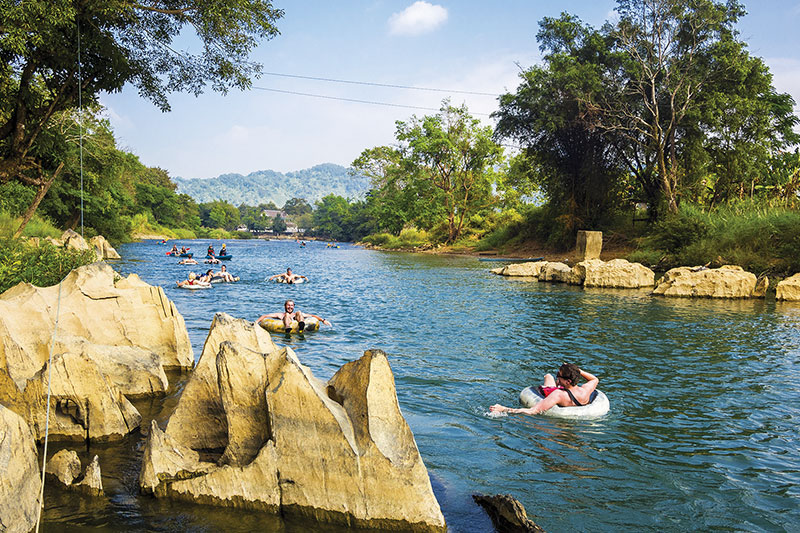
The Nam Song River meanders lazily through the valley, its surface transforming from steel grey to pale jade depending on the cloud density. Sporadic signs of human life lie scattered along its banks: guesthouses, small farms, and quiet roads that fade quickly into fields.
Boat rides along the Nam Song River take on a quieter pace, framed by low cloud drifting across the limestone peaks. Between passing showers, visitors hop from riverside cafes and hidden caves to short walks through flooded rice fields that mirror the shifting sky. The allure lies in stillness rather than activity – the chance to watch an entire landscape reinvent itself beneath the shifting weather.
If Luang Prabang is where the rain settles into ritual, Vang Vieng is where it regains momentum – not through human hands, but through the terrain itself, through the elemental play of mountains and meteorology.