
Threading Through Time
From royal courts to Phuket’s historic streets, the exquisite Thai Baba Kebaya weaves a tale of maritime trade and cultural fusion that shaped the island’s soul
Words: Phoowadon Duangmee
Photos: Tourism Authority of Thailand, Shutterstock
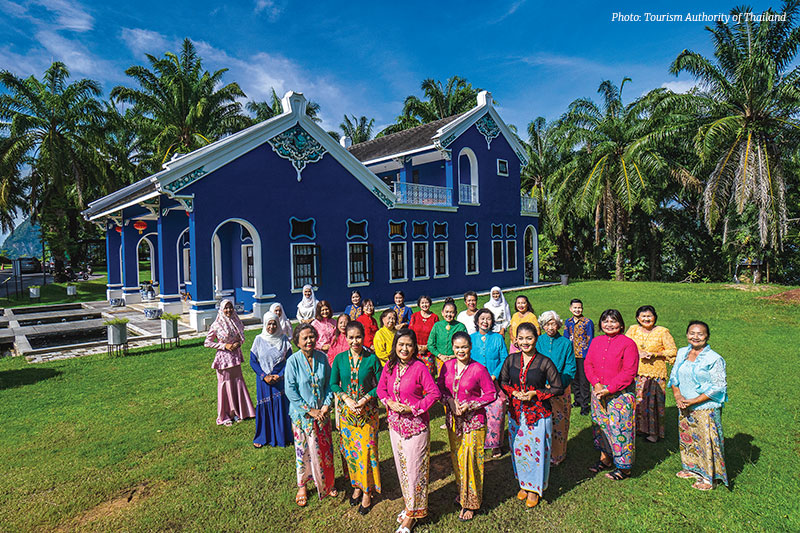
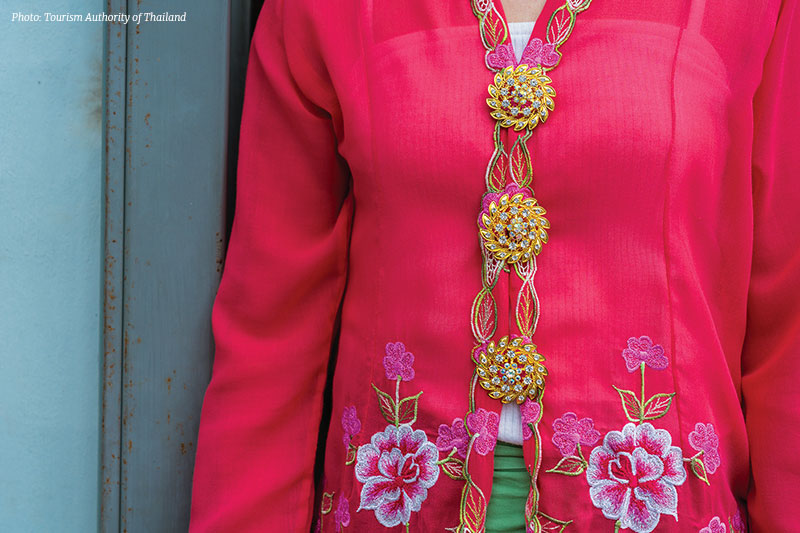
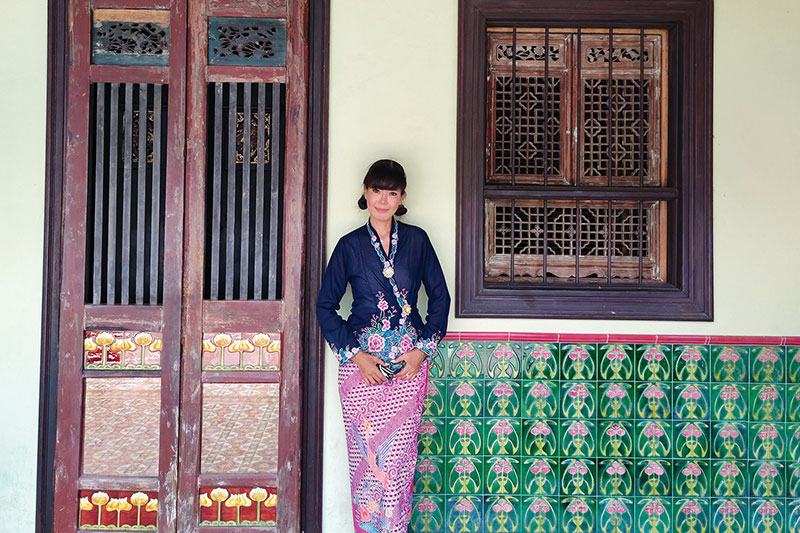
A woman stands near the pastel walls of Phuket Old Town as a relative adjusts the three gold brooches adorning her exquisite lace blouse. Nearby, local women in beautiful Thai Baba Kebaya outfits gather with tourists outside century-old shophouses, eagerly waiting for the annual Baba Wedding Festival parade to begin.
Warm afternoon air hangs over the historic quarter, scented with tropical flowers and freshly brewed coffee. Intricately embroidered kebaya blouses catch the light as the procession spills on to the street.
Each year, the Baba Wedding Festival turns back the clock in Phuket’s old quarters as local Peranakan families step out in their traditional kebaya finery. Transcending mere ceremony, these vibrant outfits gleam with centuries of trade, migration and cultural exchange across the Andaman Sea.
A Tapestry of the Sea
Kebaya made its first appearance on history’s catwalk in the royal courts of Java. Over the centuries, it sashayed through the trading posts of Southeast Asia, absorbing local influences ranging from Malay tailoring and Chinese embroidery to European lace and Indonesian batik. By the time the garment arrived on Thailand’s Andaman coast, it had evolved into a distinctive expression of Peranakan identity.
Long before it became a holiday paradise, Phuket was a bustling maritime trading post. Ships arrived with spices, silk, ceramics, metal, and fashions from ports across Asia and Europe. In the 19th century, the boomign tin minng industry attracted merchants, miners and entrepreneurs from southern China. Many settled and married local women of Malay ancestry, giving rise to fusion of customs, fashion and flavours we know as the Peranakan, or Bana-Nonya, culture.
Today this legacy is woven into the very fabric of Phuket Old Town, visible in elaborately restored Sino-European mansions, serene family shrines, time-honoured dishes like Moo Hong (tender pork stew) and Nam Phrik Kung Siab (chilli dip featuring crispy smoked shrimp), and unique annual festivals.
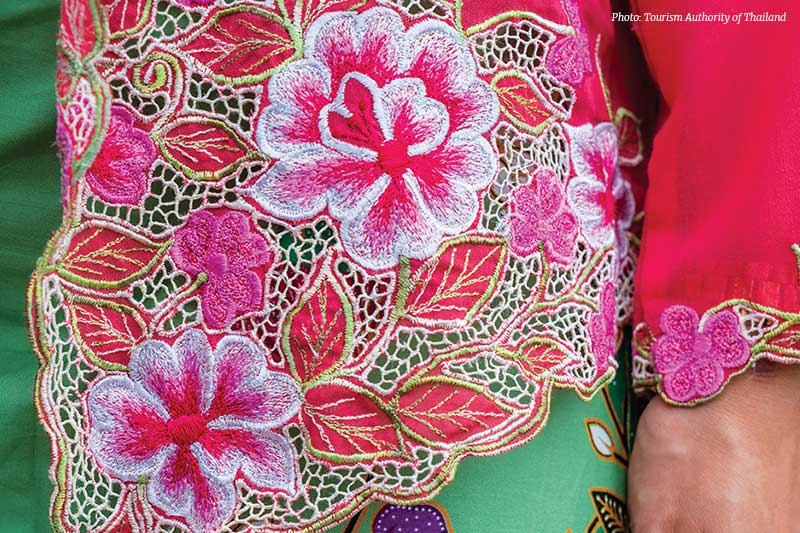
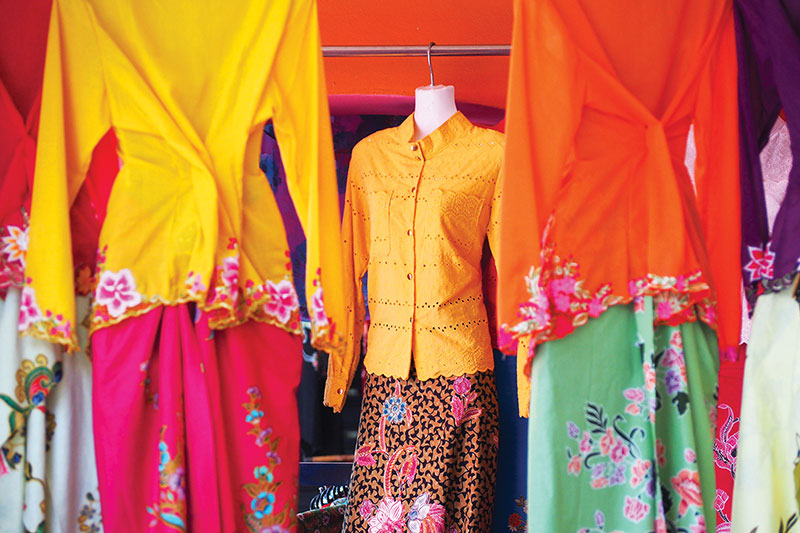
The Thai Baba Kebaya became the ultimate showcase of this cultural crossroads. Though sometimes described simply as a blouse, the kebaya is actually the centrepiece of a meticulously composed ensemble. The fitted lace top is traditionally paired with a brightly patterned batik sarong – a nod to its Indonesian roots – and secured in the front with three ornamental gold brooches in place of buttons. The silhouette of classic Malay tailoring is decorated with intricate embroidery which is often teased into auspicious Chinese motifs. Look closely at the delicate lace and cutwork, and you’ll see the artistry of the luxury textiles that once arrived from Europe by sea.
As Phuket prospered, local dressmakers adapted the imported fabrics to suit local tastes. Wealthy merchant families commissioned increasingly elaborate garments made from fine cotton, organza and European lace, while goldsmiths crafted brilliant brooches set with diamonds and other precious stones.
An Evolving Silhouette
The story of the kebaya continued the unfold across the Peranakan communities of Thailand, Malaysia and Singapore throughout the 20th century, giving rise to distinct stylistic eras. in the 1920s, the Kebaya Linda was all the range, boasting a relaxed silhouette tailored from heavier imported fabrics trimmed with gossamer European lace. A decade later, the Kebaya Biku brought added refinement, as new sewing machines allowed dressmakers to create intricate cutwork embroidery, scalloped edges and delicate motifs with flawless precision.
After World War II, the Kebaya Sulam took centre stage with its slimmer silhouette and richly coloured silk embroidery – a style that defines the elegant Thai Baba Kebaya we see today.
While these three styles were prevalent across the region, Phuket’s artisans gave them unique twists, adapting the colours, tailoring and jewellery to reflect the island’s singular traditions.
Living, Breathing Tradition
Today, the kebaya continues to evolve. Contemporary designers are reinterpreting the garment with lighter fabrics and simplified tailoring, while younger generations pair the traditional blouse with trousers or jeans. Rather than abandoning tradition, this modern styling gives the centuries-old heritage fresh relevance in everyday life. This unbroken thread of tradition attracted the global spotlight in 2024, when the kebaya was inscribed onto the UNESCO Representative List of the Intangible Cultural Heritage of Humanity – celebrated as a shared symbol of regional identity.
Visitors can experience this living fashion history throughout Phuket Old Town – visiting museums dedicated to early Chinese settlers, browsing family-run heritage boutiques, and admiring preserved family heirlooms that tell the story of generations shaped by the sea.
As the wedding procession winds around the corner onto Dibuk Road, the kebaya-clad brides disappear behind a pastel row of century-old shophouses. The music fades, but images of lace, batik and gold brooches shine on – vivid reminders that Phuket’s story has always been written by those arriving from across the sea, and deciding to stay.