
Where Saltwater Meets Sweet Earth
Discover the secrets behind Thailand’s first UNESCO city of gastronomy
Words: Phoowadon Duangmee
Photos: Tourism Authority of Thailand and Shutterstock
The first sign that you have left Bangkok behind is not the beach – it’s the tide. Take highway 35 then turn onto the quieter coastal road 2021 and after two hours you reach the broad estuary where the Phetchaburi River meets the Gulf of Thailand. Here a daily drama unfolds at dawn as long-tail boats set out, threading between shellfish farms and wooden fishing platforms that float on the mirror of Bang Tabun Bay. Mangroves hug the horizon, while egrets patrol the shallows.
Nothing is hurried; daily life belongs to the tide.
This is Bang Tabun, where river and sea merge to form one of Thailand’s richest coastal ecosystems. Freshwater from the Phetchaburi River mingles with nutrient-rich seawater, feeding mangrove forests, mudflats and shellfish beds that have supported fishing communities for generations. This is also where Phetchaburi’s world-renowned food story begins.
In 2021, Phetchaburi became Thailand’s first UNESCO City of Gastronomy. The honour celebrates a food culture defined not just by recipes, but by local wisdom, traditional livelihoods, and the environments that produce the province’s premium ingredients.
A weekend drive through Phetchaburi reveals how rivers, salt pans and palm groves have shaped its cuisine, following each ingredient from source to table. This journey begins long before the first bite.

Bay of Riches
Bang Tabun is less a destination than a meeting place in constant motion. The Phetchaburi River and Bang Tabun Canal fan into a network of tidal waterways before reaching the Gulf, creating an estuary teeming with marine life. Blood cockles burrow into the mud, blue swimmer crabs shelter in the shallows, and schools of fish shimmer with the rising tide.
For a bird’s-eye view of the bay, stop at Ao Bang Tabun Viewpoint. From the elevated bridge, shellfish farms sanke out from mangroves fringing the shoreline. Long-tail boats weave between rows of bamboo poles marking oyster and mussel beds, then disappear into the haze.
Down an the waterside, the scene becomes more intimate.
At Wat Pak Ao Bang Tabun, the temple’s riverside pavilion offers a quiet place to watch fishing boats returning with the morning catch. Engines fall silent as crews haul baskets and crab destined for local kitchens.
Boat trips venture deeper into the bay, passing traditional kra teng – wooden fishing platforms raised on stilts above the sea. Families have worked from these simple structures for generations, tending mussel ropes, oyster beds and traps that yield blood cockles and blue swimmer crabs. The fresh catch reaches restaurants across Phetchaburi within hours.
Some kra teng now welcome overnight guests. Accommodation is modest: a simple wooden room suspended above open water, the estuary stretching away on every side. Yet few hotels can offer a sunrise as spectacular as this.
Breakfast arrives before dawn, just moments after being pulled from the surrounding water. Steamed shellfish, crisp-fried mackerel with fish sauce and jumbo prawns baked in sea salt share the table with blanched chakram, a coastal succulent that thrives in saline soil and comes served with fiery shrimp-paste dip.
The cooking is simple because the ingredients need little embellshment. Everything tastes of its pristine origins.
Meander a little farther along the coast, and the sea’s daily harvest takes on a more surprising form.
The Salt Pyramids
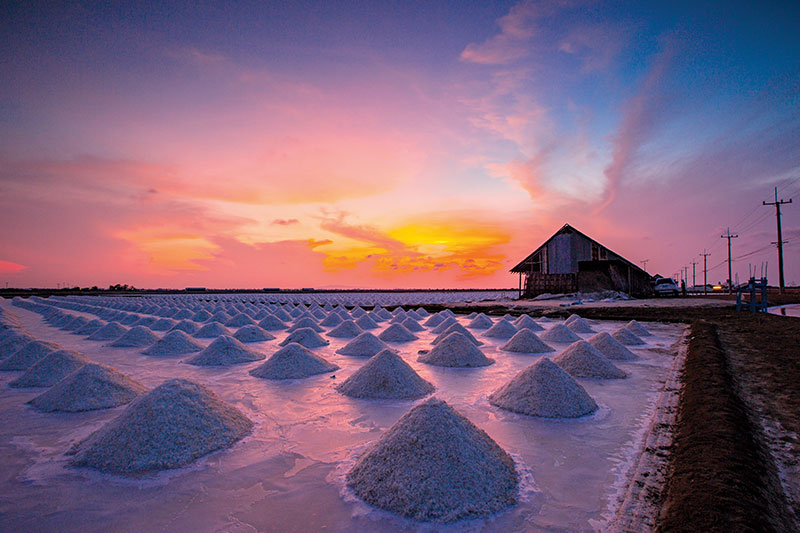
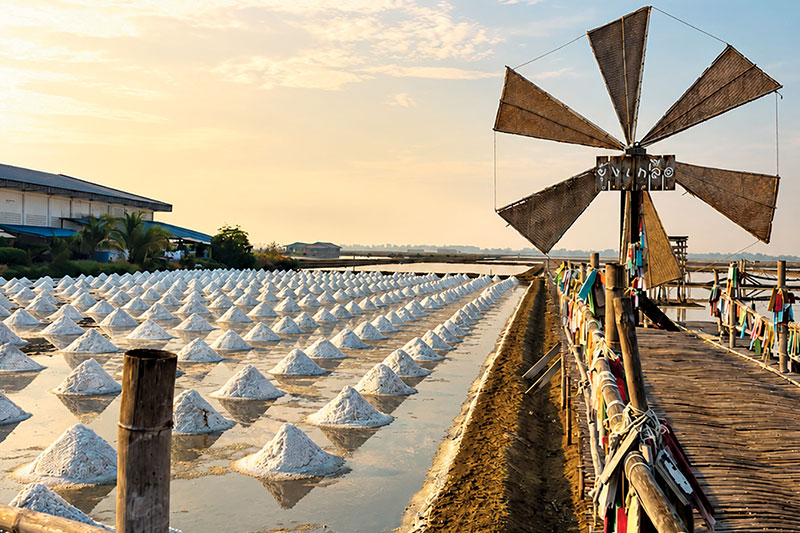
Twenty minutes along the road, the mangroves give way to fields of shimmering water. Ban Laem’s salt pans stretch towards the horizon like giant mirrors, reflecting drifting clouds and the white glare of the tropical sun. beside them, newly harvested crystals rise in brilliant mounds.
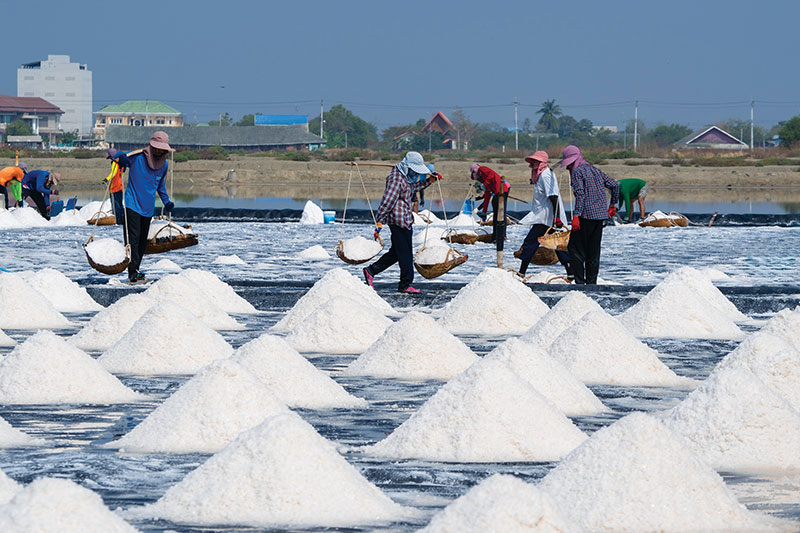
Through the car window, salt farmers trudge steadily across the shallow ponds, raking crystals into neat pyramids. Sandpipers and egrets forage nearby, sharing a landscape that is a lifeline for coastal birds as much as for the families who farm it.
Sea salt has been produced here for generations using little more than seawater, sunshine and patience. Before refrigeration transformed food preservation, these crystalline fields provided salt for preserving fish, seasoning family meals and supporting communities across the Upper Gulf.
Locals remain proud of their salt, which continues to play a central role in Phetchaburi’s cooking.
That relationship is best savoured at Yung Kluea Ban Laem, a small café-restaurant overlooking the salt ponds. From the terrace, visitors can watch farmers wade through the waters as white mounds gather along the banks.
Inside, the harvest finds its way straight onto the menu.
Salt Flower Coffee is infused with dok kluea, the delicate “salt flowers” that bloom on the surface of ponds before the main harvest begins. The coffee is free of any salty tang. Instead, the mineral edge softens the brew’s bitterness and draws out its natural sweetness.
Steamed green mussels arrive with a fiery dipping sauce, followed by prawns encased in a crust of locally harvested salt. The meal feels inseparable from the view beyond the terrace: ponds, sea, sun and toil brought together on a single table.
Giants of the Gulf
The road continues south to Laem Phak Bia, where the sea offers one of Thailand’s most memorable wildlife encounters.
Between September and December, schools of anchovies gather in the nutrient-rich coastal waters, drawing Bryde’s whales close to shore. This is one of the few places in Thailand where travellers can see these enormous marine mammals feeding in the wild.
Community-run whale- watching boats leave before dawn. As the village recedes and the Gulf opens ahead, the sea appears empty and featureless. The boat slows. Passengers scan the horizon, watching for a sudden disturbance in the water or a flock of seabirds gathering overhead.
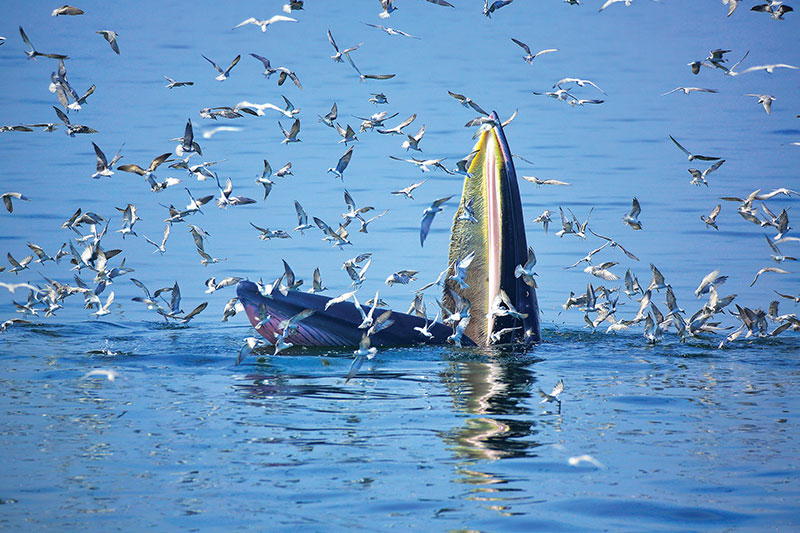
Then a guide points towards a cluster of terns wheeling low above the waves. Their frantic dives suggest movement below the surface.
A Dark Shadow Appears
Suddenly, a Bryde’s whale surges through the water, its enormous jaws opening to engulf a shoal of anchovies. Terns plunge through the commotion, snatching fleeing fish before the whale slips beneath the surface as quietly as it arrived. Stillness returns to the Gulf.
The encounter is brief, but it reveals the abundance sustained by these shallow waters. The same currents that nourish anchovies and whales also support fisheries, shellfish farms and communities along the coast.
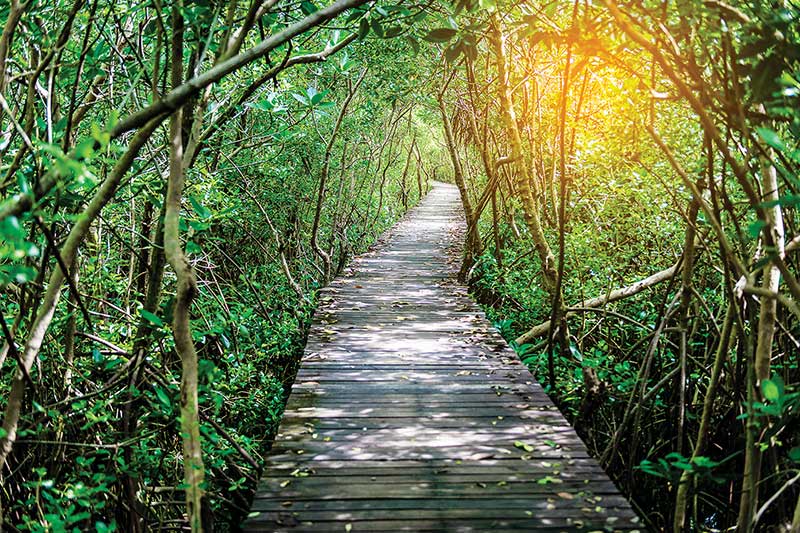
Back on shore, the ecosystem unfolds at a slower pace. The mudflats, salt marshes and mangrove forests around Laem Phak Bia form an important stopover on the East Asian-Australasian annual migration.
Each year, migratory shorebirds pause here during long journeys between their northern breeding grounds and wintering sanctuaries farther south. As fiddler crabs scatter across the exposed mud at low tide, egrets move patiently through the shallows and sandpipers gather in shifting flocks along the waterline.
The wetlands may appear quiet, but they are never empty.
A Royal Table
From Laem Phak Bia, the road turns inland towards Phetchaburi city, the provincial capital.
For centuries, the city prospered as a trading hub connecting central Siam with ports throughout East Asia. Merchants brought new ingredients and culinary techniques, while the royal court introduced another layer of influence.
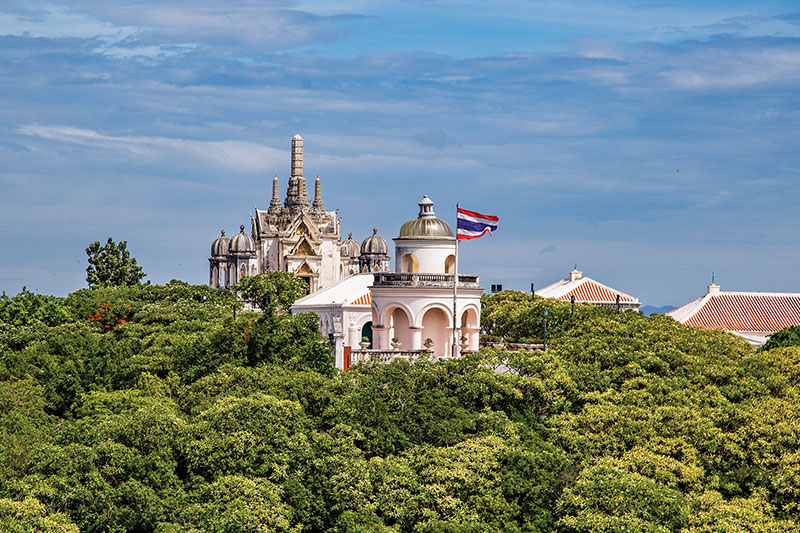
During the reign of King Mongkut (1851-1868), the construction of Phra Nakhon Khiri Palace established a royal presence on a hill above the city. Refined court recipes gradually mingled with local ingredients and cooking traditions, helping shape the cuisine for which Phetchaburi has become famous.
That heritage is showcased each morning around the Old Market beside the Phetchaburi River. Steam rises from noodle stalls while coffee brews inside weathered shophouses that have served the same neighbourhood for decades.
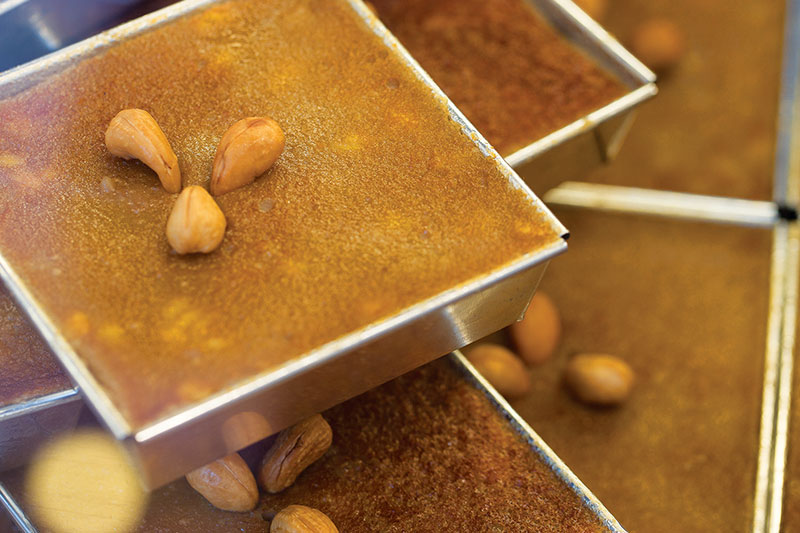
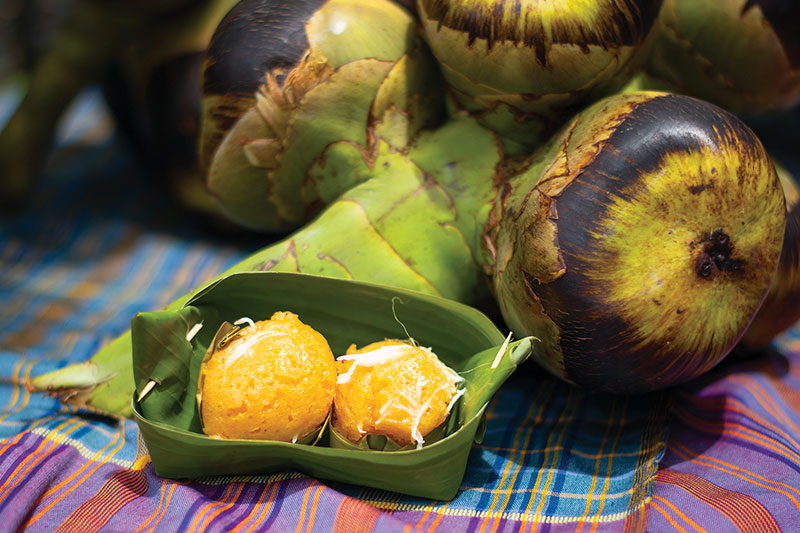
Nearby, trays of freshly baked khanom mor kaeng sit beside delicate alua and other traditional sweets. Their richness and fragrance are the root of Phetchaburi’s long- held reputation as one of Thailand’s great dessert capitals.
Yet the market is anything but a tourist honey trap. It remains part of the city’s daily life – a place where neighbours meet over breakfast, vendors call out familiar orders and family recipes are passed from one generation to the next.
Sweetness from the Palm
Beyond the city, the road continues into Ban Lat District, where tall toddy palms rise over rice fields and orchards.
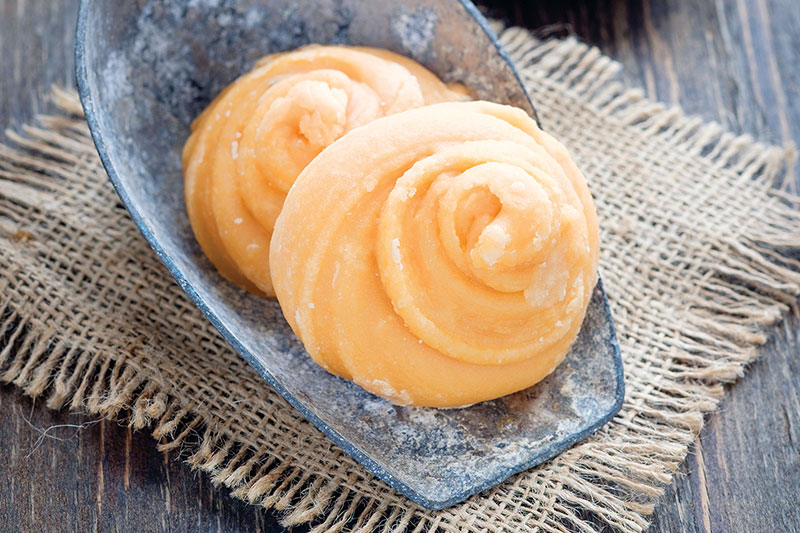
If salt defines Phetchaburi’s coastline, palm sugar sweetens the hinterland. Made from the sap of the toddy palm, it finds its way into both savoury dishes and desserts, from pad Thai and beef noodle soup to the dense, custard-like khanom mor kaeng.
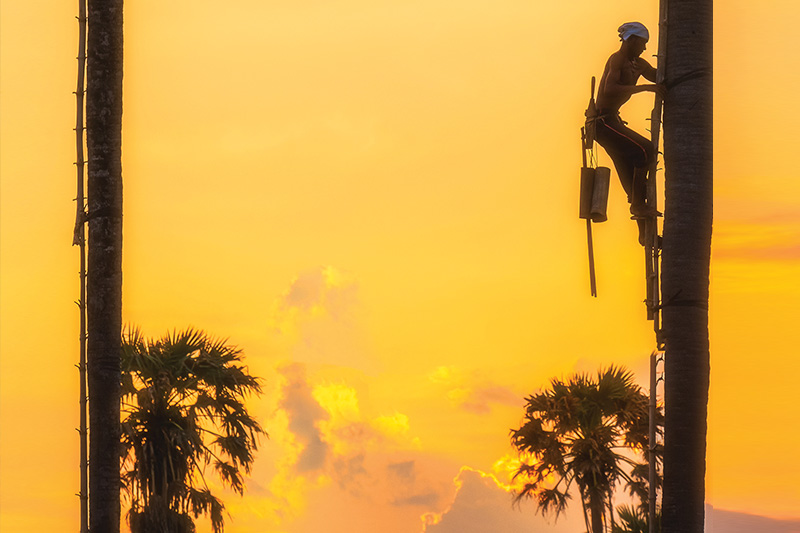
At Uncle Thanom Palm Orchard, visitors walk beneath rows of towering palms as experienced climbers demonstrate how the sap is collected. The work begins early, often before sunrise, when the flower stalks are cut and containers are secured high above the ground.
The fresh sap is pale, mildly sweet and perishable. To preserve it, workers simmer the liquid slowly over wood fires until it thickens and darkens into fragrant palm sugar, with notes of caramel and flowers.
The process is simple to describe but difficult to master. Heat must be controlled carefully, and the sugar stirred until it reaches the perfect texture – a method that has been refined over generations.
Visitors can taste the fresh sap, sample warm khanom tan and try palm fruit served in coconut milk. Yet desserts reveal only part of this ingredient’s versatility. Palm sugar also rounds out curries, noodle broths and dipping sauces, softening salt, spice and acid flavours without overwhelming them.
Like the fishermen of Bang Tabun and the salt farmers of Ban Laem, the toddy palm farmers preserve age-old skills rooted in a unique landscape.
The drive back to Bangkok takes little more than two hours, yet Phetchaburi feels a world away. Here, rivers meet the ocean, seawater becomes salt, and palm sap slowly transforms into sugar. The story of every meal starts with folk deeply connected to these landscapes – fishermen reading the tide, salt farmers watching the sun, and palm growers collecting sap before dawn.
By the time Bangkok’s skyline comes back into view, the journey’s flavours are easier to understand – deeply rooted in the sea and the soil.