
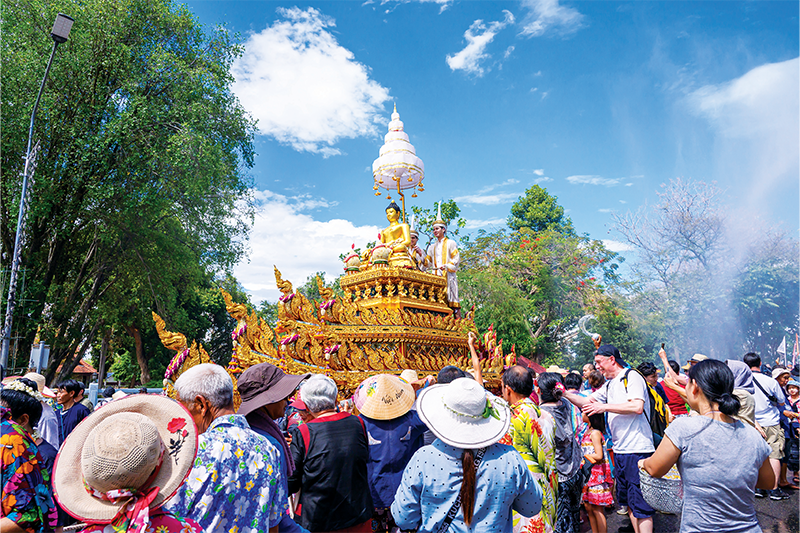
Songkran: Follow the Flow
From northern temples to southern islands, the traditional New Year festival showcases Thailand’s rich cultural diversity
Words: Sarita Urupongsa
Photos: Shutterstock
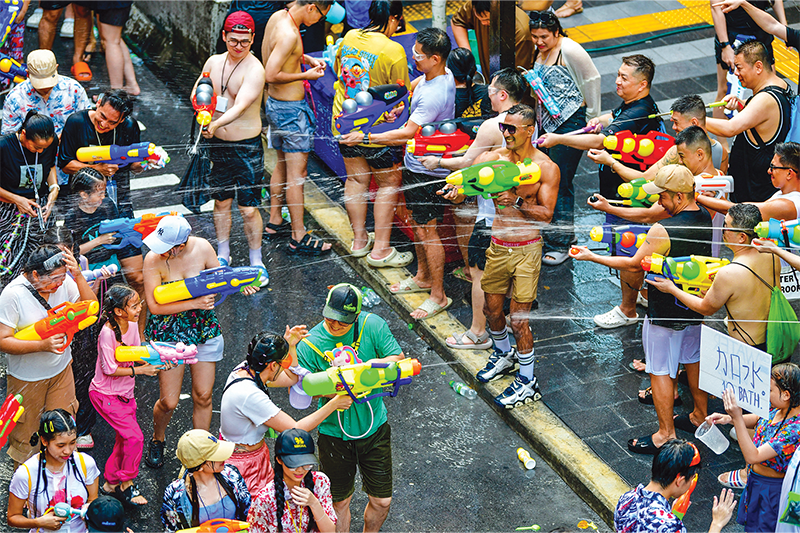
Each year in April, Thailand pauses, takes a deep breath, and plunges into rituals of renewal for the year ahead. But traditional new year Songkran celebrations are far more than just water battles and drenched city streets. Rooted in cosmology, gratitude and community, this festival is marked in many different ways across the country. From serene temple rituals to happy village games, Songkran reveals Thailand’s sacred and playful heart.
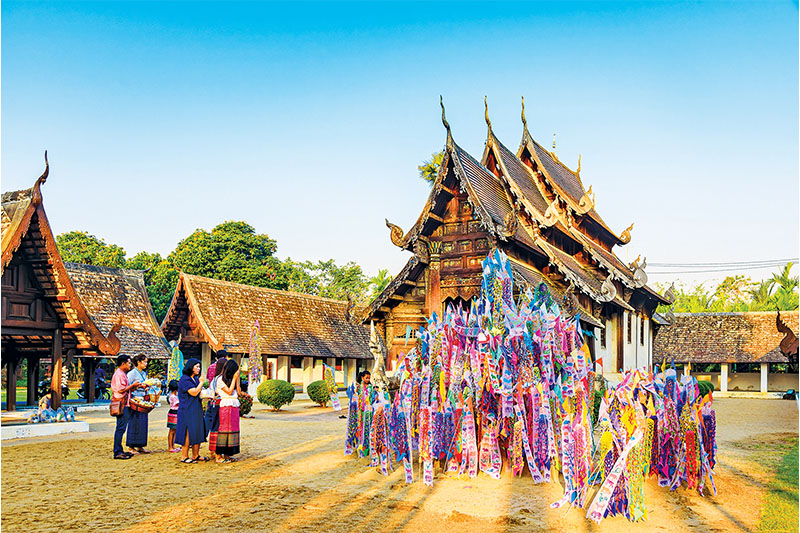
Songkran Everything You Need to Know
One of Thailand’s oldest and most cherished traditions, Songkran is a graceful yet joyful festival bathed in a spirit of thanksgiving, respect and togetherness. At its heart is a simple yet powerful element – water – used to cleanse, bless and bring people closer. Purification and playfulness go hand in hand, showing renewal can be both meaningful and merry.
Whether marked with quiet prayers, family reunions or laughter-filled splashing, the festival invites you to wash away old worries and welcome the year ahead with an open heart.
The word Songkran comes from “Sankranti”, the Sanskrit word for “stepping forward, or transitioning”. It also describes the Sun’s entry into Aries, a cosmic turning point marked by traditional New Year celebrations across South and Southeast Asia.
Songkran celebrations traditionally last three days. The first day is Maha Songkran, when the Sun shifts from Pisces to Aries. The second is known as Wan Nao or the day of transition. The final day is Wan Thaloeng Sok, or the start of the new year.
Songkran is celebrated every year on April 13-15, according to the royal Thai calendar. The traditional calendar once guided daily life in Thailand, marking auspicious dates and royal ceremonies, as well as seasonal rhythms and solar and lunar eclipses.
Besides ushering in a new year, Songkran carries deep social meaning. April 13 is National Elderly Day while April 14 marks Family Day, adding to the festival’s celebration of respect, kinship and family bonds.
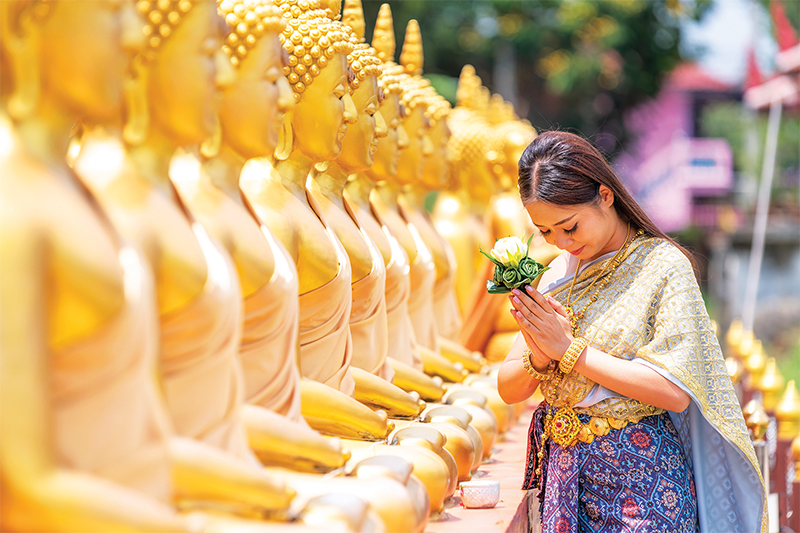
For many Thais, Songkran is a precious opportunity to return home and reconnect with loved ones. Water battles and clay- daubed faces may be iconic images of the festival, but gentler traditions flow in family homes and temples. Worshippers offer alms to monks, bathe Buddha images and sculpt sand pagodas –returning sand to temples in a ritual of renewal. Evenings bring a livelier atmosphere with theatrical performances and live music.
Songkran’s fame has spread worldwide, drawing visitors from every corner of the globe and earning recognition as Intangible Cultural Heritage by UNESCO on December 6, 2023.
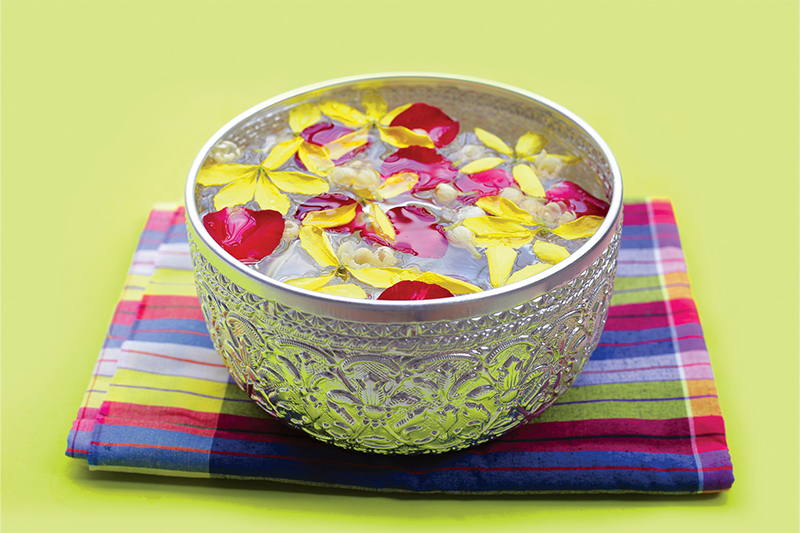
Unique Regional Flavours
Songkran unfolds differently across Thailand, each region boasting its own rituals rooted in local culture and and beliefs. In many places, ancient traditions offer a glimpse into the rhythms of an earlier time.
North: Lanna Traditions
The North celebrates Songkran as “Paweni Pi Mai” – the Lanna New Year. Its opening day, Sangkran Long, brings the white-clad spirits of Grandfather Sangkhan (Pu) and Grandmother Sangkhan (Ya) floating down rivers to carry misfortune away. To ward off bad luck, villagers fire guns or set off firecrackers, while homes are spring-cleaned and Buddha statues anointed with turmeric- and Sompoi (soap pod)-infused water.
Next comes Wan Nao or the “day of restraint”, when quarrels or harsh words should be avoided. The morning is devoted to preparing food and offerings for merit- making the following day. In the afternoon, villagers sculpt sand pagodas at temples, decorating them with colourful “Tung” paper banners.
The third and most auspicious day is Wan Phaya Wan, the start of the new year. People rise early to offer alms to monks and prepare Than Khan Khao, or food for ancestors. Family members pour scented water on the hands of their elders in the “Dam Hua” ritual of forgiveness and blessing.
The final evening is spent watching traditional performances and playing traditional games like Sabah – bean tossing.
Northeast: Buddhism Flows
Songkran in Isaan is traditionally known as “Bun Songkran” or “Bun Duean Haa” – merit-making in the fifth lunar month. Deeply rooted in Buddhist beliefs, the Northeast festival balances celebration with spiritual renewal.
It begins with Mue Songkran Long/ Phaai, the day the old year passes or is defeated, when locals prepare offerings and sweep their homes to welcome the new year.
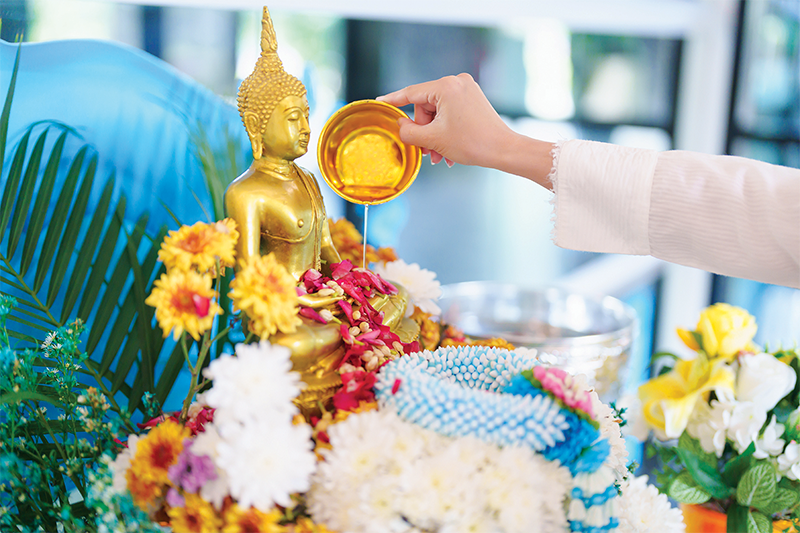
On day two, Mue Nao, villagers adorned in their finest clothes visit temples to make merit and offer alms. Senior monks give blessings, Buddha images are gently washed with ceremonial water, and youngsters pour fragrant water on their seniors’ hands. Listen out for the Bai Sri Su Khwan chanting ritual, held to restore balance and good fortune by honouring the 32 guardian spirits. The mood lightens as the day unfolds, with joyous water- splashing and games, before the evening brings communities together for sermons and chanting.
The finale is Mue Songkran Khuen, the day the New Year rises, when villagers gather to play games and watch Mor Lam and Ram Trut dance performances at temples to appease spirits and dispel misfortune.
Songkran festivities can last anywhere from a week to two weeks in the Northeast, depending on when family members have to return to work in the cities.
Central Thailand: Rituals of Gratutude
Songkran in the heartlands features its own unique rituals of bathing Buddha statues, honouring elders and making merit. Celebrations in Bangkok centre on the royal field of Sanam Luang, where worshippers bathe the revered Phra Buddha Sihing statue.
Meanwhile, ancient Songkran rituals are preserved by ethnic Mon communities in provinces around Bangkok. In Ban Phaeo (Samut Sakhon) and Pak Kret (Nonthaburi), offerings are made to the Hindu deity Thao Kabil Brahma and the Goddess Nang Songkran. Regional flavours abound, from Khao Chae (rice in iced water) and colourful flag parades to the propping of sacred bodhi trees, carrying sand to temples, and playing traditional games.
Phra Pradaeng: Living Mon Heritage
On Bangkok’s “Green Lung” of Phra Pradaeng the Mon community preserves centuries-old traditions with its Songkran Pak Lat celebrations. Uniquely, rituals here last a full seven to 10 days and date back to the reign of King Rama II (1809-1824).
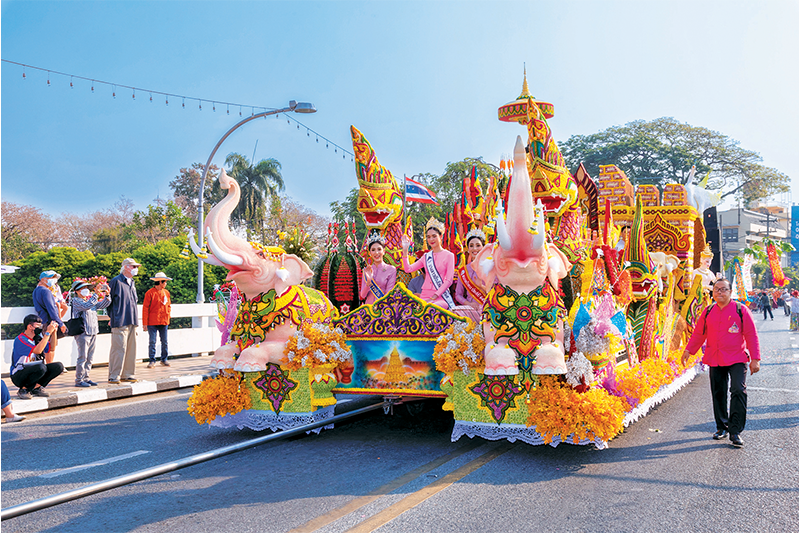
Phra Pradaeng’s Songkran begins with spring cleaning to invite good luck. The neighbourhood then bursts into colour with floral floats and Nang Songkran parades, as young women and men in traditional attire dance to the rhythm of Mon long drums.
Another cherished tradition is Khanom Kuan Ha Ko, better known as Kalamae – Thai toffee. Neighbours gather to stir large pots of the sticky sweet made from glutinous rice, coconut sugar and coconut milk. Once ready, the thick, glossy candy is cut into pieces and shared among families, friends and monks in a spirit of unity and generosity.
The South: Reflection and Renewal
In the South, Songkran is known as Wan Wang, the “day of rest”, when daily habits are set aside in favour of reflection and renewal.
On the first day, locals bid farewell to the guardian spirit of the old year while banishing misfortune by launching tiny rafts in purification rituals known as Loi Khroh or Loi Phae. Revered Buddha statues are also bathed to strengthen spiritual bonds for the year ahead. Unique to the South is “Tham Khwan Khao Yai” – a temple blessing ceremony featuring sheaves of rice to ensure a bountiful harvest and prosperity in the 12 months ahead.
On the third day, Wan Benja, people welcome the guardian of the new year by wearing pristine outfits symbolising renewal and holding the Jaturamuk ceremony to reinvigorate ties with elders.
Len Wang, or playing during rest, brings out the playful side of southern Songkran, with Manora dance performances, Nang Talung shadow puppetry and the Chuea Ya Hong ritual invoking and honouring ancestral spirits.