
Never Judge a Fruit by its Cover
Don’t be fooled by its rough and ugly appearance – the custard apple boasts an irresistibly sweet and fragrant heart
Words: Sarita Urupongsa
Photo: Shutterstock
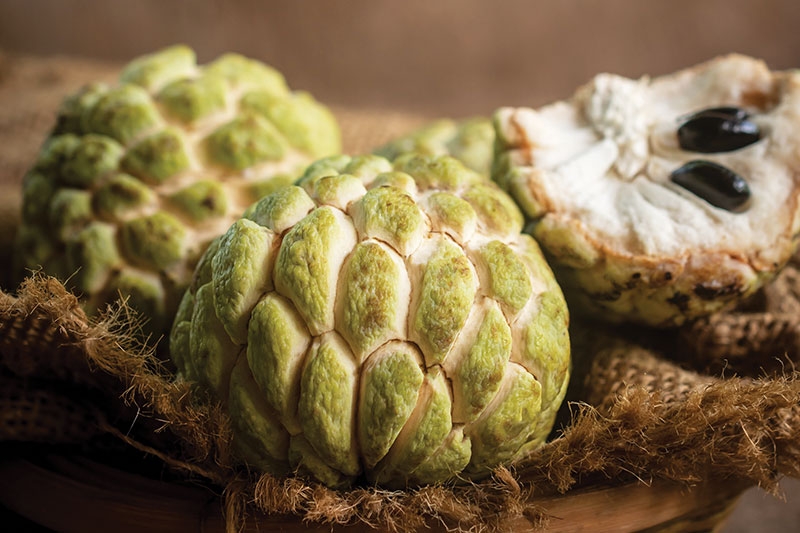
Nicknamed the “world’s ugliest fruit”, the custard apple’s grotesque appearance can be enough to deter even the most adventurous food lover. But don’t let the exterior fool you: these lumpy-bumpy green spheres are among the most delicious items in nature’s dessert buffet.
Known locally in Thailand as Noina, the custard apple breaks open to reveal sweet, buttery, and richly fragrant flesh.
Originally native to Central and South America, this tropical gem was carried across the sea to Thailand during the Ayutthaya period. Today, it is a cherished fixture of local orchards, supplying Thai markets with two popular varieties: the traditional Noina Fai (cotton sugar apple) and Noina Nang.
Noina Fai is prized for its thin skin, deep ridges and intensely sweet, pillow-soft flesh. In contrast, the Noina Nang features a smoother, thicker rind and a firmer, chewier flesh with a subtly refreshing tart flavour.
While many prefer to simply scoop the custard-like flesh straight from the skin with a spoon, it is also served in elegant wedges.
The Noina Nang variety, meanwhile, is firm and holds its shape beautifully in rich, coconut milk-based desserts. It is also delicious paired with shaved ice, served over warm sticky rice, or churned into homemade ice cream.
But this fruit isn’t just for dessert. Its delicate sweetness also shines in savoury dishes like Yum Noina – a piquant salad where the fruit is tossed with blanched shrimp and roasted peanuts in a spicy lime dressing. It is this exciting play of textures and flavours that makes the custard apple a true icon of Thai food.