
Blooming Beyond the Mud
A timeless symbol of purity, the lotus reminds us that beauty can emerge from even the murkiest of waters
Words: Sarita Urupongsa
Photos: Shutterstock
Graceful and serene, the lotus has long been woven into the cultural and spiritual fabric of Thailand. Rising unblemished from muddy waters, it serves as a powerful symbol of resilience, purity and enlightenment in Buddhist belief. From ancient inscriptions to modern-day rituals, the lotus continues to inspire art, faith and everyday life. This is a tale of beauty, but also of transformation and quiet strength.
The Lotus and Buddhism
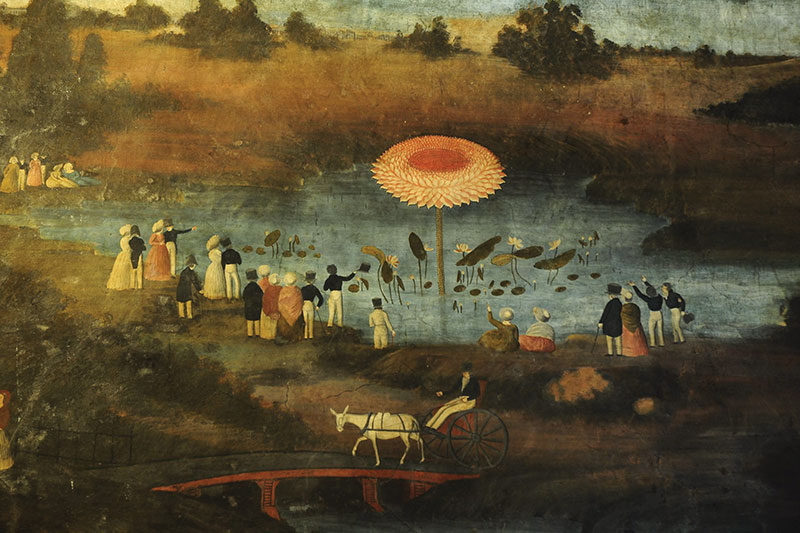
The lotus has held a quiet yet profound place in Thai hearts for centuries. Its story stretches back more than 600 years to ancient stone inscriptions in the reign of King Ramkhamhaeng the Great. These early records mention various types of lotus, revealing the flower’s deep roots in Thai life. Over time, the lotus has bloomed across Thai literature, temple murals, and artistic traditions, becoming both a cultural and spiritual emblem.
Most Thais first encounter the lotus symbol in Buddhist teachings at school. One story tells of how the future Buddha, Siddhartha Gautama, took seven steps forward at birth, and with each step a lotus flower blossomed beneath his feet. More than a myth, this image reflects a central idea in Buddhism. A lotus that rises above the water’s surface and blooms in the sunlight symbolises a being who has transcended suffering, becoming enlightened: awake, aware, and joyful in the truth of nature.
Because of this, the lotus has come to symbolise spiritual awakening and is often regarded as the unofficial flower of Buddhism. In Thailand, devotees commonly offer lotus flowers to monks or Buddha images, sometimes pairing them with jasmine garlands in a delicate blend of fragrance and faith.
Beyond its spiritual beauty, the lotus symbolises resilience. Growing from murky mud beneath still waters, it emerges as blossoms of remarkable purity and grace. This transformation from mud to magnificence serves as a metaphor for inner strength and spiritual growth. It suggests that even from difficult or impure conditions, one can rise above and achieve clarity and beauty.
The lotus has also inspired artists for beyond Thailand, appearing across the world in paintings, poetry and designs. Renowned Chinese master Zhang Daqian depicted the flowers in his expressive ink works, capturing their elegance and vitality. Meanwhile, in Europe, lotus motifs shape everything from Art Deco lamps and jewellery to Art Nouveau furnishings.
Varieties of Grace
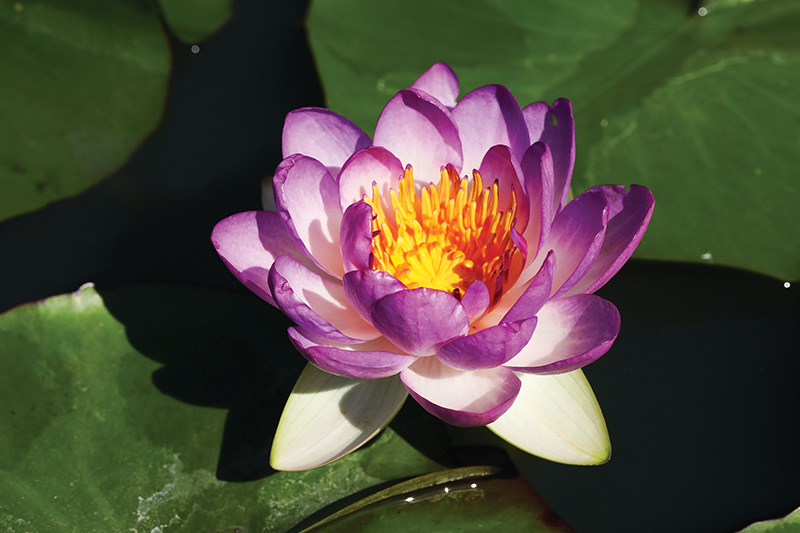
Known as the “queen of aquatic plants”, the lotus blooms across Asia and into northern Australia, typically in shade of white and pink. Its flower open in the morning light throughout the year, offering a daily reminder of renewal.
In Thailand, “lotus” refers to two distinct plant families. The first is the sacred lotus, known locally as Bua Luang. Within this group are four distinct types: the pink, single-petaled Patum or sacred lotus; the white, lightly layered Buntarik; the richly layered pink Sattabongkot; and the double-petaled white Sattabut. Each is subtly different in form, yet all share the same symbolic grace.
The second group is the water lily, or Bua Sai. These soft-stemmed beauties anchor their roots in underwater soil. Thailand boasts a rich variety of water lilies, with tropical day-bloomers like Bua Phan, Bua Phuean, and Bua Khab sharing ponds with mysterious night-blooming varieties. Botanical enthusiasts will also appreciate more exotic species like the giant Victoria water lily, tropical Nymphaea, and Western hybrids.
Beyond temples and ponds, the lotus blooms in all corners of Thai daily life. Households and even restaurants cultivate lotus plants in the belief that they bring good fortune. Traditionally, the long, intertwining stems of the lotus are seen as symbols of family bonds, representing love, care, and an enduring connection.
A Flower of Many Uses
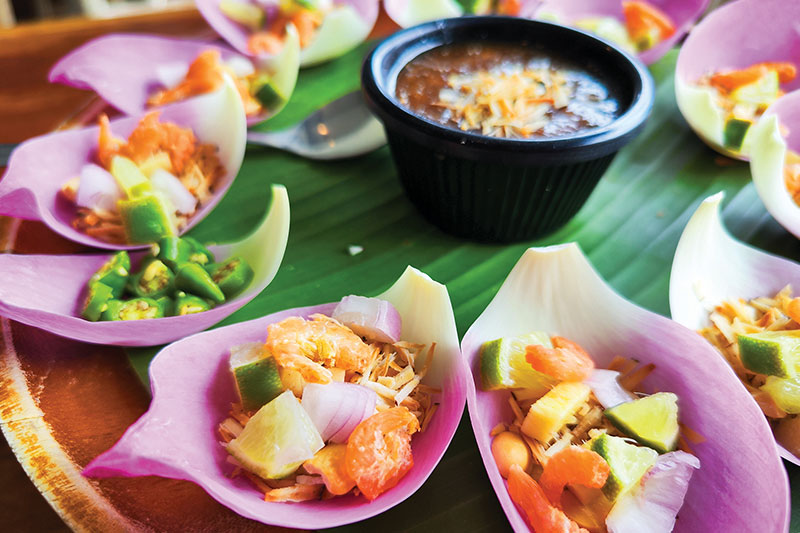
The lotus is also remarkably versatile, with a wide range of culinary and medicinal uses. While the flower is often used in religious offerings, the petals are incorporated in dishes like Miang Kham to create the Miang Kleep Bua variation. Lotus stems and shoots are also prized ingredients, appearing in sour curries, spicy salads with shrimp, and herbal soups like Gaeng Liang.
Lotus stamens and embryos – the tiny green cores of the seed – are used in traditional Thai and Chinese medicine. The seeds can be eaten fresh for a slightly sweet and pleasantly crunchy snack, or cooked and added to desserts and savoury dishes. Additionally, lotus root is known as a cooling remedy for fatigue and coughs, sipped in refreshing drinks or munched as a crispy fried snack. Even the leaves are useful, most famously to wrap rice dishes in their subtle, earthy aroma or served fresh with chili dips.
The Four Lotuses
In Buddhist teachings, the lotus serves as a metaphor for human spiritual readiness. People are compared to four kinds of lotus:
- Rising above the water: Those with sharp insight who bloom instantly on receiving the light of truth.
- Floating on the surface: Those ready to bloom the next day after receiving guidance.
- Submerged but still growing: Those who require time, effort, and practice to achieve insight.
- Buried in the mud: Those so overwhelmed by ignorance that enlightenment remains out of reach, like a lotus that never rises above the murky depths.
Chasing Lotus Landscapes
For travellers seeking lotus encounters in natural splendour, Thailand offers several breathtaking destinations.
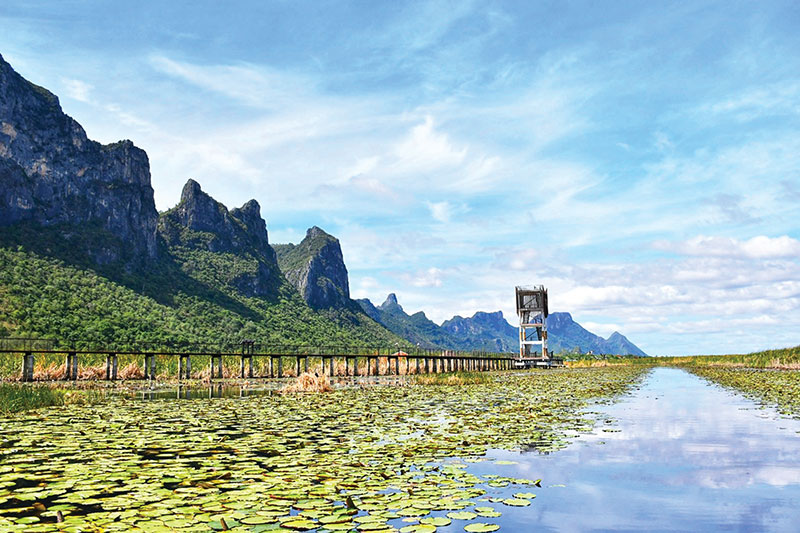
Bueng Bua Nature Education Centre, Prachuap Khiri Khan
Nestled between the Khao Sam Roi Yot mountains and the sea, this 36.8-square-kilometre wetland is home to the sacred lotus Bua Phuean, water lilies and a rich variety of waterbirds. Explore via the kilometre-long wooden boardwalk featuring resting pavilions and a birdwatchign tower with 360-degree panoramic views. Signboards offer insights into the surrounding ecosystem and its biodiversity. Local villagers also offer boat rides – 500 baht for four passengers – along the waterways of blooming lotus.
Open daily, 8am-5pm, Khao Sam Roi Yot National Park, Moo 2, Khao Daeng, Kui Buri District, Prachuap Khiri Khan; www.facebook.com/KhaosamroiyotNationalPark
Red Lotus Lake Kumphawapi, Udon Thani
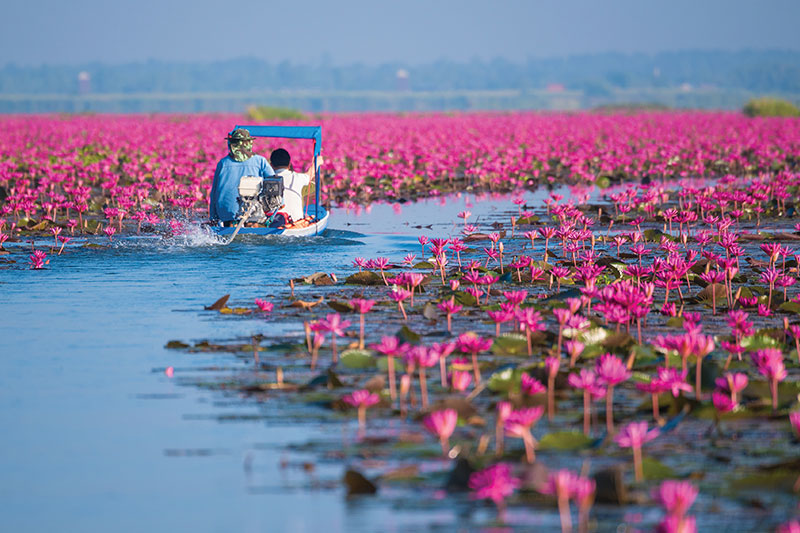
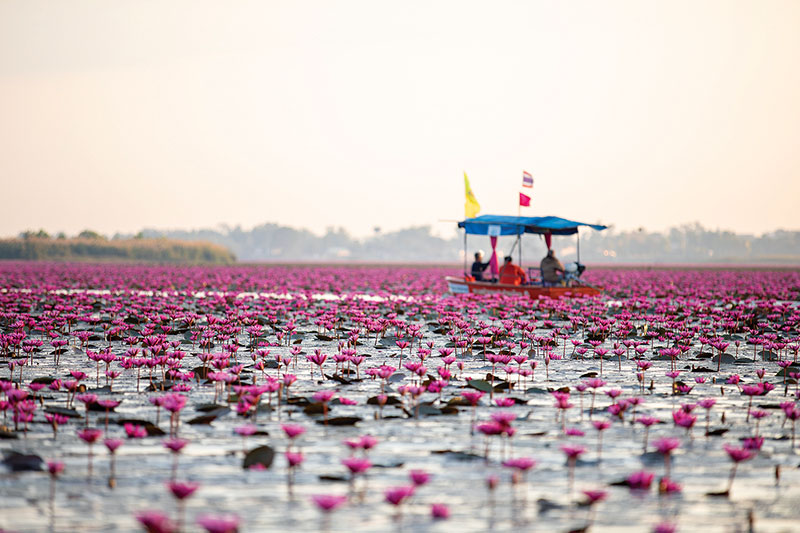
The famed Red Lotus Lake of Nong Han transforms into a sea of pink during the cool season. Spanning 22,000 acres in northeastern Thailand, this freshwater marvel is one of the country’s most celebrated natural attractions. Its beauty has even earned international recognition, ranking among the world’s most unusual lakes. Several piers offer long-tail boat rides for two passengers or larger covered vessels for up to six. Boat rides typically last between 60 and 90 minutes, offering tranquil journeys through this breathtaking floral landscape.
Open daily, with blooms most visible from November to February. Best time to visit is between 6am and 10am. Nong Han Lake, Chiang Wae Sub-District, Kumphawapi District, Udon Thani; www. facebook.com/tatudon
Kasetsart University Lotus and Water Lily Park, Sakon Nakhon
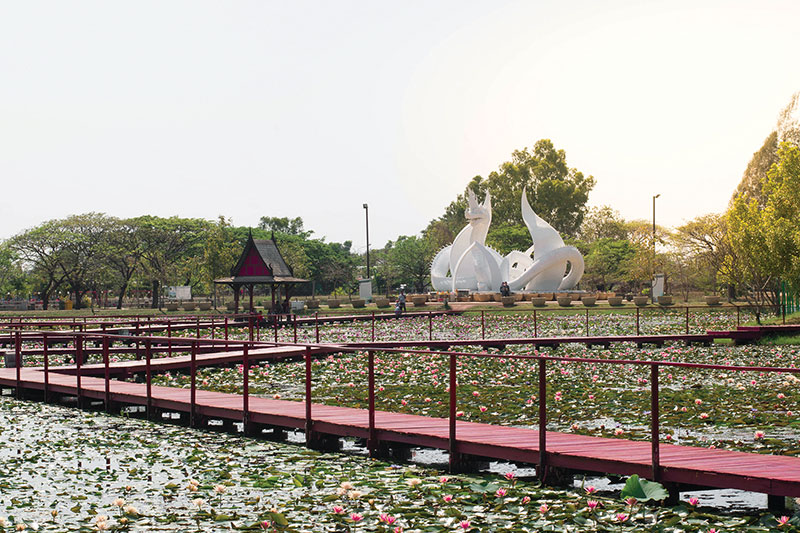
Spanning more than 50 rai, this vast lotus sanctuary is considered the largest of its kind in Thailand. What began as a natural wetland has been transformed by Kasetsart Univeristy into a research site boasting a diverse range of Thai and international lotus species. The White Naga – a majestic, gleaming sculpture rising over 10 metres high – offers good fortune, protection, and peace to visitors.
Open Monday to Friday 8.30am-4.30pm and Saturday-Sunday 8.30am-6pm. For peak bloom-viewing, visit between 8.30am and 1pm. Kasetsart University Chalermphrakiat Sakon Nakhon Province Campus, Chiang Khruea Sub-District, Mueang Sakon Nakhon District, Sakon Nakhon; www.ku.ac.th