
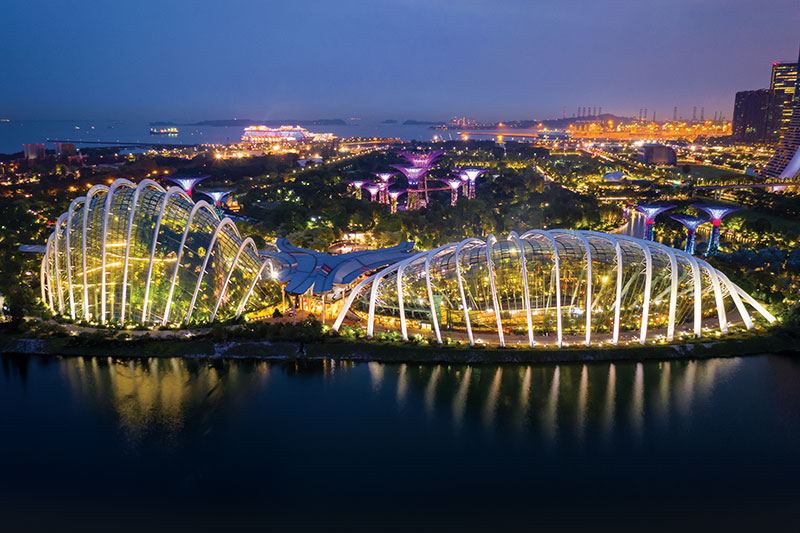
Four Hearts, One City
Jouney through the Lion City’s ethnic enclaves where the past isn’t just remembered – it’s simmered, stirred and shared every day
Words Chutima Limpasurat
Photos Chutima Limpasurat & Shutterstock
Singapore is famed for its precision – clean lines, efficient transport and ambitious architecture. Yet beneath this polished surface lies a bubbling hotpot of different cultures. For a true taste of the Lion City, you have to step out of air-conditioned luxury and into the humid rhythm of its neighbourhoods, where heritage spills out on every street corner.
Join us for a stroll through four chambers of Singapore’s heart – Katong, Chinatown, Little India, and Kampong Glam – where every beat reveals a city that doesn’t just celebrate diversity but lives it.
Katong: Kaya Toast and Colourful Shophouses
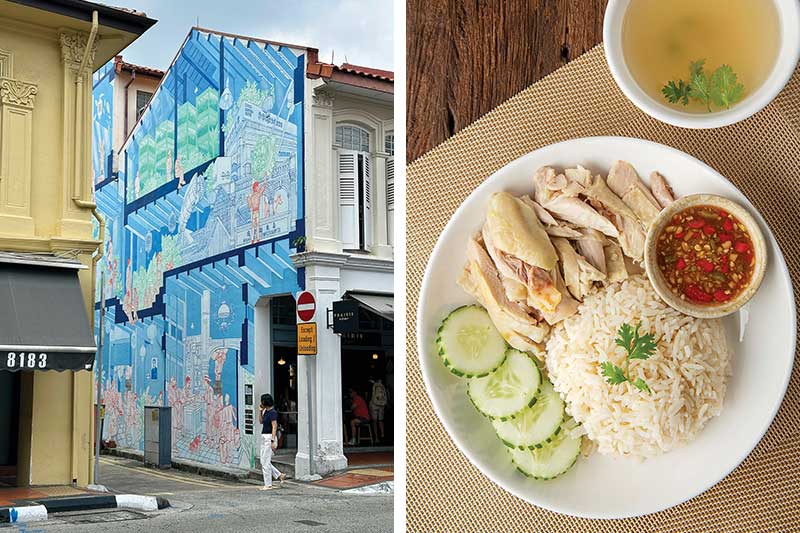
Along East Coast Road, pastel- coloured shophouses line the pavement like pages from a storybook. Here we are at the heart of Peranakan culture – a unique blend of Chinese-Malay heritage in one of Singapore’s most charming neighbourhoods.
Chin Mee Chin Confectionery hunkers on a quiet street corner, a time capsule of old Singapore. Inside, the aroma of kaya – coconut jam simmered with eggs and pandan – infuses the air. Locals gather over kopi (strong coffee) and thick slices of kaya-slathered toast in a ritual that has remained unchanged for generations. Breakfast here is no mere meal, but a moment to connect with Merlion history.
Outside, Katong unfolds in layers. Traditional Peranakan shophouses with their intricate tiles and wooden shutters stand alongside contemporary cafés, wine bars and designer boutiques. The streets around Peranakan Museum are a living exhibit, historic facades animated by daily bustle.
Food here tells the story of Singapore as vividly as the architecture. Beyond classic Peranakan dishes, Katong is the place to try Singapore’s beloved staple: Hainanese chicken rice. Found everywhere from holes- in-the-wall to high-class restaurants, this dish of poached chicken with fragrant rice, broth and a trio of sauces reveals the city’s different Chinese and Southeast Asian layers. Simple yet precise, it captures Singapore’s culinary philosophy: respect tradition but refine it.
In Katong, culture unfolds in simple moments: a shopkeeper warmly greeting a regular, or a cook’s quiet pride in her family recipe. Beneath the current of daily life, this is a neighbourhood with soul.
Chinatown: Where Dynasties Meet Divine Flavours
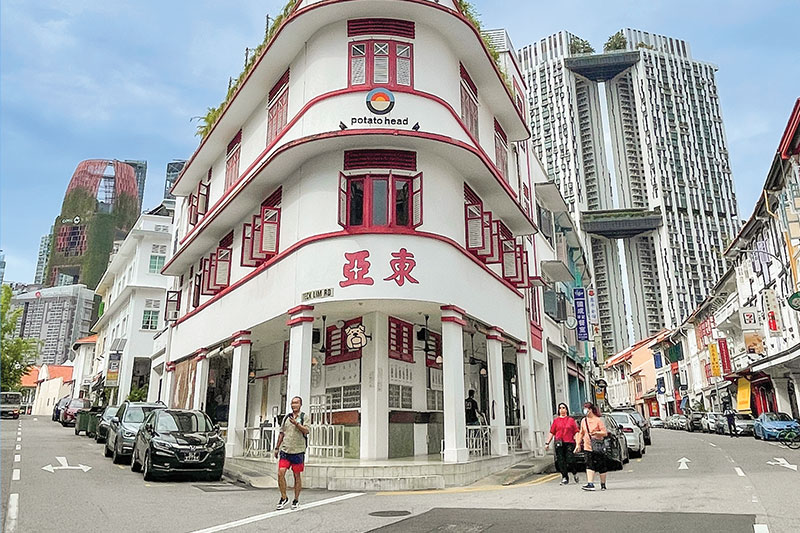
Generations-old trade collides with modern trends in the dense, energetic streets of Chinatown.
To get a flavour, dive into the People’s Park Complex, a community hub buzzing with travel agencies and traditional Chinese medicine dispensaries. At its legendary hawker centre, Singapore’s unique culinary character shines through in a moving feast of different dishes.
Hawker centres reveal the secret of Singapore’s cultural melting pot. Chinese, Malay, Indian and Eurasian food stalls sit side by side, as diners pile their tables high with noodles, samosas, Malay satay, sizzling kebabs, and more. This is global dining at its finest, where the world’s cuisines are shared, adapted and enjoyed.
But amid the sizzle of woks and clatter of pots, one dish deserves special mention: chai tow kway, or fried carrot cake. Not a shred of carrot goes into this local delicacy, which instead features fresh and preserved white radish stir-fried with eggs and served with spicy or sweet sauce.
Chicken rice is another true taste of Singapore, found all across Chinatown in a rich variety of recipes. Some stalls specialise in silky, delicately flavoured poached chicken, while at others the meat comes roasted with a crispy skin. But the simple sensational formula never changes: rice infused with garlic and chicken fat, accompanied by a tasty broth and zesty sauces. In a city defined by mind-blowing diversity, chicken rice is comfort food: familiar, accessible and universally loved.
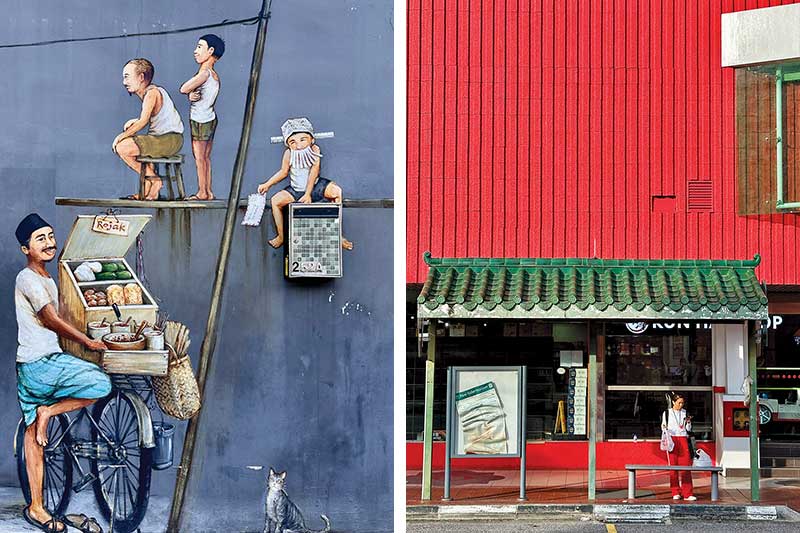
Chinatown is also a living artwork. Murals and street art tell stories of early migration,
daily life and cultural resilience, bridging history with contemporary expression and adding another sensory layer to the neighbourhood.
As the sun sinks, the energy shifts towards Lau Pa Sat, the famous “Old Market” hawker centre housed in a National Monument. Beneath its 130-year-old Victorian iron beams, visitors embark on a culinary journey through more than 80 stalls offering local specialities, fusion food and international dishes. At nightfall, the experience flows outdoors into Satay Street – charcoal grills are lit, smoke fills the air and skewers of marinated meat are cooked over open flames. Office workers, tourists and locals gather at communal tables, sharing flavours and gossip in a vivid expression of Singapore’s casual dining culture.
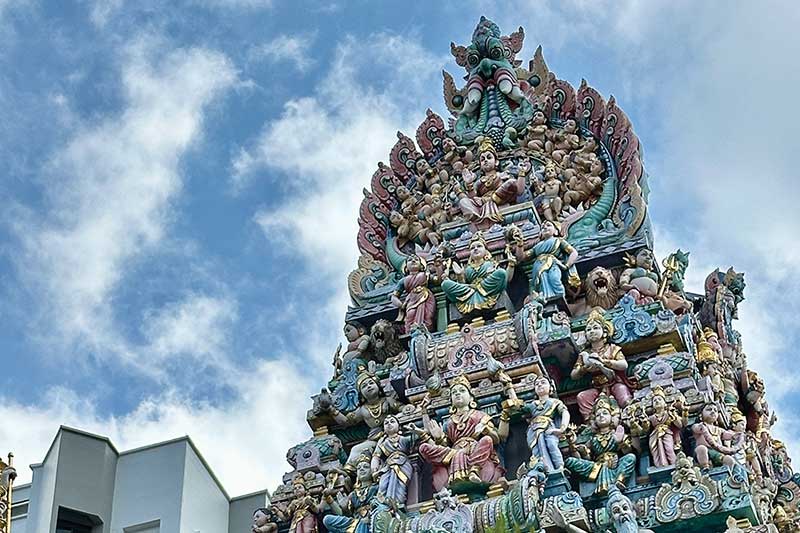
Little India: Sensory Overload
A whirl of colour, sounds, scents and movement, Little India is saturated in the energy of the subcontinent.
The eye of this kaleidoscope is Tekka Centre, where a wet market and food stalls anchor daily life. The stage is set at dawn, as vendors lay out eye-popping displays of fresh veg, spices and flowers. The spectacle is crowned by stalls of garlands: bright marigolds threaded with sweet-smelling jasmine for temples, rituals or beautiful household decorations.
Food here is bold, aromatic and rooted in Indian traditions. From meals served on banana leaf to freshly made roti prata, each dish unveils layers of spicy history. Diners frequently pair Indian dishes with a drink or dessert from another cuisine – another twist in the city’s culinary culture.
Just a few steps away is the House of Tan Teng Nia, one of the area’s last remaining Chinese villas. Painted in vivid colours, it is another striking reminder of Singapore’s diverse roots – where communities have intertwined for decades.
Nearby, the 24-hour Mustafa Centre is less a shopping mall than a bustling bazaar overspilling with everything from gold jewellery to daily essentials. The aisles
are dense and the selection overwhelming, mirroring what makes Singapore tick: rich abundance, easy accessibility and the collision of global and local influences.
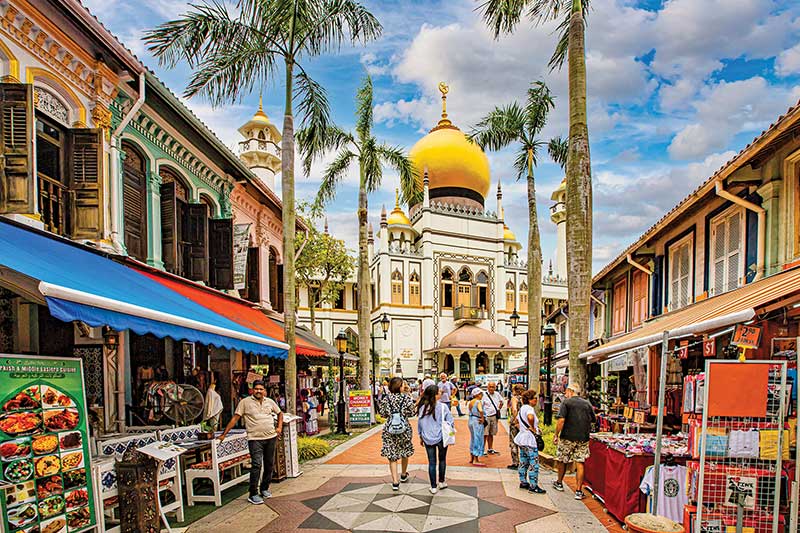
Kampong Glam: Heritage with Edge
Kampong Glam is the district where Malay heritage meets cutting-edge trends.
Its beating heart is the majestic Sultan Mosque, whose golden dome rises over the rooftops as the neighbourhood’s spiritual anchor. Gathered in its shadow, textile shops and fragrant Malay restaurants satisfy the body as much as the soul.
Dining in Kampong Glam unpeels another layer of Singapore’s diversity. Malay and Middle Eastern influences shape menus of rich stews, grilled meats, and aromatic rice dishes. But the wider world of drinks and desserts opens to diners in this district’s all-inclusive culinary scene.
Just around the corner is Haji Lane, now one of Singapore’s most sophisticated enclaves. Boutiques, independent labels, and vibrant murals line this narrow street, attracting visitors from all around the world.
Here, heritage is not preserved under glass but reshaped in the daily flow. Colonial buildings find new life as contemporary cafés and traditional motifs are reshaped into cutting-edge designs. Even the food has transformed, as traditional recipes meet global innovations to create a “Mod-Sin” dining scene.
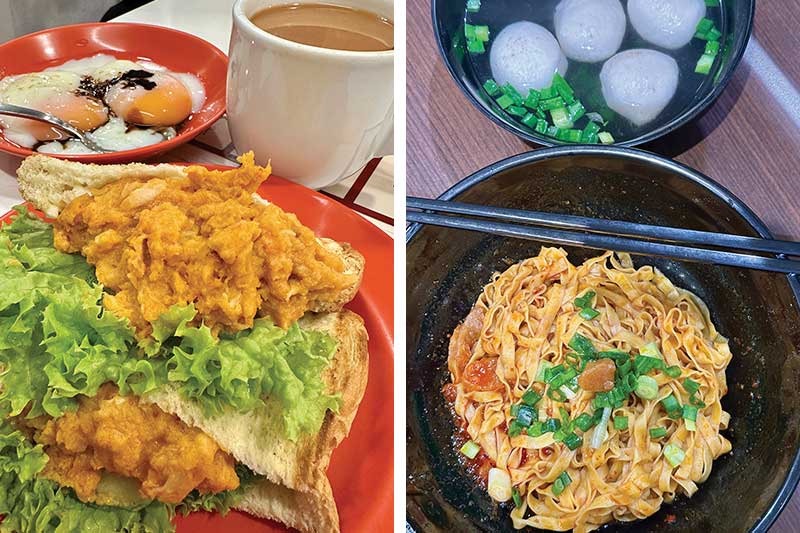
Hawker Culture: The Great Dining Democracy
One thread binds Singapore’s vibrant tapestry of neighbourhoods: the hawker centre. These aren’t just places to eat, they are the pulsing heart of the city’s cultural identity.
Each of these food bazaars sizzles with the city’s essence: succulent Chinese roast meats, fragrant Malay nasi lemak, and rich Indian curries collide with Peranakan flavours, Arabic aromas and European delicacies. Here, there is no hierarchy and no separation, only a shared appreciation of good food.
Hawker centres pulse with a changing daily rhythm: the morning hustle, the frantic lunch rush, and the laid-back atmosphere of evening gatherings. Tables are shared, conversations overlap, and strangers become part of the same communal story.
Here, Singapore’s diversity is not just a spectacle to be admired, but a living culture to dive into.
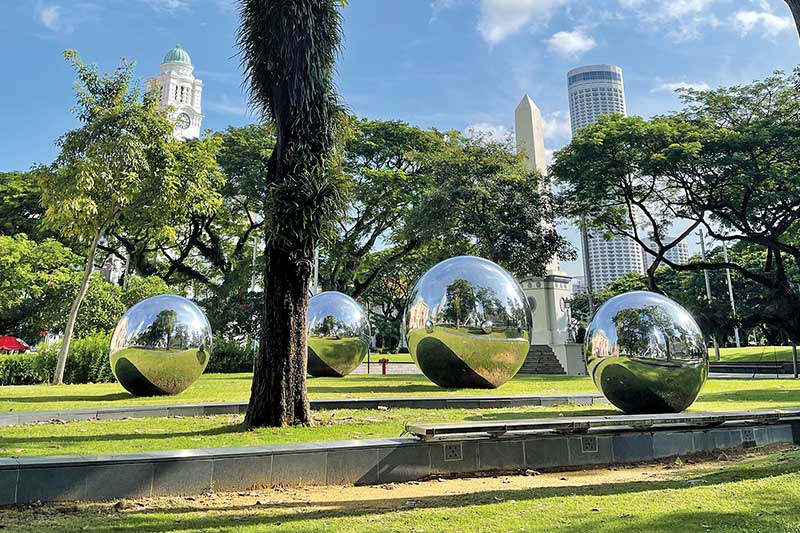
Orchard Road: Where Cultures Meet
Singapore’s iconic boulevard of gleaming malls and international brands seems a world apart from local neighbourhoods at first glance – yet this is where the city’s many threads gather in one tapestry.
Here, families from Katong and office workers from Chinatown mingle with shoppers from Little India and trend-setting creatives from Kampong Glam.
Dining options match this melting pot. From refined restaurants to casual eateries, the diversity of Singapore’s culinary landscape is on full display.
Beyond the gleaming retail façade, Orchard reflects the essence of Singapore: a city
that thrives on diversity, where different cultures don’t merely coexist but flow together in a rich and restless current of creativity.