
Muay Thai – From Ancient Battlefields to Global Stage
Once a survival skill for Siamese soldiers, this martial art has grown into a global phenomenon that attracts countless curious visitors to gyms and rings in Thailand
Words: Phoowadon Duangmee
Photos: Shutterstock
Thailand marks Muay Thai Day on February 6 – when gyms across the country overflow with the sound of drums, the scent of incense and deep reverence as fighters bow low to honour their Khru Muay (boxing teachers). The day celebrates a martial art that has travelled from the battlefields of old Siam to become one of the world’s most renowned fighting traditions and a living emblem of Thai identity.
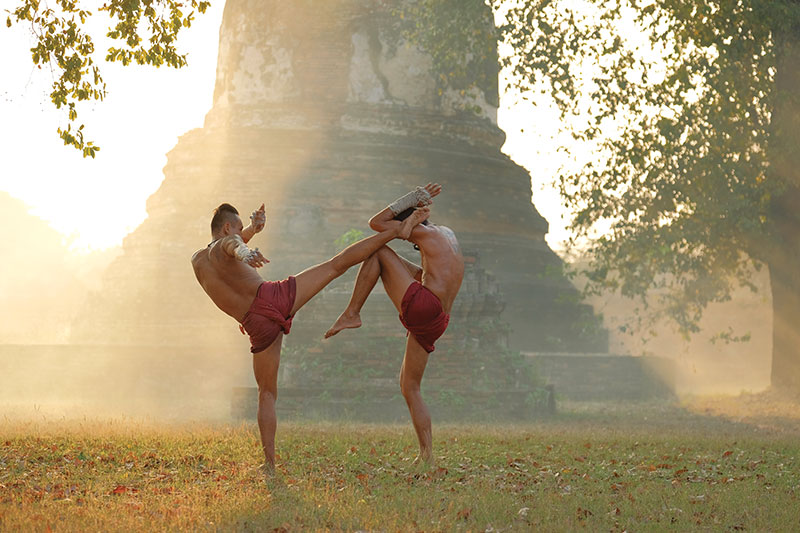
Long before Muay Thai became a sport, it was a vital lifeline for soldiers in battle. Some 300 years ago, when wars were fought at close quarters, Thai warriors trained in Muay Boran (ancient boxing) – unarmed combat that weaponised every part of the body: fists were swords, elbows hammers, and knees and shins spears. Striking techniques were coupled with shielding moves in what became known as the “art of eight limbs”, referring to the eight points of contact in combat.
The history of Muay Thai is written by heroes who helped forge the legendary resilience of the Thai spirit. Among them is Nai Khanom Tom, who was imprisoned after the fall of Ayutthaya in 1767 but defeated 10 Burmese champions to win his freedom. Equally revered is Phraya Phichai Dap Hak, the warrior who vanquished foes using Muay Boran techniques after his sword broke in battle.
When peace returned, Muay Thai shifted from battlefields to village fairs, becoming a rite of passage for young men and a spectacle enjoyed by both kings and commoners. The sport won royal patronage in the early 20th century under King Chulalongkorn, when its techniques were refined in championship rings.
In recent years, champions like Somrak Khamsing, Thailand’s first Olympic gold medallist, and Buakaw Banchamek have introduced this heritage to the global sporting arena.
Muay Thai in Popular Culture
However, it was cinema and pop music that propelled Muay Thai onto the world stage. Actor Tony Jaa’s electrifying performance in “Ong-Bak” introduced global audiences to authentic Muay Thai techniques, inspiring a wave of foreigners to train in Thailand. Other films like “Kickboxer”, coupled with the rise of MMA, UFC and ONE Championship, boosted the world’s love affair with Muay Thai. Today, its cultural reach extends far beyond the ring. Lisa Blackpink wore a Muay Thai-inspired outfit during her recent “Deadline” solo tour, complete with boxing shorts emblazoned with her name in Thai.
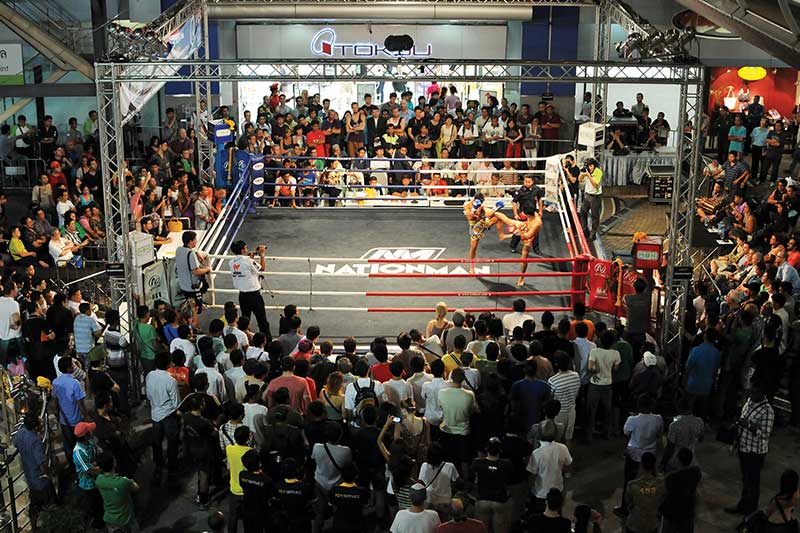
Muay Thai’s global fame has turned boxing camps and stadiums in Bangkok, Phuket, and Chiang Mai into pilgrimage sites where foreigners come to train and immerse themselves in the sport’s traditions.
From the legendary Rajadamnern and Lumpinee boxing stadiums to a makeshift ring at a Chiang Mai temple fair, the same traditions set the stage. Before the first punch is thrown, the combatants perform the Wai Khru Ram Muay – a ritual war dance honouring their teachers, ancestors and the ring’s guardian spirit. As the beat quickens and the aroma of liniment oil wafts from the fighters’ bodies, the arena settles into hushed anticipation of the battle to come.
From Local Ring to Global Phenomenon
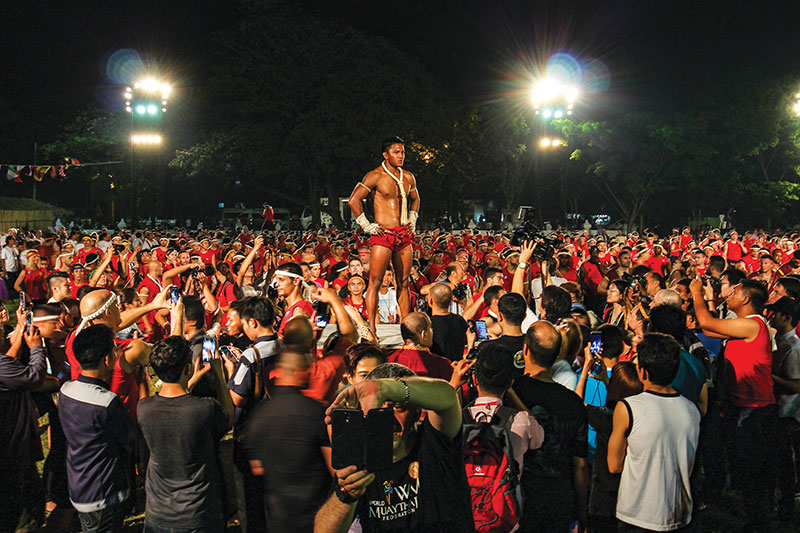
In recent decades, Muay Thai has spread beyond Thailand to gyms in London, New York, Paris, Tokyo and Seoul. Its universal appeal lies in three qualities that resonate with fighters and fitness seekers alike – simplicity, honesty and discipline.
Global popularity has generated foreign stars like France’s Nabil “The Prodigy” Anane, England’s Jonathan “The General” Haggerty, Scotland’s Nico “King of the North” Carrillo and Myanmar’s Soe Lin Oo “The Man of Steel”, proving that champions from abroad can go toe- to-toe with Thailand’s finest.
Muay Thai was recognised by UNESCO as Thai Intangible Cultural Heritage in 2021, confirming what practitioners have always known: more than just combat, this martial art shimmers in Thai culture as a symbol of perseverance, humility and grace. Each kick, elbow strike and step of the Ram Muay evokes a heritage stretching back centuries.
Landing a Kick in Thailand
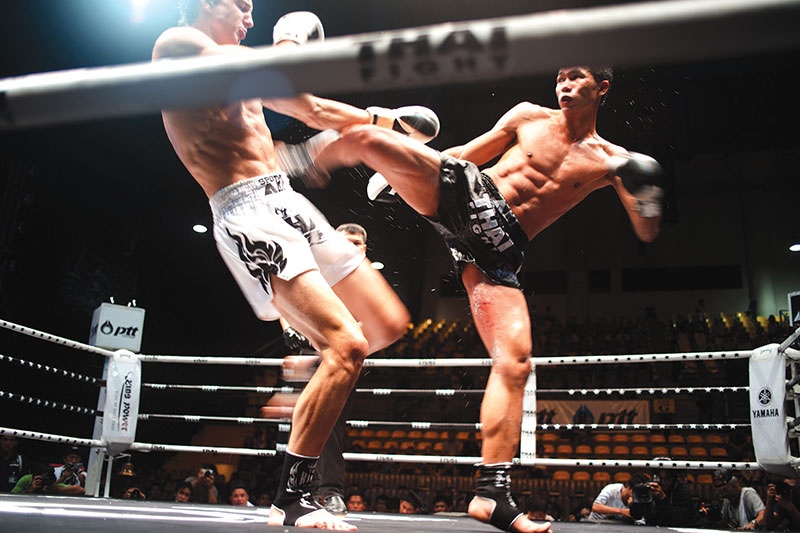
Whether you’re a curious tourist or a fighter aspiring to ring glory, Muay Thai greets all levels with the same basic principles: stance, balance, and guard.
Casual learners can join beginner classes at resorts or beach camps, where the focus is on fun, fitness and safety. Those seeking deeper immersion can train at reputable gyms, where structured sessions cover pad work, clinching, conditioning and discipline. For the serious few, long-term training, usually twice daily, builds stamina, ring IQ and respect for tradition.
Four Styles, One Muay Thai
Before Muay Thai became a global phenomenon, it was a patchwork of different fight schools – each shaped by a lineage of local teachers. Among these, four styles stood out: Muay Chaiya, Muay Korat, Muay Tha Sao, and Muay Lop Buri.
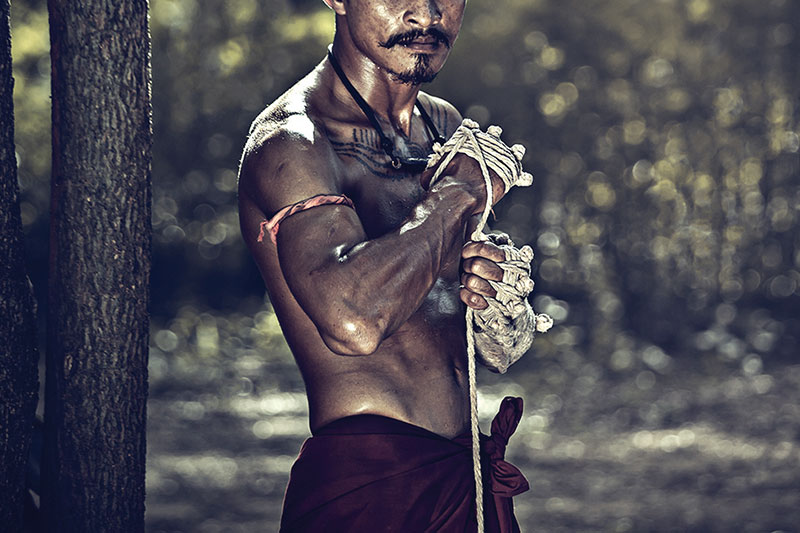
Muay Chaiya (Surat Thani)
This centuries-old technique is known for its defensive style. Fighters assume a low stance, elbows tucked in, guard raised, turning defense into a weapon. Also known as “Thadee Chaiya”, this style features nimble footwork and calculated feints. Each movement is precise yet fluid, elegant but dangerous.
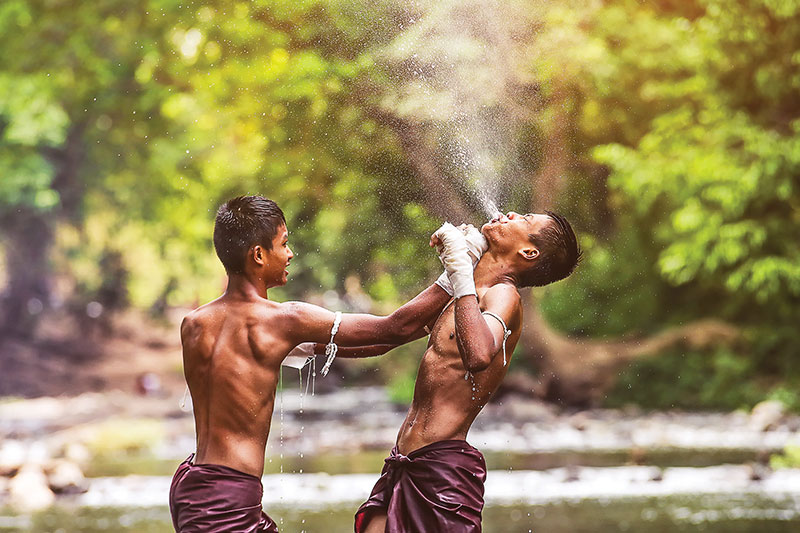
Muay Korat (Nakhon Ratchasima)
Called the “Strongman’s Style”, Muay Korat comes from Thailand’s rugged Northeast. This school is championed for its raw power and endurance. Fighters take a wide stance, delivering crushing punches, brutal kicks and sharp knee strikes to overpower opponents. In the old days, Muay Korat warriors trained with daily tasks: think hauling water, pounding rice, chopping firewood, climbing coconut trees and running through rice fields to build strength, agility and stamina.
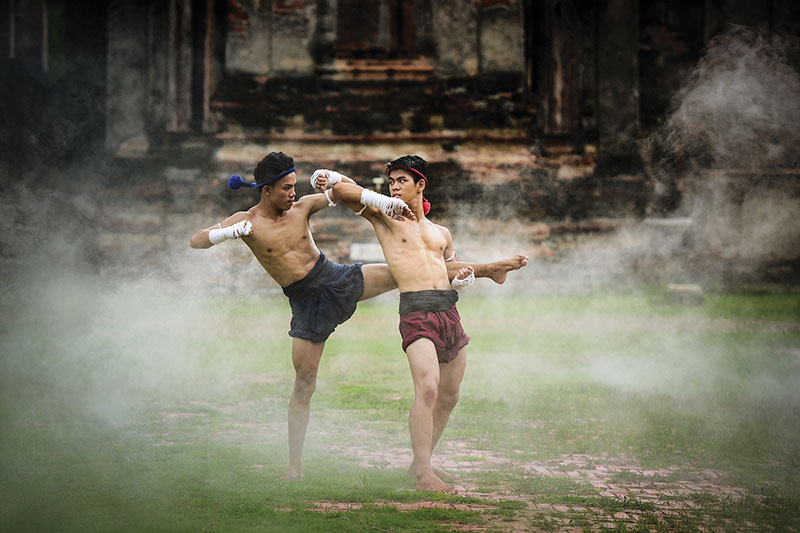
Muay Tha Sao (Uttaradit)
Dubbed the “pride of northern Thailand”, this style is noted for its fast, agile movements. Fighters count on speed, light-footedness and improvisations, delivering rapid kicks and flying knees and elbows from unexpected angles. This style employs a wide stance and backward weight shift, transitioning between attack and defence with extraordinary speed. Fluid and adaptable, Muay Tha Sao blends finesse with force, showcasing a martial art where strategy, rhythm and agility outmatch sheer strength.
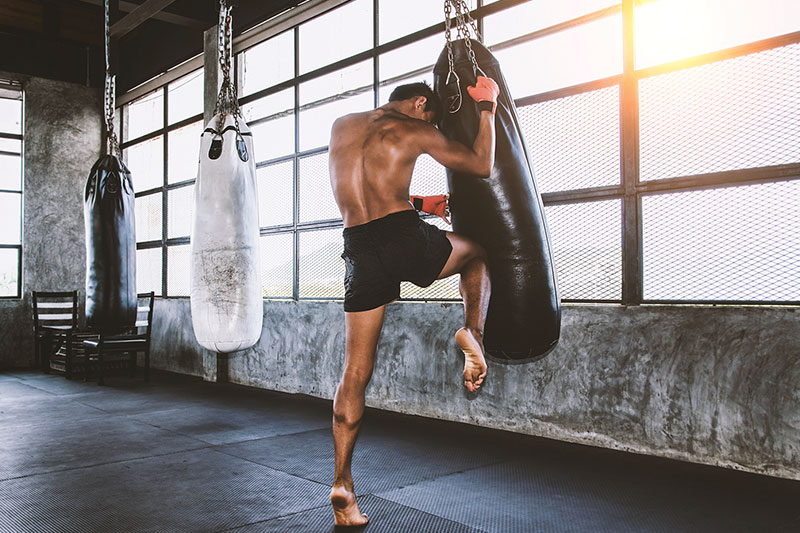
Muay Lop Buri (Lop Buri)
The oldest style of all, Muay Lop Buri is defined by intelligence and agility. Constant movement delivers a blend of offence and defence with rapid, precise punches, kicks, feints and strategy to outsmart opponents. Sharp vision and nimble footwork allow them to bait, evade and strike with deceptive efficiency. Fighters wear distinctive forearm wrappings and ankle bindings, setting it apart from other Muay Thai styles.