
Thailand’s Coolest Ways to Beat the Heat
From food and fabric to water and rituals: A guide to the refreshing pleasures of the hot season
Words: Pinanong Panchuen
Photos: Chada Chef’s Table, Chef Wuttisak Wuttiamporn, Penny the Chef, Samatcha Apaisuwan, Anutra Ungsuprasert and Shutterstock
The hot season opens like an oven door in Thailand – humid air rolling out before dawn as street vendors set up their carts. By mid-morning, life retreats from the heat. Shady spots are treasured, the rhythm of life slows, and even conversaions are short, as if silence offered relief.
Steam-room temperatures can shock visitors, but Thais have found a multitude of cooling – and delicious – antidotes. Over generations, the hot season has shaped how they eat, dress, travel and rest. Rather than fighting the heat, they have learned how to move with it, making small, practical choices that add up to comfort.
These can be tasted in refreshing food, seen in calming colours, and felt in various age-old traditions that now define summer in Thailand.
Unlocking Fruit’s Savoury Superpower
Before refrigeration reshaped kitchens and eating habits, Thais relied on seasonal produce, which defined the menu from month to month. Fruits, abundant and naturally cooling, were turned into delicious dishes designed to beat the summer heat.
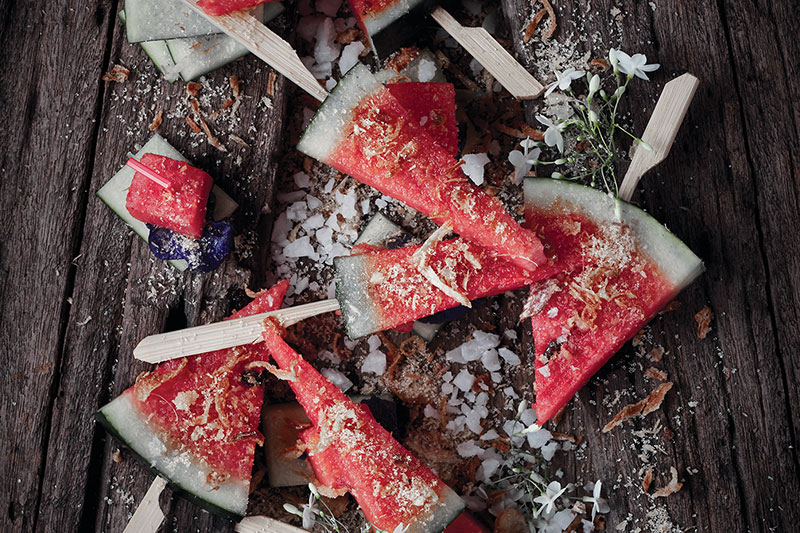
Watermelon is chilled, cut into thick wedges, and topped with a sprinkling of dried fish powder mixed with sugar for a classic hot-season treat. This combination can startle at first bite, before becoming strangely irresistible. The fruit’s high water content cools and hydrates the body, while the savoury topping awakens the appetite. Thais consider it neither a dessert nor a snack, but something in between, to be eaten slowly on hot afternoons.
Continuing the savoury summer theme, chilled pineapple is served with Ma Hor – a savoury, caramelised nutty pork or chicken topping, stir-fried with palm sugar, fish sauce and a garlic-coriander- pepper paste. The fruit’s acidic sweetness balances the rich, umami flavour of the topping, creating a flavour contrast that is highly prized in Thailand.
Coolest Cuisine Down South
The sun blazes brighter in the South, with flavours to match. Culinary offerings here are bold – each designed to bring relief from the unrelenting heat.
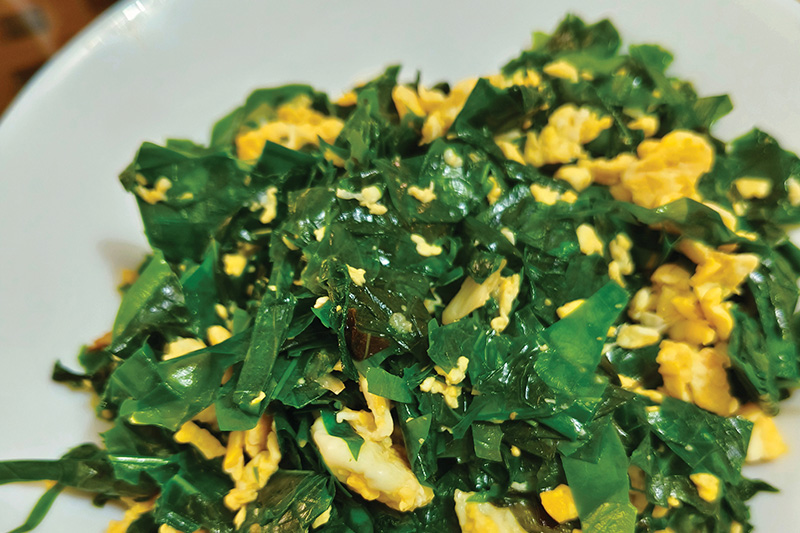
A classic example is Bai Liang Phad Khai: melinjo leaves stir-fried with egg. This creamy concoction is traditionally paired with the South’s famously spicy yellow curry to quench the fire without dulling the flavour. The leaves bring a delectable bitterness, while the egg adds subtle richness.
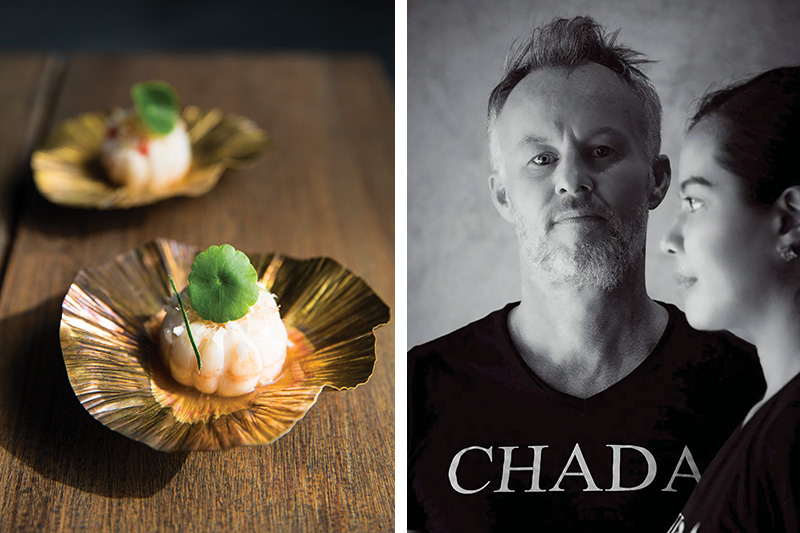
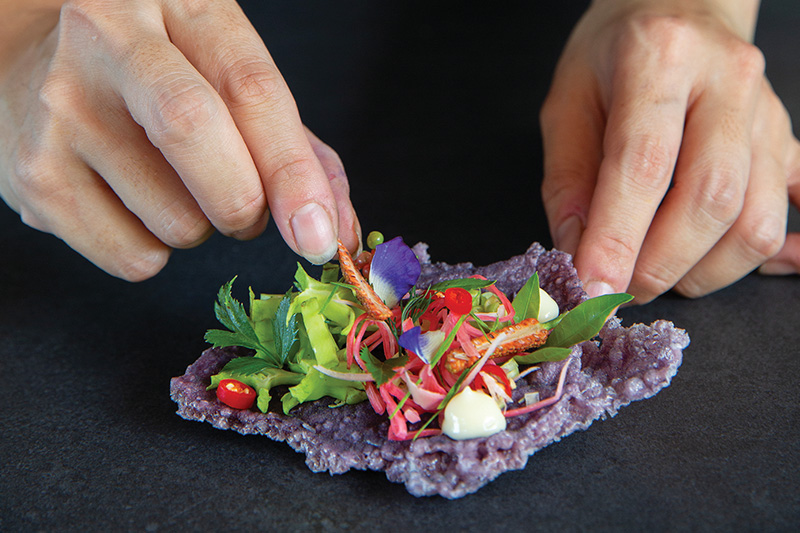
These summer favourites reach new heights in the fine-dining setting at Koh Samui’s CHADA Chef’s Table (www.chadaculinary. com), where locally sourced ingredients are cooked simply so their natural flavours shine. The focus is less on interpretation than on clarity.
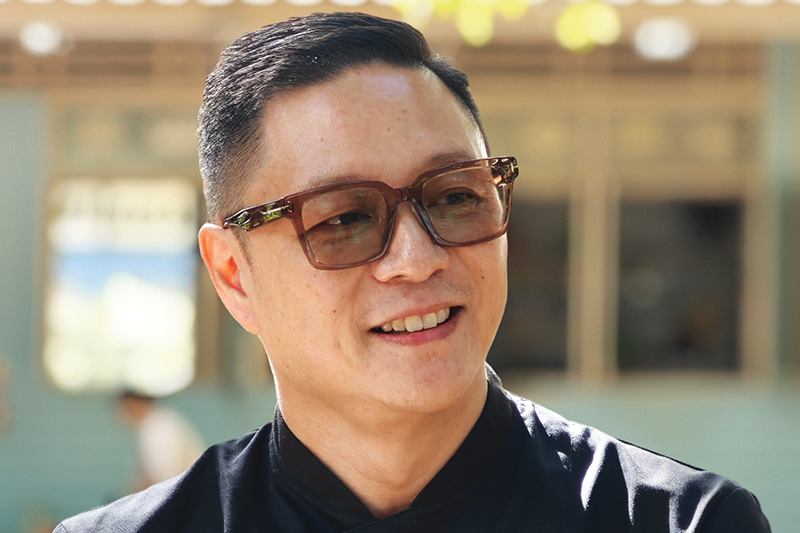
The kitchen is helmed by Chef Jeremy Simeon – a New Zealander who has cooked for celebrities such as filmmaker Guy Ritchie and TV chef Gordon Ramsay – and lawyer-turned-chef Chitrlada “Tang” Sirachadapong. Their shared mantra: Avoid excess.
The menu opens with appetizer classics: oysters paired with Bai Mui leaves for a delectably bitter brininess; dried fish with watermelon; pomelo salad with blanched prawns and coconut milk; and mangosteen with a savoury twist of Bai Waen Kaeo (water pennywort).
Curries follow with equal precision. Scallops emerge as a ceviche alongside chilled Tom Kha broth, accented with caviar and finely sliced kaffir lime. Firm barracuda anchors a yellow curry, served with lotus stem salad, Malay bael leaves, and wild coriander. Even the humble Khao Yum – a salad of butterflypea-tinted rice, fresh herbs, fruits, vegetables and a tangy, sweet dressing – is transformed into a crisp rice cracker topped with chilled lime mayonnaise.
What defines these dishes is not novelty, but care. The flavours remain unmistakably southern, yet they are designed to cool, stimulate and restore.
Letting Spice do the Work
When the heat advances, the response is not to retreat, but to engage. Thais’ famed culinary creativity blazes even higher during the hot season.
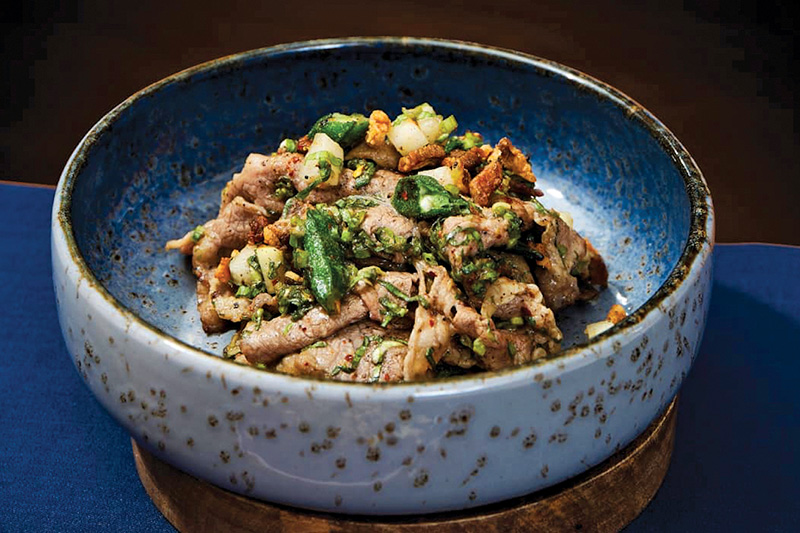
One example is Suea Phen salad, or the “Tiger Runs Away Salad”, Chef Pruek Sampantaworaboot’s (www.instagram.com/pruek) signature dish for sweltering summers. A Thai Iron Chef winner and former instructor at the Le Cordon Bleu Dusit culinary school, Pruek concocted the dish as a secret weapon against rising temperatures. Although trained in sauce-heavy French cuisine, he believes meals in the hot season should be light, yet bold. Among his preferred antidotes are spicy Thai salads (Yum), which promote perspiration – the body’s cooling system.
The Suea Phen salad features slices of grilled beef tossed in a sharp, fragrant dressing of green chilli paste blended with roasted eggplant relish and fish sauce. Crispy beef fat and grilled roselle flowers add a touch of richness, acidity and contrast. The level of heat can be adjusted, but the intention remains clear. Asked how fiery the dish can get, the chef grins: “Even a tiger would run away.”
When the Plate Becomes a Landscape
Hues matter in the heat, when lighter colours become more appetising. This is where food presentation comes in.
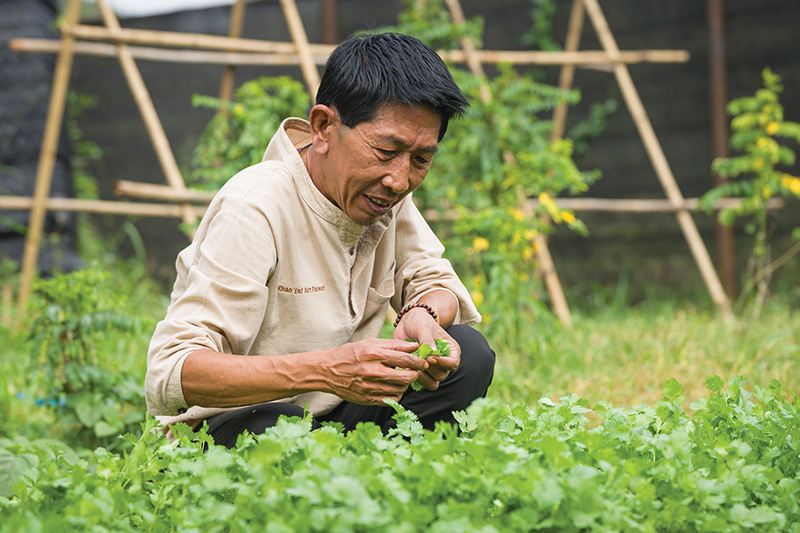
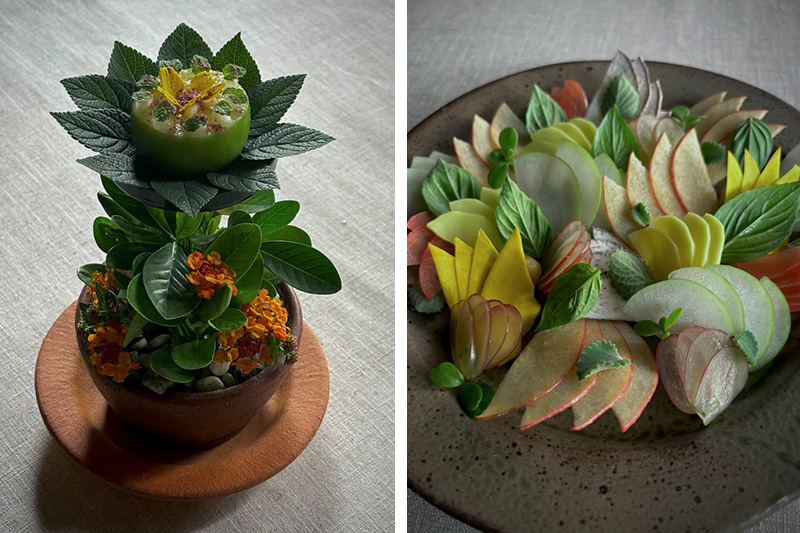
The plate is a canvas for Chef Wuttisak Wuttiamporn at Khao Yai Art Forest (www.khaoyaiart.com). Fashion, art, and seasonal colours influence how food is arranged here. A simple vegetable salad can become an expression of rhythm, layered in bands of yellow, red and white punctuated with herbs to resemble a garden in full bloom.
Fruit receives the same eye- pleasing treatment. Milk jujubes are halved, arranged in small clay pots, and dressed with mint and chilli salt – a painstaking yet playful presentation.
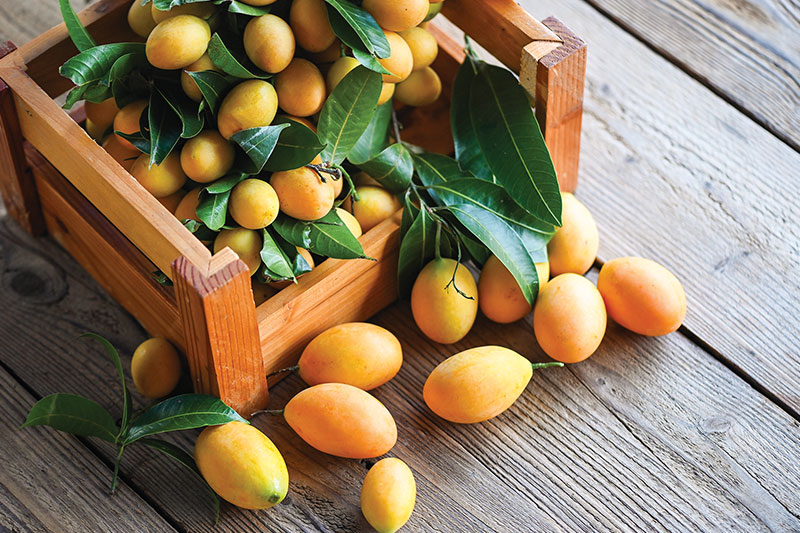
Seasonal fruits with brief harvests are especially prized during the hot season. Mayongchid (Marian plums), sweet with a soft acidity, are pounced upon by Chef Pennee Jirayuwatana (Penny the Chef at www. instagram.com/pennythechef), who transforms the fruit into sensational chilled desserts that focus on texture and flavour, not sugar.
A star among them is Mayongchid Tart – layers of yoghurt jelly and cream cheese over a crisp biscuit base made with wholewheat flour and French butter, decorated with edible flowers and herbs. The result is a refreshing treat rather than a heavy dessert.
At the Orchard, At the Right Moment
Hot season abundance is best experienced in Thailand’s orchards. From late February to May, fruit farms across eastern provinces open their gates, inviting visitors to taste sweet treats straight from the tree.
Chanthaburi, Rayong, and Trat are famous for durian, mangosteen, rambutan, and salak (snake fruit). Visitors can stroll beneath the boughs, tasting fresh fruit and comparing the sweetness and texture.
In Nakhon Nayok, the two varieties of Marian plum – sour mayongchid and sweet maprang – appear early in the season. In Chachoengsao, golden Nam Dok Mai mangoes arrive in March, often sold with freshly steamed coconut sticky rice and coconut milk.
These experiences are a reminder that when it comes to seasonal produce, timing is everything.
Dressing for the Season
Summer comfort is not limited to the table. What touches the body matters as much as what feeds it.
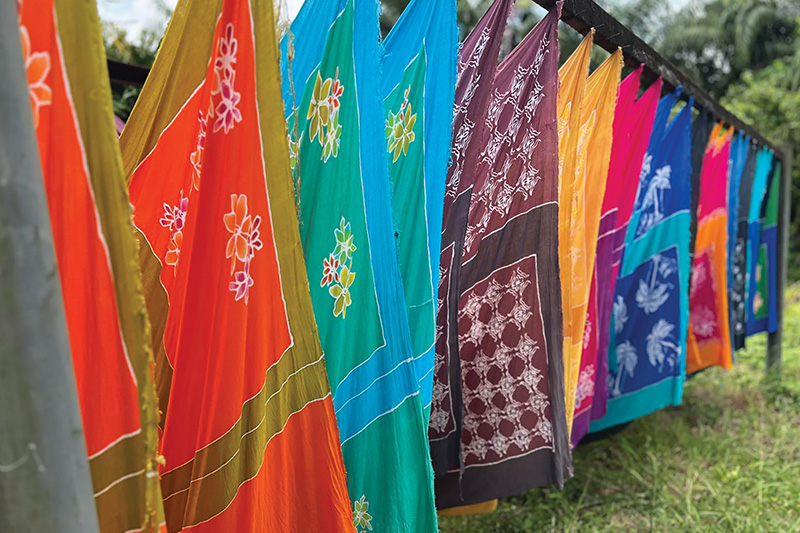
The traditional batik sarong (Pha Pa-The) remains one of the most adaptable garments for the hot season. Wrapped or draped, it shields the body from the blazing sun while allowing the skin to breathe.
Silk, often linekd with formality and ceremony, is also a practical choice in the heat. Cool by day and warm at night, it adjusts to the temperature A light silk shawl can guard against the midday sun, then serve as a wrap in the evening.
Southern batik blooms with patterns of the sea, flora and fauna, sashaying easily between traditional and everyday wear.
At master batik designer Thaninthorn Raksawong’s Dahlah Batik in Krabi, visitors can watch the pattern-making unfold firsthand, gaining insight into how each piece is shaped by patience and handiwork.
Cooling the Body, Clearing the Mind
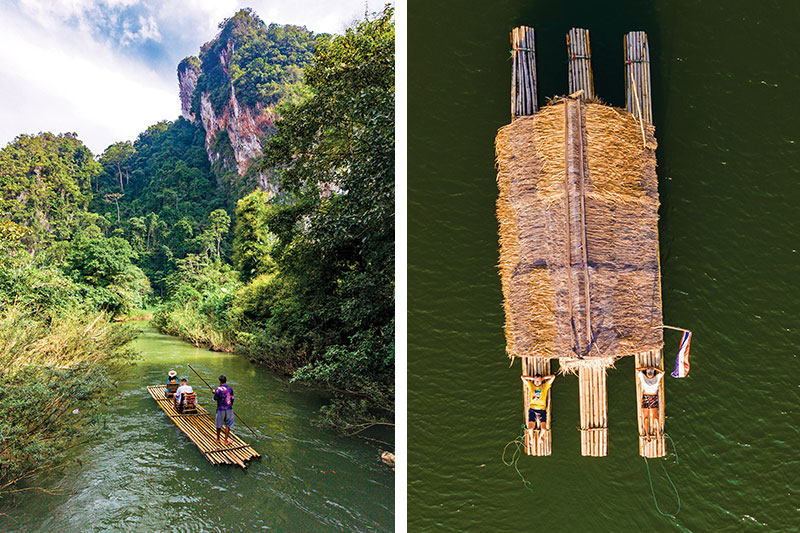
Water is the most obvious answer to heat, with rivers, waterfalls, canals and ocean offering relief across the country.
From bamboo rafting and waterfalls in Phang Nga, to Krabi’s freshwater canals and hot- and-cold springs, and Samui’s waterfalls, lagoons, and coral- fringed islands, full immersion offers physical and emotional restoration.
Standing under a waterfall or drifting along a shaded river washes away tension. In Thailand, summer doesn’t drive people indoors; it heightens awareness – of food, fabric, and leisure. Comfort comes not from avoiding the heat, but from knowing how to turn it into pleasure. That understanding, shaped over time, is the real estate of summer.
Cold Comforts in Hot Hours
When eating becomes a chore, chilled desserts are often the answer.
In Thailand, these delicious treats are not seasonal novelties, but an everyday way of beating the heat.
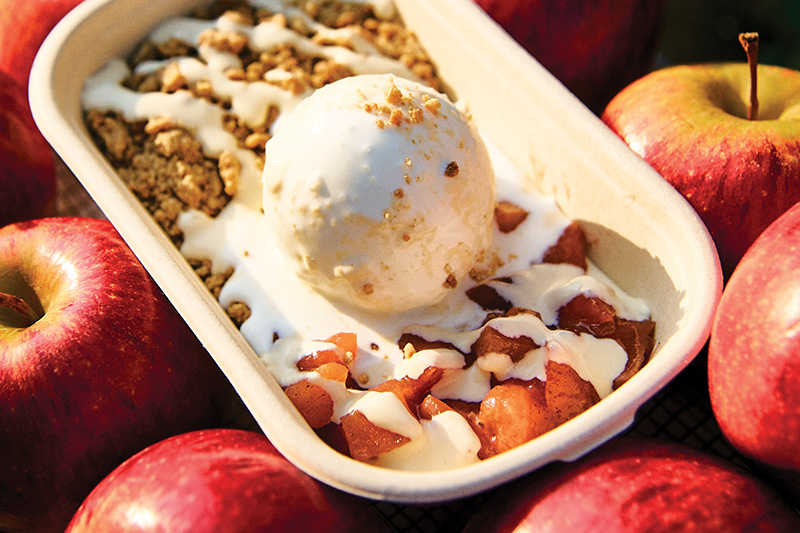
Baan Pat & Jeanne, GalileOasis, Bangkok
Produced in small batches, ice cream here comes in strange yet sensational flavours. Treat your palate to brown butter banana with fish sauce, dark caramel soy sauce with almond praline, nipa palm vinegar sorbet, and so much more. Instagram: @baanpatandjeanne
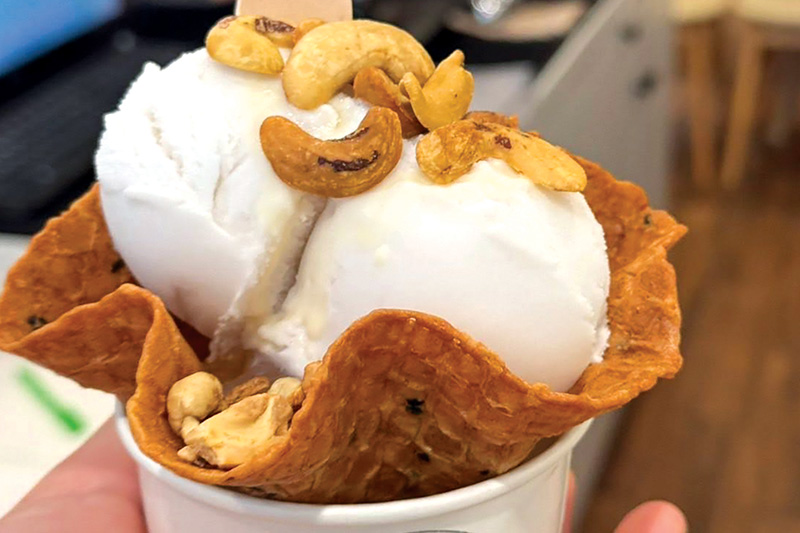
Kokia Coconut Ice Cream 1947, Koh Samui
Charming and popular, locals prize this café for its Thai ice cream made from local coconuts and traditional toppings like Lod Chong (pandan noodles) and Bua Loy (glutinous rice balls) in a crispy Thong Muan (rolled coconut wafer). For vibes, don’t miss the historical photos of Samui and welcoming floral decor. Facebook: Kokia Coconut Ice Cream1947
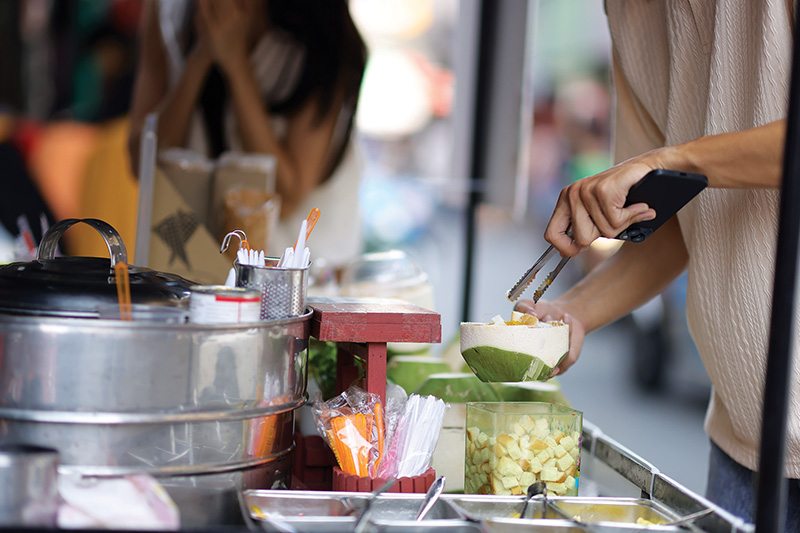
Coconut Ice Cream Carts (Nationwide)
You don’t have to look far to find street stalls and carts serving coconut ice cream in cups, coconut shells, or soft buns, with a choice of roast peanuts, sticky rice and other toppings. Creamy, not too sweet, and fast-melting, this ice-cold treat demands to be eaten quickly on the spot.
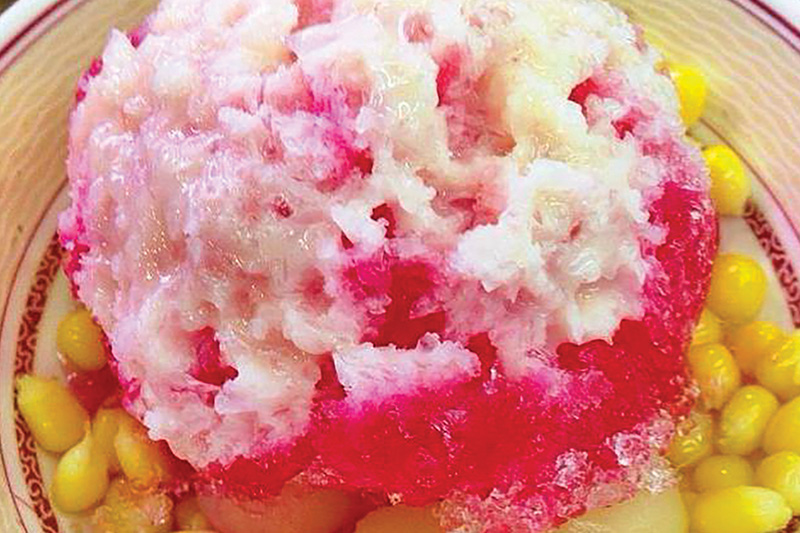
Cheng Sim Ei, Chula Soi 5, Bangkok
Thais are addicted to this family- owned chain specialising in shaved ice layered with grass jelly, beans, fruit, and syrup. Choose from a myriad of flavours and toppings for your own special balance of sweetness and textures. www.facebook.com/chengsimei
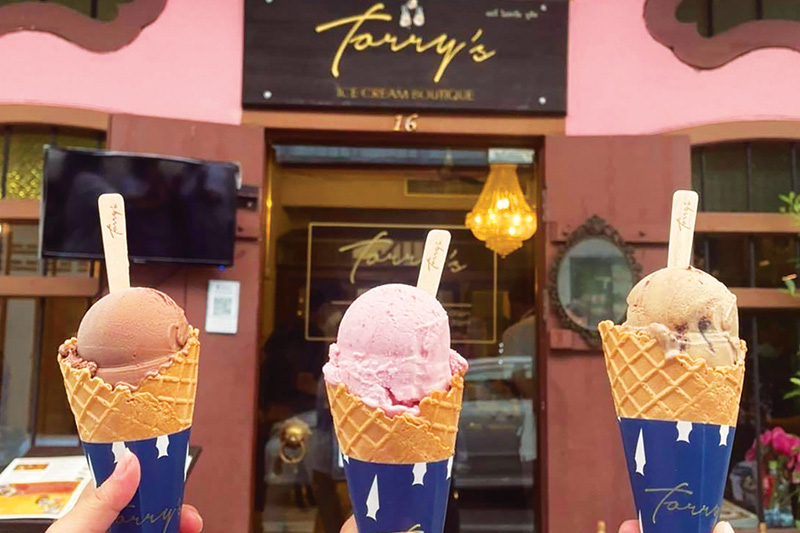
Torry’s Ice Cream, Phuket
This artisan ice-cream parlour celebrates Phuket’s Peranakan traditions with flavours such as O-Aew (aiyu jelly), A-Pong (coconut crepe) and Bi-Co-Moi (black sticky rice with coconut milk). For extra atmosphere, they are served inside a gorgeous restored Sino- Portuguese shophouse. www.torrys.com
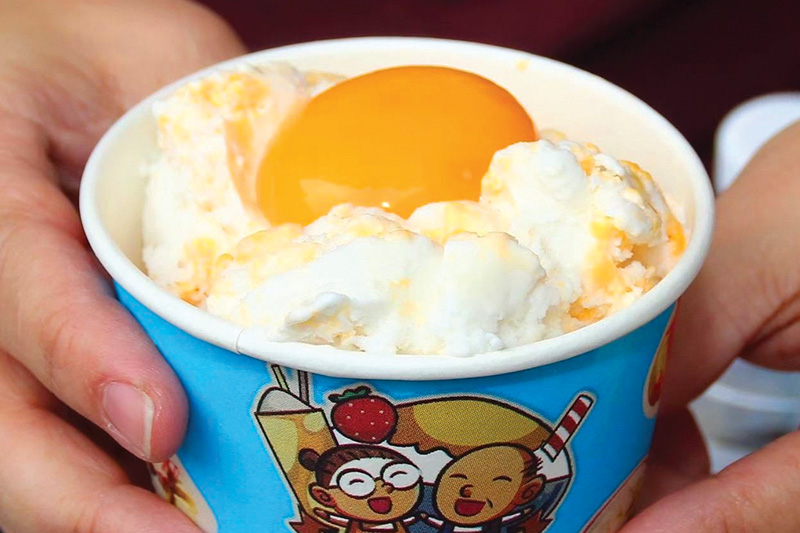
Ni-Ang Namkhaeng Sai & Egg Ice Cream, Talat Phlu, Bangkok
A classic, family-run street dessert vendor offering shaved ice and firm-egg ice cream with classic syrups and toppings. The menu has remained unchanged for decades, favouring familiar classics over trendy trifles. www.facebook.com/niang.taladplu

Itim Roi Ros (100 Flavours Ice Cream), Chiang Mai
Famed for its “hundreds” of unique flavours, this longstanding homemade ice cream shop offers savoury sensations such as Khao Soi and Nam Phrik Num alongside even crazier concoctions inspired by soap and fabric softener. Even weirder – once your taste buds recover from the shock – the flavours are all delicious!
www.facebook.com/Iceloveyou
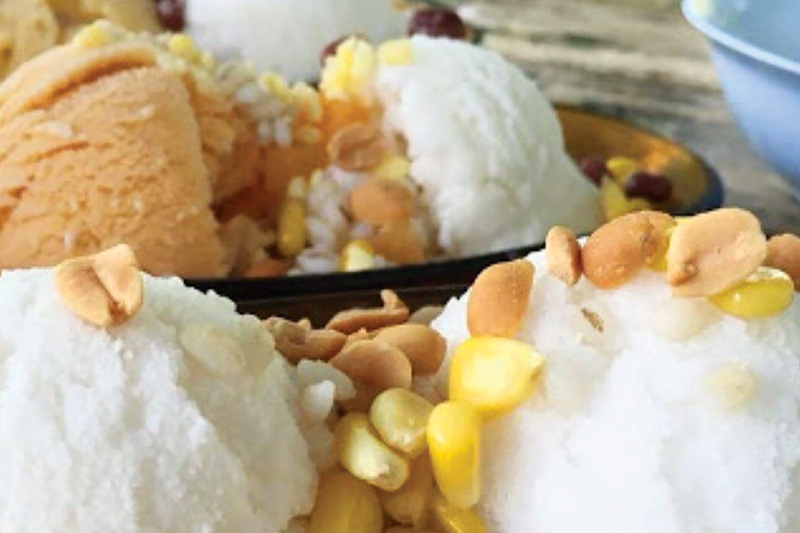
Nuttaporn Ice Cream, Bangkok
This generations-old shop in Bangkok’s Old Quarter is cherished for authentic, natural Thai-style ice cream, especially coconut and mango flavours. Recipes remain true to tradition, prioritising fresh flavours over commercial ease.
www.facebook.com/nuttapornicecream94
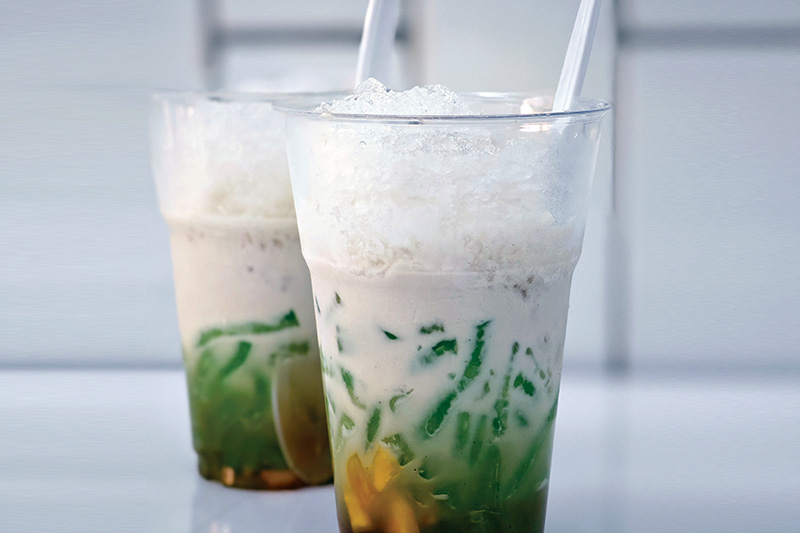
Lod Chong Singapore, Charoen Krung, Bangkok
This 70-year-old street stall, named after the nearby but now defunct Singapore cinema, is celebrated for its refreshing Lod Chong: Soft, chewy pandan-flavoured jelly noodles served in rich coconut milk, palm sugar syrup and crushed ice, often with jackfruit. www.facebook.com/lodchongsg