
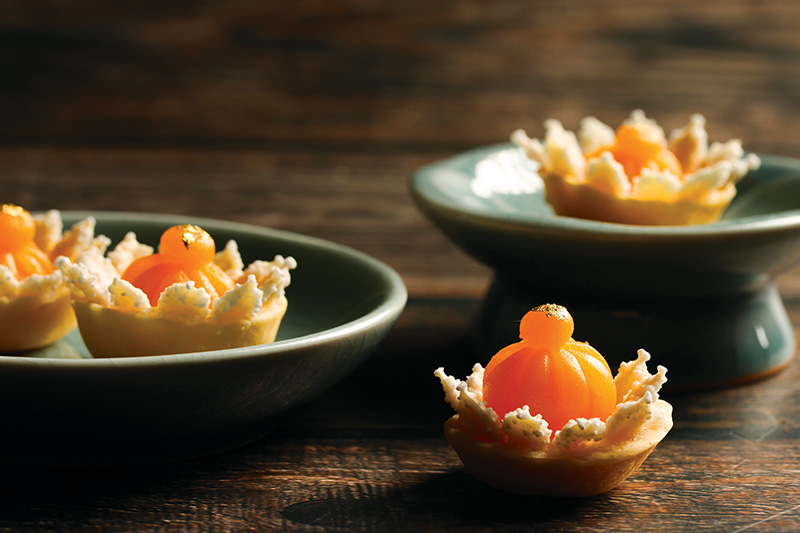
The King of Thai Sweets
Khanom Ja Mongkut carries centuries of royal symbolism and artistry in every bite
Words: Sarita Urupongsa
Photo: Shutterstock
First cooked up in the royal kitchen of King Rama II (1809-1824), Khanom Ja Mongkut holds a revered place in Thai culinary heritage. Often served at ceremonies and weddings, this regal delicacy is also a go-to gift for those celebrating promotins and other career milestones. Ja translates as “leader” or “chief”, while Mongkut means “crown”. Together they symbolise leadership, prestige and prosperity.
Beyond its rich symbolism, the confection is a masterpiece of taste and texture. Each bite releases a floral aroma along with a rich and layered sweetness.
Crafting this ornate crown jewel of Thai cuisine isi a painstaking labour of love.
Two centuries ago, Ja Mongkut was far simpler: a thick, sticky blend of mung bean flour, coconut milk and sugar wrapped in banana leaves. The recipe evolved over time, taking on its regal appearance under the influence of Thai desserts like Dara Thong, a crown-shaped golden confection developed a century later.
Creating this elaborate confection demands patience and precision. First, roasted watermelon seeds are dipped in sugar syrup and gently flicked until the sugar crystallises into delicate spikes. A soft dough enriched with egg yolk is then rolled thin, stamped into 2-centimetre rounds, and baked in moulds to form crisp pastry bases.
For the rich filling, coconut milk and sugar are simmered until thick, then whisked with egg yolks and flour over a gentle heat until a smooth paste forms. The paste is hand-rolled into small balls which are scored to resemble golden crowns and then placed in the baked bases. Finished with a tiny jewel of dough and studded with the crystallised watermelon seeds, each sweet is garnished with a leaf of edible gold for good fortune.