

Unlocking Trat
An insider’s guide to the vibrant markets, historical lanes and lush coastal ecosystems of Thailand’s hidden eastern treasure
Words: PinanongPanchuen
Photos: Shutterstock
Like a butterfly emerging from its chrysalis, Trat undergoes a dramatic transformation when the rainy season arrives. Forested hills glisten under afternoon showers, mangrove forests buzz with new life and branches hang heavy with fruit. Most travellers know this eastern province as the gateway to Koh Chang and neighbouring islands, but the mainland boasts hidden riches shaped by rivers, forests and nature-loving communities.
These gems are not reached by ferry, but along winding roads through historic riverside neighbourhoods, unique landscapes and heritage villages. For those willing to explore off the beaten path, Trat proves that Thailand’s greatest treasures lie beyond its beaches.
When the Day Begins
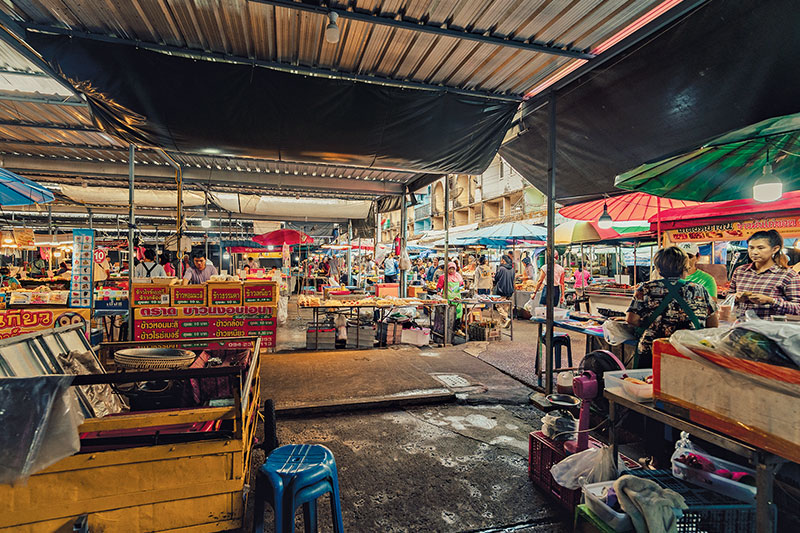
Mornings in Trat start early at Rai Rang Market, where the dawn light reveals fishermen unloading the night’s catch, restauranteurs hunting for fresh ingredients and families filling their baskets with herbs, vegetables and fruit.
Seafood steals the show – glistening prawns, mantis shrimp, crabs, and shellfish netted fresh from the Gulf of Thailand every morning. Ask a local how best to eat them and the answer is delightfully simple: steamed or grilled then dunked in Trat’s traditional fiery dip.
Breakfast here is equally intruguing. Alongside standard coffee, soy milk and crispy pa tong go (Chinese dough sticks), many locals start their day with a steaming bowl of pork blood soup – a favourite that routinely sells out before the morning rush. But don’t miss the local Tom Yum: unlike the rich, creamy soup found elsewhere, Trat serves a clear, aromatic broth sharpened with fresh lime juice for an intensely bright and invigorating dish.
As night falls, the market trasnforms into a lively street-food banquet piled high with home-style curries and traditional Thai sweets.
Just a short stroll away, the pace slows to the rhythm of Trat’s historic canal neighbourhood.
Crossroads of Asia
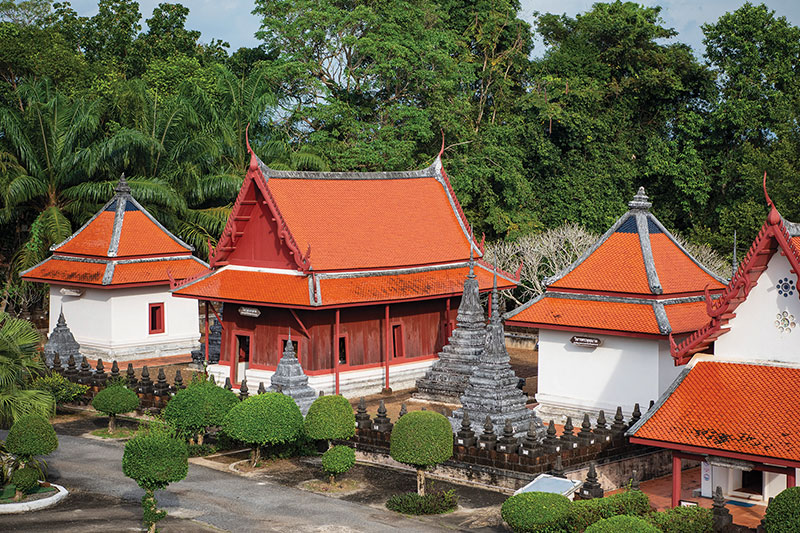
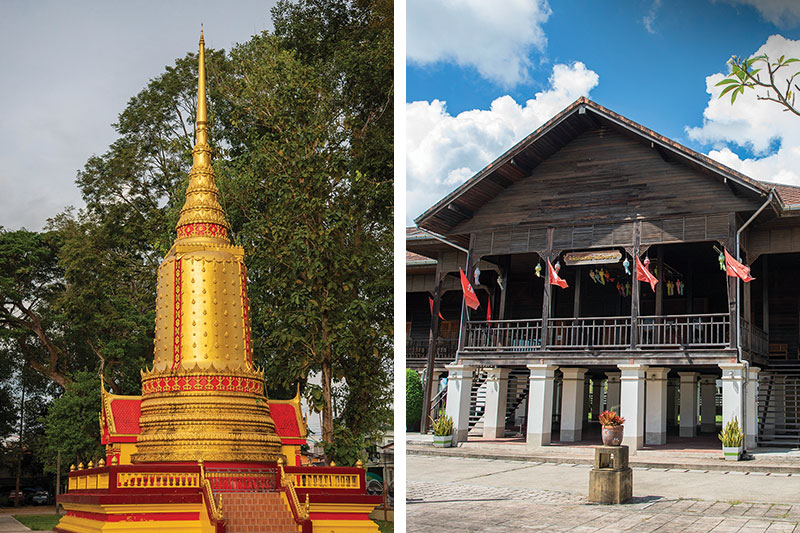
The Rak Khlong Bang Phra Community dates back to the reign of King Rama I (1782-1809), when the waterway was among the busiest routes in eastern Thailand. Chinese junks and trading vessels from across Asia sailed inland here, creating a melting pot of Thai, Vietnamese and Chinese communities.
When roads replaced the waterways during the reign of King Rama VI 91910-1925), many of the old wooden canal homes ended up facing a street. Today, visitors wander through narrow lanes lined with beautifully restored timber houses, resurrected as boutique guesthouses, cafés and family-run shops.
Follow the road to the Trat City Museum, where the province’s maritime history comes to life in street tableaux, poignant artefacts and stories of the pioneers who built this border town.
Wander deeper into the town and historic landmarks reveal the many chapters of Trat’s past. At Wat Buppharam, the province’s oldest temple, exquisite murals shine with a strong Chinese influence. Nearby, Wat Yothanimit opens a window on ancient royal ceremonies, while the former residence of the French Resident Commissioner unveils the brief period of colonial rule in the early 20th century.

Buddha Beneath the Water
Beyond the city, shopfronts give way to lush green hills before opening to the still waters of Khao Rakam Reservoir, home to one of Trat’s most mysterious sights. The giant Sunken Buddha once stood inside a monastery before being submerged during expansion of the reservoir. When water levels drop, the five-metre-tall statue rises above the surface, creating an otherworldly scene – especially when wrapped in the morning mist of rainy season. Visitors can rent a kayak or stand-up paddleboard for a close encounter with this hidden sentinel.
Where the Forest Meets the Sea
Trat’s tightly woven tapestry of mountains, rivers, mangroves and sea forms one of Thailand’s richest coastal ecosystems.
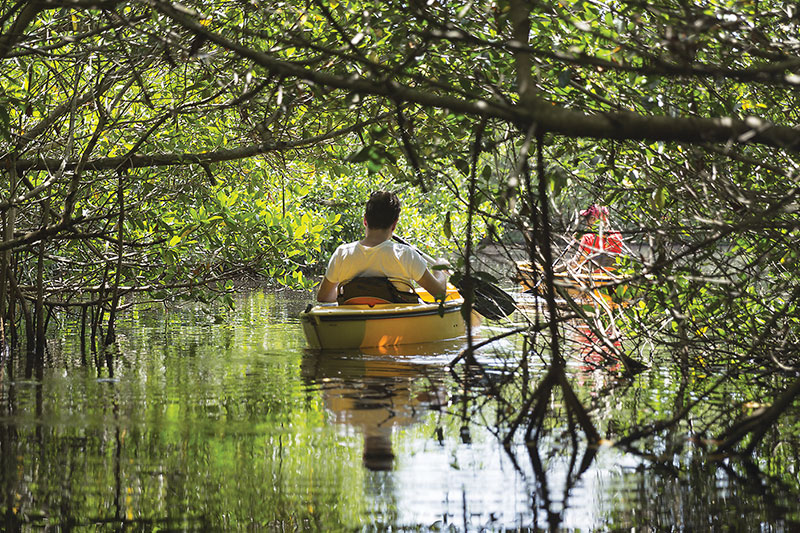
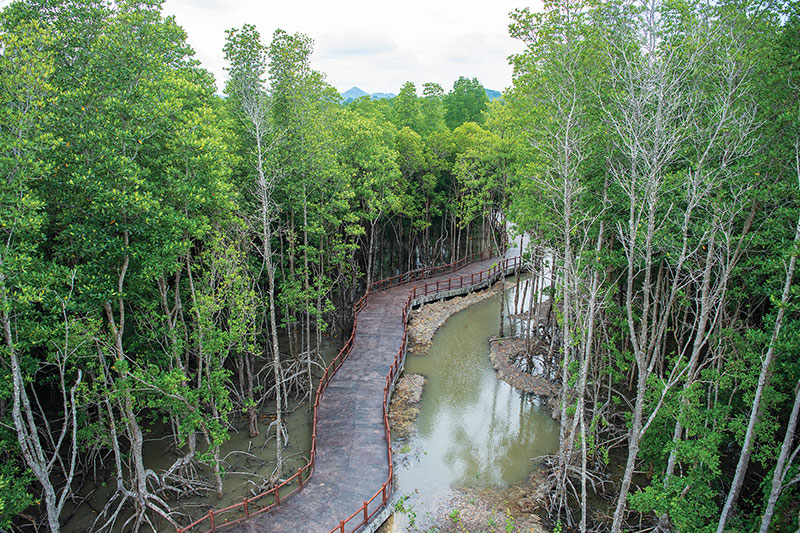
At Ban Tha Ranae, tour boats meander through ancient mangrove forest to the extraordinary Taboon Courtyard. This surreal maze created by exposed roots of Taboon (puzzlenut) trees spans roughly the area of three Olympic swimming pools. Visitors tread lightly though the root forest along elevated walkways toward a magnificent, two-century-old giant known as the Grandfather and Grandmother Tree.
Ban Tha Ranae community is a door to experiences that transcend mere sightseeing. Guests can plunge into mangrove ecology with hands-on conservation activities, sip herbal Roi Roo Tea brewed from native medicinal plants, and discover how generations have been nurtured by the forest’s bounty.

Path to the Black Shore
Another natural wonder awaits in Laem Ngop district. Black Sand Beach resembles scorched volcanic shorelines that are common across the Pacific. However, its inky sand was actually formed over centuries by weathered shell fragments, iron-rich minerals and quartz. Locals believe the mineral-rich grains here possess miraculous healing properties, but its monochrome beauty is reason enough to visit.
Finding this surreal gem is half the adventure. A scenic boardwalk weaves through a lively mangrove ecosystem filled with fiddler crabs, mudskippers and wading birds, opening onto a kilometre-long stretch of dark sand.
Village Shaped by Harmony
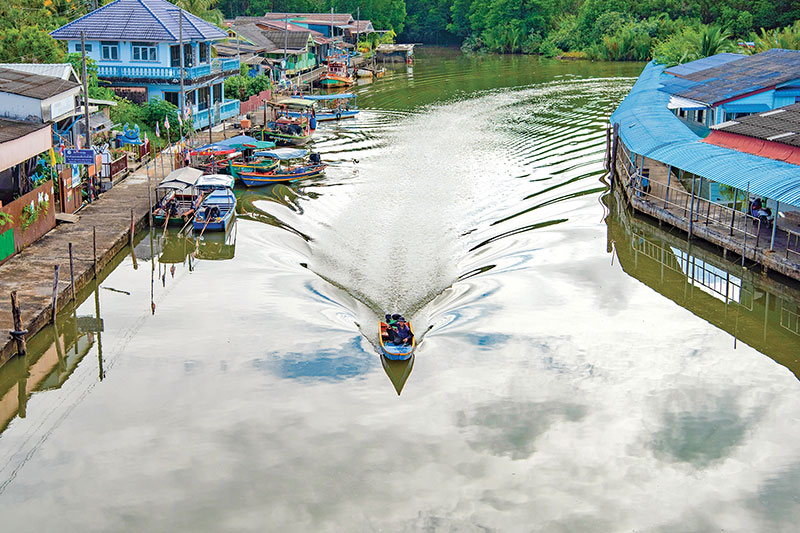
A little further along the coast lies Ban Nam Chiao, a village home to Trat’s most iconic bridge. Named the Eye of Ban Nam Chio for the striking shape of its reflection on still water, this dramatic span rewards visitors with panoramic views of moored fishing boats, mangroves and the canal that gives the village its name.
This community is also remarkable for its diversity: Buddhist and Muslim Thais have lived alongside Chinese and Cham settlers here for centuries. Visitors can take guided tours to local Buddhist temples, the 200-year-old mosque and Chinese shrine, then explore the mangroves that sustain and protect the community via boardwalk or boat.
Want to dive deeper? Book a local homestay for the ultimate immersion in village life. Wake up to the gentle hum of fishing boats and a breakfast of Ban Nam Chiao-style stir-fried noodles, sour fish soup and fresh seafood. Afterwards, join local fishermen foraging for shellfish and spoon worms before feasting on your catch – lighty blanched and served with a fiery local sauce.
Follow the Green Road
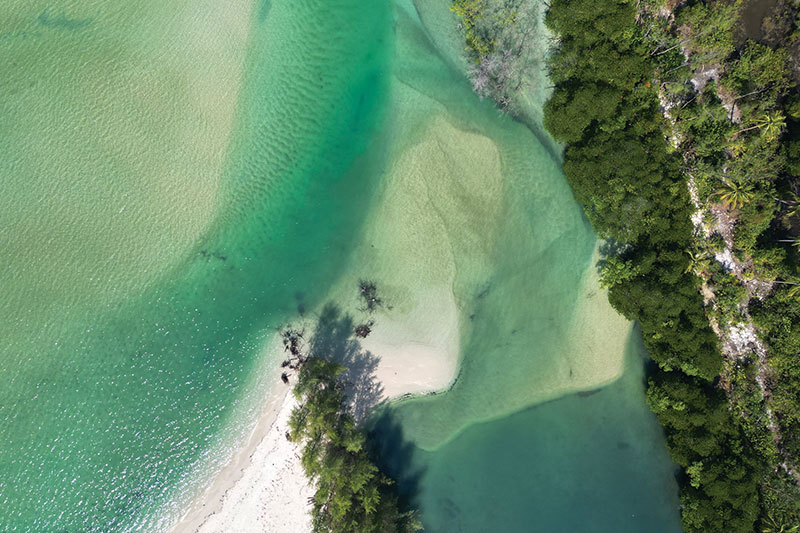
The journey continues south along Highway 3, one of Thailand’s most scenic coastal drives. Thailand narrows to its thinnest point between kilometre markers 81 and 82, where a 450-metre finger of land separates the Cambodian border from the Gulf of Thailand.
Rainforest mountains rise on one side of the road, while turquoise sea stretches out on the other.
Nearby, Ban Chuen Beach offers a quiet break before the road turns inland towards Khao Saming District, Trat’s fruit basket. From May to July, sprawling orchards open their gates to visitors, their branches heavy with durian, rambutan, mangosteen, salak and the famous local golden pineapple. As well as feasting on fruit fresh from the tree, visitors can learn traditional farming crafts and master the age-old method of hand-roasting cashew nuts.
No trip to Trat’s orchards would be complete without a stop at Warista Café & Garden. Here, the signature iced Americano infused with mapeed (a tart, local citrus fruit), captures the essence of Trat in a single refreshing cup. Paired with house-baked lemony brioche or rich durian pastry, it provides a perfect finale before crossing the road to catch a flight from Trat Airport.
Forget the Ferry Pier
For decades, Trat was known as the gateway to Thailand’s eastern islands – but for adventurers with time to explore, the mainland boasts destinations rich in character and soul. History still flourishes along tranquil canal banks, while ancient mangroves hide thriving ecosystems, and diverse communities maintain centuries-old traditions. During the rainy season, when lush green forests and bountiful orchards reveal Trat’s true character, travellers are invited to look closer and discover one of eastern Thailand’s most rewarding journeys.