
Unmasking the Soul of Khon
From glittering costumes to hand-painted masks, Khon brings an ancient epic to life. Discover the artistry behind the performance and the small treasures it inspires today
Words: Phoowadon Duangmee
Photos: Tourism Authority of Thailand, Shutterstock
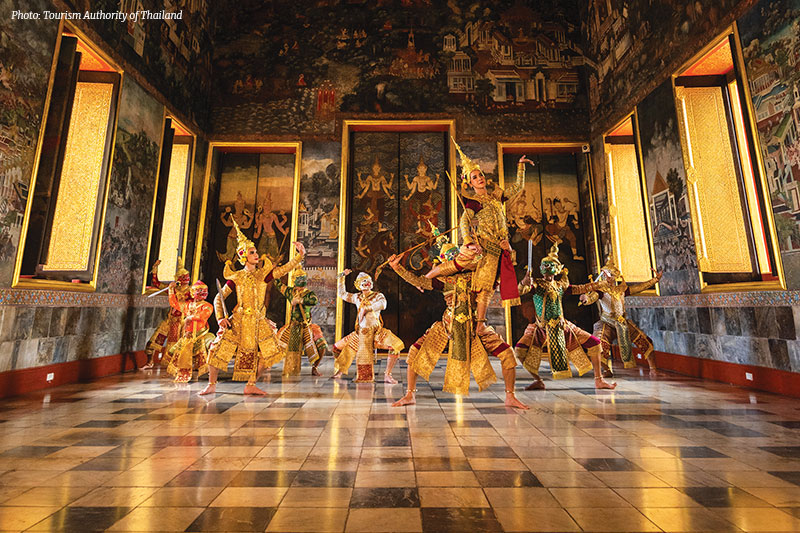
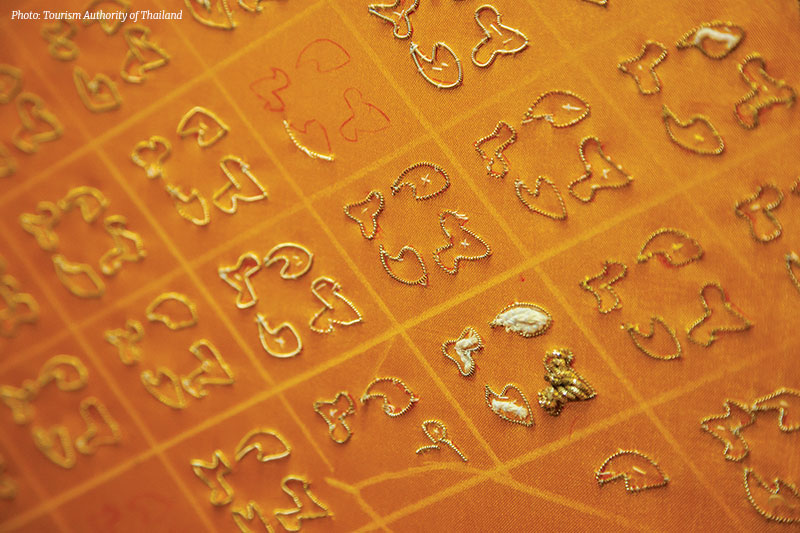
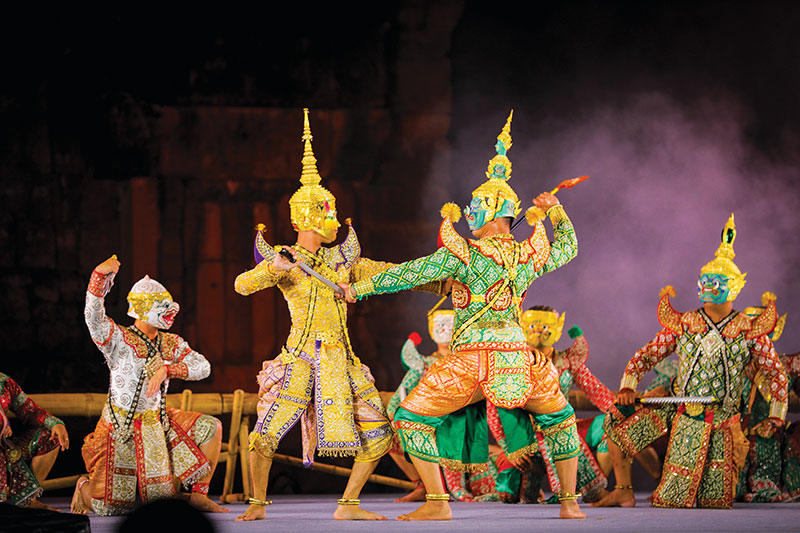
The room darkens as the percussive rhythms of a piphat ensemble break the silence. Mystical characters emerge in the glow of the stage: a green-faced demon king with a towering golden crown, a playful monkey warrior ready for action, and royal figures in shimmering hand-embroidered costumes.
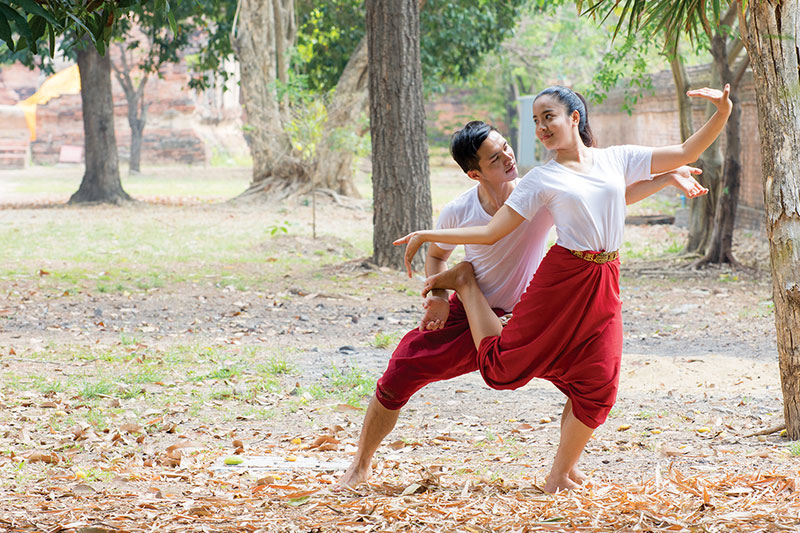
This is Khon, Thailand’s traditional masked dance drama. To the uninitiated, it feels like entering an enchanted realm of gods, demons, monkey armies and epic warfare. Here, ancient battles are fought in stylised movements and human emotion is rendered in delicate hand gestures.
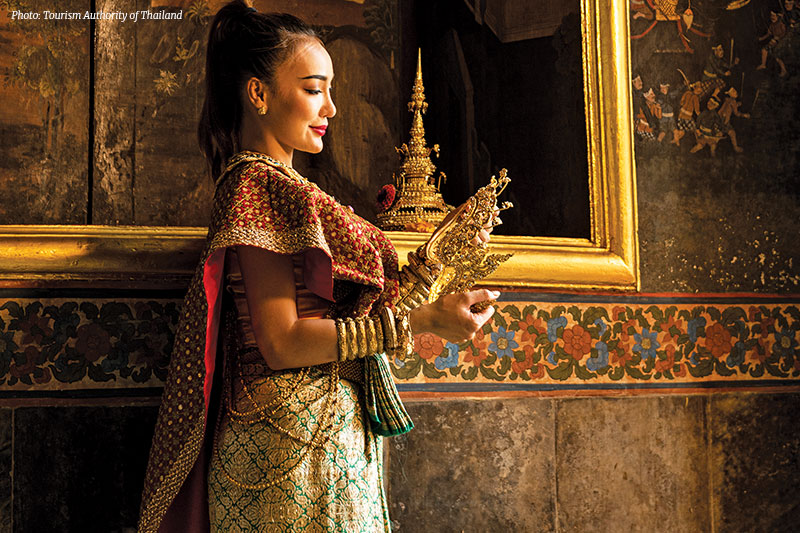
Yet behind every show stands an unseen army of mask makers, embroiderers, musicians and master craftspeople whose quiet dedication breathes life into an ancient epic. Khon is not merely a performance, it is the beating heart of Thai craftsmanship.
An Epic Made Thai
At the heart of Khon drama is the Ramakien, Thailand’s version of the ancient Indian Ramayana saga. The story follows the heroic prince Phra Ram, his beautiful wife Sita, the formidable demon king Thotsakan and the charismatic monkey warrior Hanuman.
The tale may have originated in India, but the telling became uniquely Thai over the centuries. Characters acquired local quirks, while striking Thai choreography, music and royal court stylings transformed the epic into a grand theatrical spectacle. The dazzling artform entered the global spotlight in 2018, when UNESCO anointed Khon as Intangible Cultural Heritage of Humanity.
International audiences need no primer before the curtain rises. Khon is a feast of colour, music, fantastical creatures and drama – understanding its deep history can come later.
Decoding the Mask
The path to understanding Khon begins with its visual language. Human characters like Phra Ram and Sita perform unmasked, leaving the elaborate headwear to supernatural beings. Each character can be identified instantly through the precise colour, shape and expression of their mask.
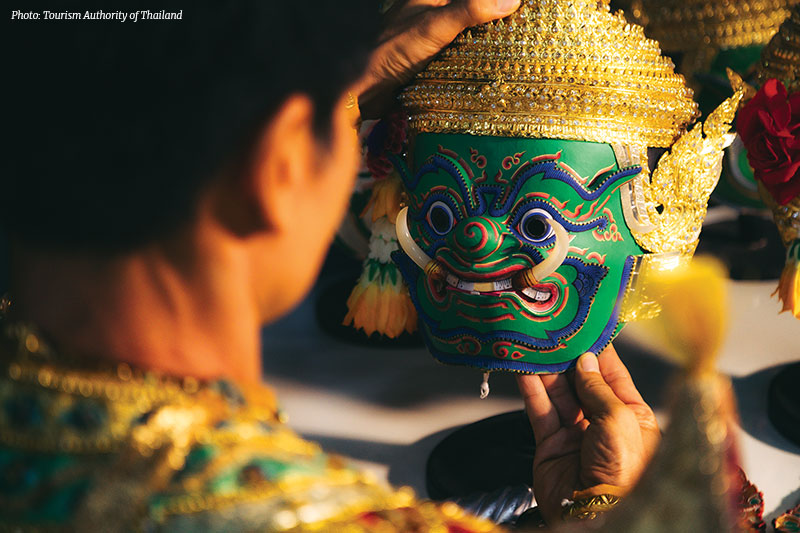
No mask is more imposing than that of the demon king Thotsakan. His emerald-green face and headdress stacked with faces – he is also known as the “10-faced demon” – make him instantly recognisable.
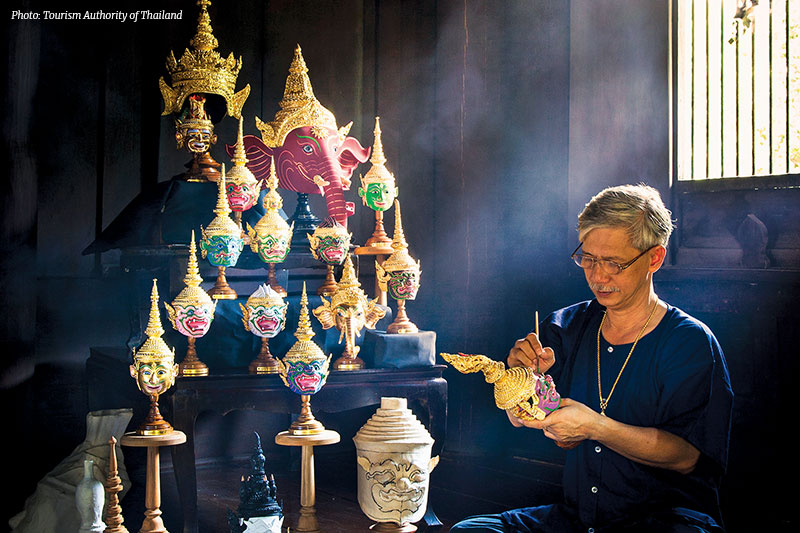
Creating a single mask demands extraordinary patience, requiring weeks of layering, sculpting, gilding and find hand-painting. When paired with jewel-studded costumes and iconic flared epaulets, the visual impact is staggering and a testament to legions of craftspeople who never step into the spotlight.
Hero, Beauty, Demon, Trickster
While the hundreds of kings, celestial beings, demons and monkey warriors are enough to bewilder anyone, four main characters anchor the Ramakien.
Phra Ram, the hero, is an noble prince whose quest to rescue his wife drives the plot, while Sita is the emotional heart of the epic. Like Helen of Troy, she is a legendary beauty whose abduction sets off a war that brings down empires. Thotsakan, the magnificent demon king with a green face and richly ornamented costume, is the ultimate villain and routinely steals the show.
Then there is Hanuman. White-faced, athletic and mischievous, this monkey warrior is fiercely loyal to Phra Ram but leaps, battles, schemes and romances his way through the epic. The Hanuman character also shows how stories change as they travel through time and space. Unlike the chaste devotee of Rama in the Indian version, the Thai Hanuman is a dashing rogue with a notoriously complex love life involving no less than six wives – a perfect example of how the epic was not just translated but also reimagined as it travelled east.
Beyond the Theatre
Once you recognise these characters on stage, they begin to appear everywhere.
Walk through Bangkok’s Emerald Buddha Temple (Wat Phra Kaew) and you will notice the Ramakien unfold across walls in a panorama of palaces, battles, demons and monkey armies. After watching a Khon performance, these murals spring to life: the greenfaced figure is no longer a mythic monster, but Thotsakan himself, while the leaping white-faced monkey can be none other than Hanuman.
This ancient imagery can also be seen in contemporary Thai design. Traditional Khon masks have been reinterpreted as miniature sculptures for modern homes. Some remain faithful to their elaborate originals, meticulously painted and displayed in a clear acrylic case or on a wooden stand. In others, the traditional kanok ornamentation metamorphoses into geometric shapes and pastel, monochrome or even neon colours.
The transformation may seem disrespectful, but there’s something very Khon about it. Like the Thai artists who transformed the Ramayana into the Ramakien centuries ago, today’s artists are breathing new life into the epic with their own versions.
Taking Khon Home
For travellers, this artistic evolution also offers souvenirs with real Thai soul. While a full-sized theatrical mask might strain your luggage allowance, you can still take a piece of the epic home.
Collectors can seek out intricately painted miniature masks while others can opt for vibrant Khon-inspired prints, stationery, silk scarves, ceramics and hand-crafted jewellery.
Curated design destinations like Iconcraft at IconSIAM and the Bangkok Art and Culture Centre (BACC) offer modern interpretations, while museum shops, exhibitions and design fairs can yield more playful variations.
Part of the charm lies in choosing a character that resonates with your own spirit: Thotsakan for a bold, dramatic presence; Hanuman for mischievous energy; Sita for refined elegance; or Phra Ram as a fearless hero.
Ultimately, the most rewarding pieces are those that retain the spirit of the artisan – something painted, embroidered, shaped or imaginatively interpreted by human hands.
A mass-produced souvenir gives you an idea of what Khon looks like, but a beautifully crafted object carries the soul of the performance home.
From Stage to Suitcase
Khon offers a fresh lens through which to explore Bangkok. Trace the narrative across the murals of wat Phra Kaew, then watch those painted characters come alive on stage at the Sala Chalermkrung Royal Theatre, before browsing masks, textiles and contemporary interpretations at artisan and design workshops.
Eventually, the house lights come up. Thotsakan’s green face disappears backstage. Hanuman removes his white mask, Phra Ram and Sita step out of their glittering costumes and the piphat ensemble lays down its instruments. The theatre goes quiet, but the story lives on – painted on temple walls, sculpted in design studios, reinterpreted in jewellery, textiles and tiny painted masks. And somewhere, packed safely into suitcases bound for destinations around the world.