
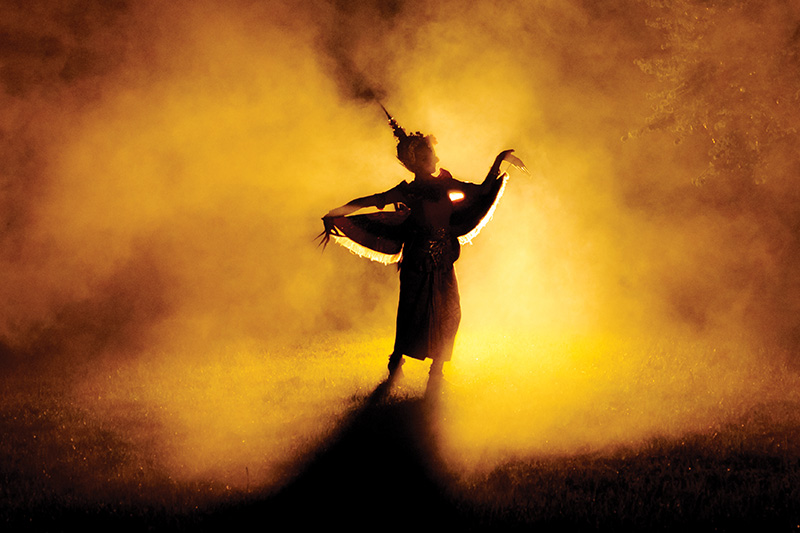
Wings of Devotion
Inspired by the mythological Kinaree, the dazzling costumes and bird-like movements of Nora dancers bring ancient legends to life in southern Thailand
Words: Phoowadon Duangmee
Photos: Shutterstock
The landscape unfolds in shades of sparkling blue and green as the plane descends in southern Thailand. From the window, you see plantations of swaying palms and waterways snaking through green mangroves. But the South is shaped as much by belief as by geography. In villages scattered around Songkhla Lake, Nora – Thailand’s oldest spiritual dance – still holds a sacred place in people’s lives.
Part dance, part theatre, and part ritual, Nora performances mesmerise audiences with dazzling costumes, acrobatic moves and amazing choreography. The movements of dancers also carry a mystical power, invoking the living soul of southerners and the unseen spirits of their ancestors.
While Nora may look like mere tourist entertainment, for locals it is a bridge between the human realm and the afterlife.
Tapestry of Belief
Nora (also known as Manora) has been woven into southern Thai culture for centuries. But the pulse of this ancient tradition beats strongest among the communities living around Songkhla Lake.
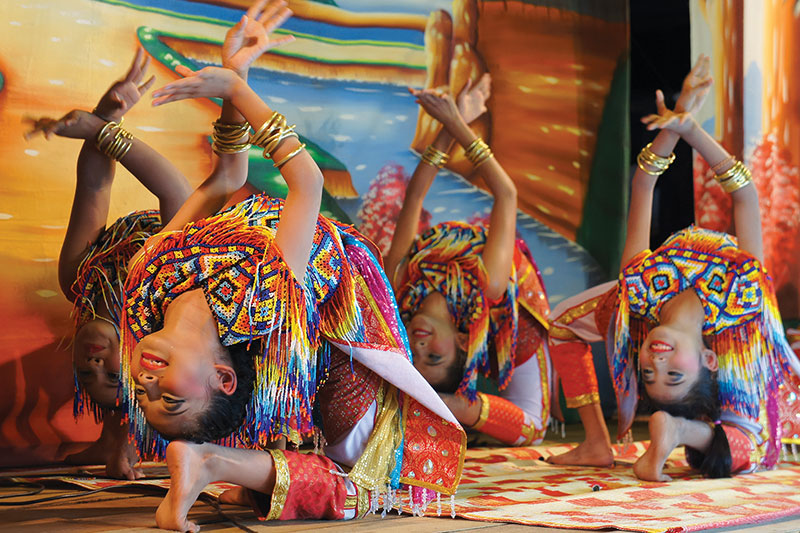
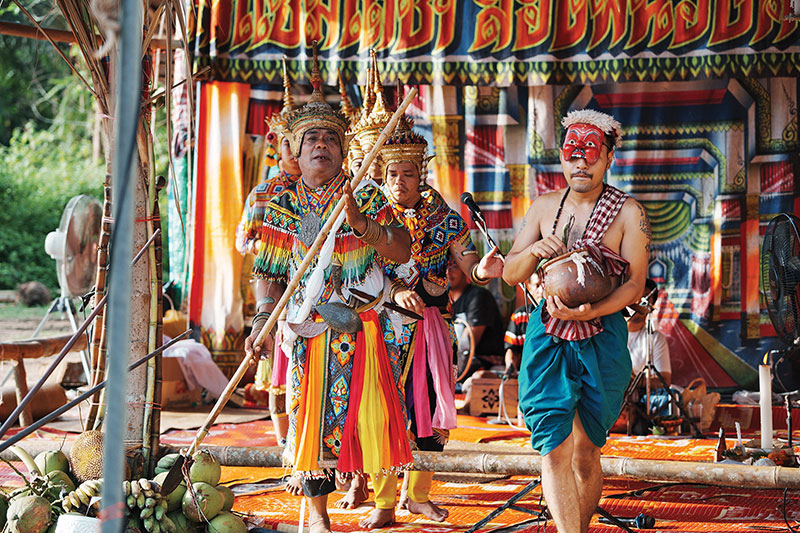
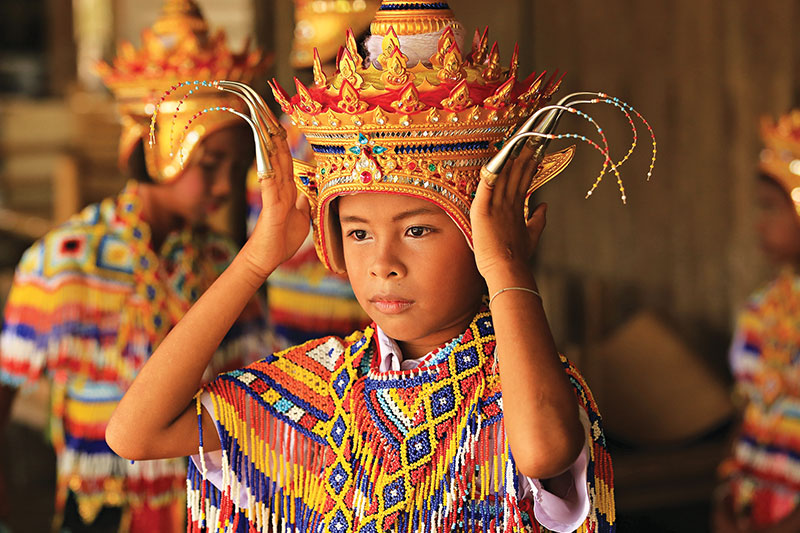
On stage, stories unfold in shimmering movements and improvised dialogue. Dressed in bright costumes – and long, curved metallic fingernails resembling bird talons – performers move with remarkable agility, bending, spinning and stamping in time with
the notes of barrel drums, gongs and reed pipes. The graceful movements are believed to be influenced by South India’s ancient dance form – Bharanatyam.
Beneath its dazzling spectacle, Nora is rooted in age-old rituals to honour the dance master, appease ancestral spirits, and mark important community events. Through their movements, the dancers seek the blessings of their artistic forbears while reaffirming the region’s unique cultural identity.
In 2021, UNESCO inscribed Nora onto the Representative List of Intangible Cultural Heritage of Humanity, a global nod to this ancient storytelling dance and the vibrant communities keeping its spirit alive.
While Nora dancers are proud of the international recognition, they know the real power of the dance lies in its centuries-old sacred movements.
Ancient Spirits Come Alive
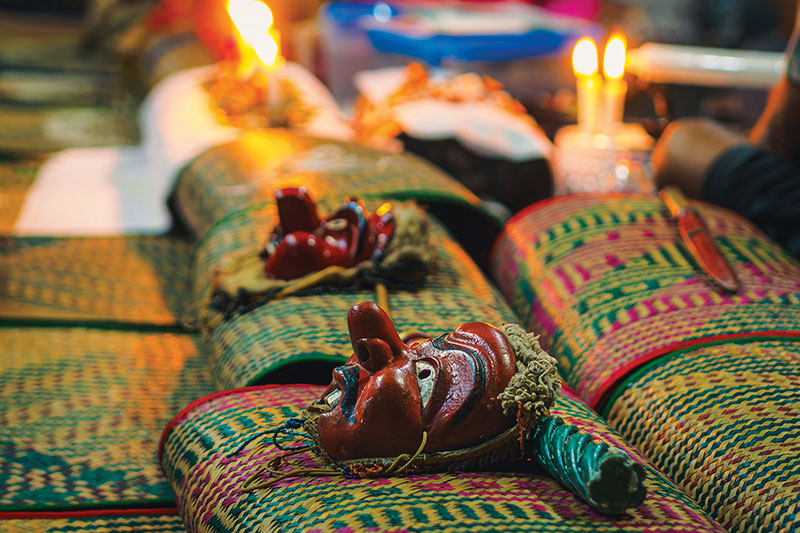
At the heart of Nora is the Rong Khru ceremony, which pays homage to the masters who have carried this living art through the generations.
Here, the boundary between present and past dissolves as dancers honour their teachers – both living and ancestral – to bring alive a 500-year-old tradition that remains the soul of the South.
Performers gather under the guidance of a senior master, or Nora Yai, who leads rituals crowned with a glittering Serd headpiece.
Musicians strike up a slow rhythm, and Rong Khru begins.
One by one, the dancers step onto centre stage – their movements measured and deliberate. Drummers pick up the beat and the stamping of feet gets louder, until the space pulses with grace and energy.
Moved by the spirit of their ancestors and mentors, the dancers tell a story that is captivating and immersive even for visitors with no knowledge of Nora.
Costumes Straight from Paradise
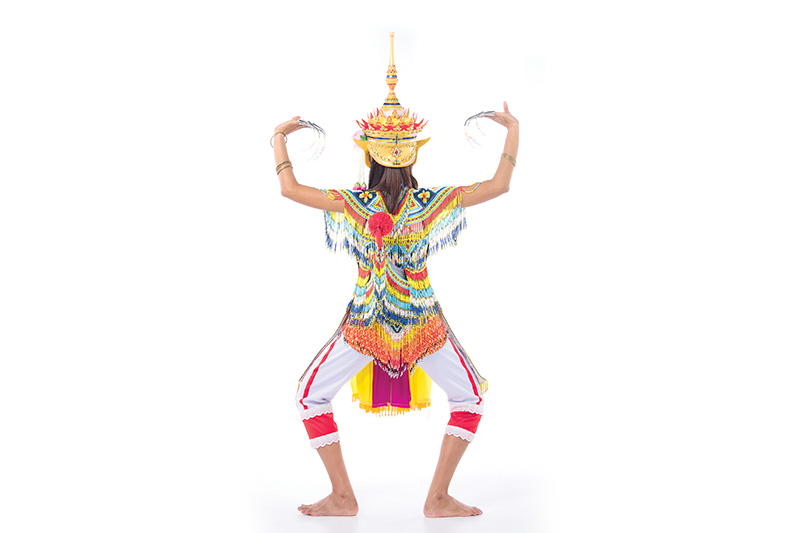
Before a single movement is made, it is the extraordinary costumes that catch the eye. The spectacular creations are inspired by the Kinaree – the mythological half-woman, half-bird creature of the Himmapan forest.
Resplendent in brightly coloured silk and shimmering beads that catch the light with every turn, the performers appear to have stepped fresh from a mythical realm.
Their backs are adorned with intricately decorated wings and tails that ripple dramatically with every movement. Atop the head sits the Serd, a tall ceremonial crown worn only by performers initiated into the tradition.
But the most distinctive feature is the curling metal fingernail extensions, worn to amplify the dancers’ elegant movements. Take a closer look or zoom in with a camera if you want to appreciate the secrets of Nora’s mesmerising beauty.
The overall effect is breathtaking: as the dancers spin across the stage, their costumes flicker and flash like a bird of paradise in flight.
Music in Motion
Nora is shaped by its music, with dancers and musicians engaging in a lively rhythmic dialogue. Drums set a tone of spirited energy while the melodic Pi (reed pipe) weaves in notes of sweetness touched with melancholy and solitude.
Unlike stage performances with a script, Nora relies on improvisation and spontaneous inspiration. Dancers may sing the verses, tease the musicians, and even joke with the audience. The atmosphere shifts constantly, from sacred ritual to vibrant spectacle. This fluidity is what keeps the performance alive – no two shows are the same.
A Shared Heritage
Nora’s roots lie in Thailand, but over the centuries this ancient ritual has strutted across the Malay Peninsula and beyond.
The tradition still flourishes in northern Malaysia, particularly in states like Kelantan, Kedah and Perlis, where dual-language performances in Thai and Malay reflect its shared cultural heritage.
Yet Nora’s spiritual home remains in Thailand’s southern tip, where the sacred dance continues to evolve with the communities who created it. The dance also faces the same modern pressures as many traditional art forms; the younger generation is moving away to large cities, and global entertainment is competing for attention. But Nora endures, thanks to masters who devote their lives to sharing their knowledge with young learners. Apprentices spend years mastering the demanding techniques, musical timing and ritual knowledge required of a Nora dancer.
The dance form is now leaping onto a national stage, as festivals and cultural institutions introduce it to wider audiences. Yet the most meaningful performances still take place in village settings – temple courtyards, community gatherings and local ceremonies.
Where to Witness the Magic
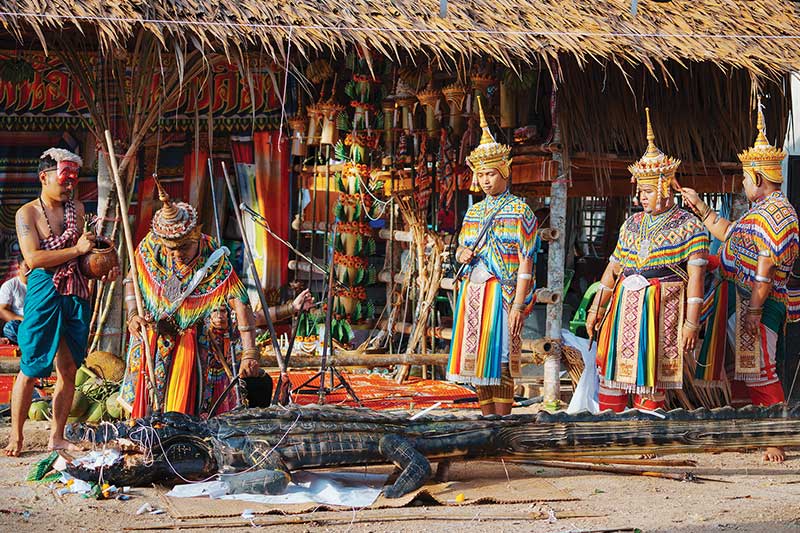
For those exploring southern Thailand, Nora offers a rare window into a living tradition. You may chance upon a performance in temple grounds, where costumes gleam under soft lantern light and the steady pulse of drums echoes through the night. Villagers sit cross-legged around a makeshift stage, as performers spin and stamp across the ground.
The best place to watch a Nora performance is in Phatthalung’s Wat Tha Khae, the temple believed to be the birthplace of the dance form. In early May, more than 100 Nora performers and masters gather at the temple for three days and three nights to perform the dance for both ritual and entertainment. The flickering candles, rhythmic drums, sweet pipes and glittering costumes create a mood that’s both festive and sacred.
Thailand is famous for its temples, food and tropical beaches. But its deeper spirit can be found in living traditions like Nora, which has helped shape life in the far South for centuries.
For travellers seeking a more profound connection, Nora offers something rare: an encounter with the enduring rhythms of southern Thailand’s spiritual and cultural world.